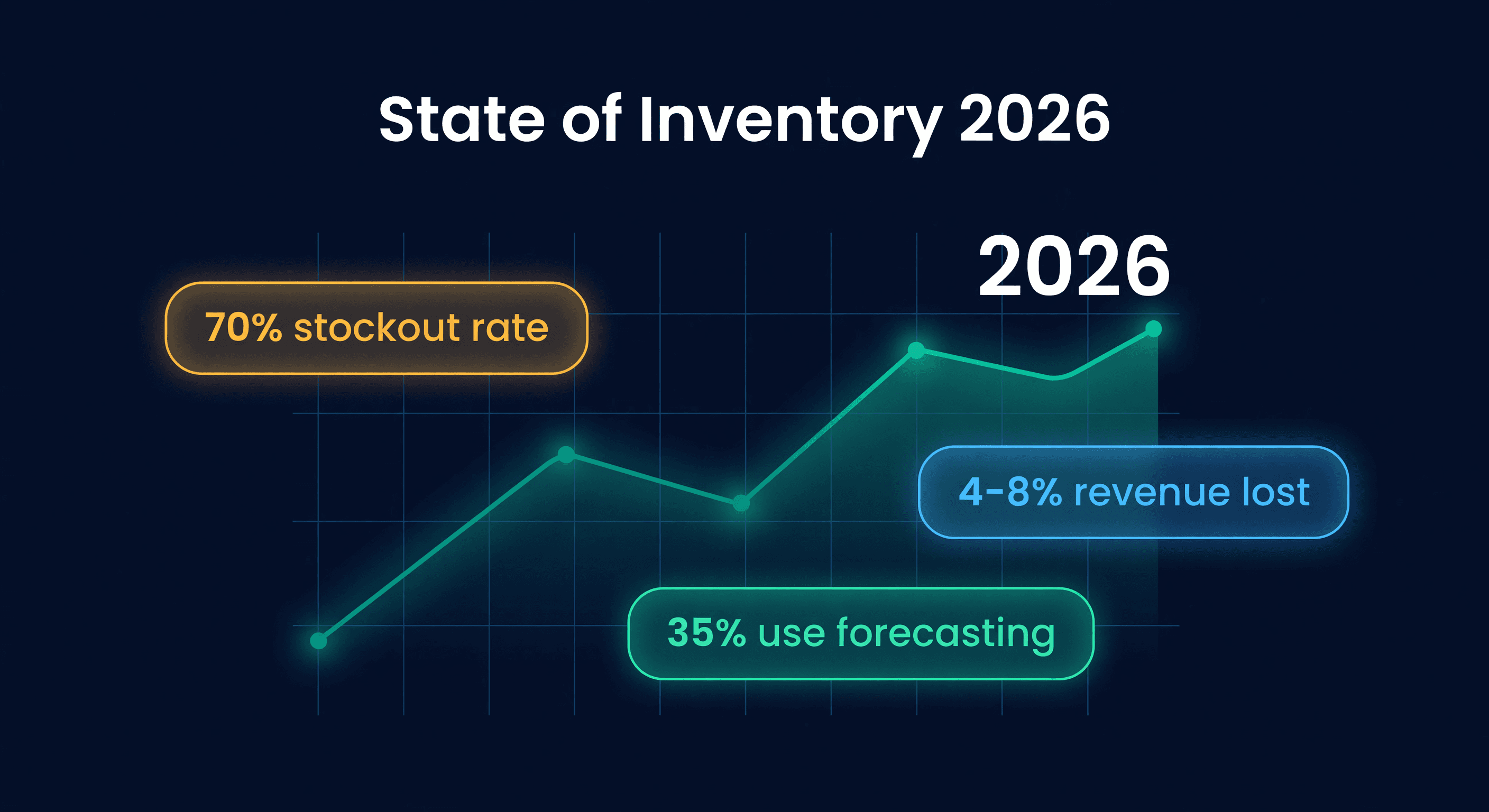
State of E-commerce Inventory Management 2026
Key takeaway: 70-80% of small and mid-sized e-commerce sellers experience quarterly stockouts. Only 25-35% use forecasting software. Multi-channel coordination is the number one challenge, with 65% of multi-channel sellers reporting regular inventory conflicts.
The Numbers Tell An Uncomfortable Story
Most small and mid-sized e-commerce sellers are still getting inventory wrong in 2026. Despite better tools, better data, and more options than ever, the same problems keep showing up: stockouts, overstock, and multi-channel inventory that nobody can keep straight.
We compiled data from industry surveys, platform benchmarks, and our own customer data to see where the market actually stands. The short version: the gap between sellers who have figured out inventory planning and those who have not is getting wider.
Key findings:
- 70-80% of sellers experience stockouts quarterly
- Only 25-35% use dedicated forecasting software
- Multi-channel sellers face 2x the coordination challenges
- Average inventory carrying cost is 20-30% of inventory value annually
Stockouts Are Still Endemic
How Often They Happen
| Business Size | Stockout Frequency |
|---|---|
| < $500K revenue | 82% experience quarterly stockouts |
| $500K - $2M | 74% experience quarterly stockouts |
| $2M - $10M | 61% experience quarterly stockouts |
| > $10M | 43% experience quarterly stockouts |
Smaller businesses struggle more. Less forecasting sophistication, tighter cash for safety stock, and fewer people watching the numbers. But even at $10M+, nearly half of sellers still stock out every quarter. That is not a small-business problem. That is an industry problem.
The Revenue Hit
Stockouts cost more than the missed sale:
- Direct lost sales: 4-8% of annual revenue
- Amazon ranking loss: Recovery takes 2-4 weeks
- Customer lifetime value: 15-25% of stockout customers do not come back
- Advertising waste: PPC spend on out-of-stock products
For a $1M e-commerce business, stockouts cost $40,000-$80,000 annually. I find it remarkable how many sellers treat this as a cost of doing business rather than a fixable problem.
Root Causes
| Cause | % of Stockouts |
|---|---|
| Inaccurate demand forecasting | 38% |
| Supplier delays | 24% |
| Insufficient safety stock | 19% |
| Multi-channel coordination failures | 12% |
| Data entry errors | 7% |
Forecasting drives 38% of stockouts. Fix the forecast and you fix more than a third of the problem.
Forecasting Adoption Is Surprisingly Low
What Sellers Actually Use
| Forecasting Method | Adoption Rate |
|---|---|
| Spreadsheets / manual | 45% |
| Platform native tools (Shopify, Amazon) | 25% |
| Dedicated forecasting software | 25% |
| No systematic forecasting | 5% |
Nearly half of sellers are still running inventory on spreadsheets. That works until it does not - usually around 50-100 SKUs across 2+ channels.
Why More Sellers Have Not Switched
| Barrier | % Citing |
|---|---|
| Cost concerns | 34% |
| Perceived complexity | 28% |
| "Spreadsheets work fine" | 22% |
| Integration concerns | 11% |
| Unaware of options | 5% |
The "spreadsheets work fine" contingent is interesting. In my experience, it is almost always a seller who has not calculated their actual stockout cost. Once they see the $40K-$80K number, the $100/month for software stops looking expensive.
The ROI Is Clear
Sellers using dedicated forecasting software report:
- 43% reduction in stockout frequency
- 28% reduction in overstock
- 15% improvement in inventory turnover
- Average payback: 2-3 months
That is not a marginal improvement. That is a step-change.
Multi-Channel Makes Everything Harder
The Coordination Problem
| Challenge | % of Multi-Channel Sellers Affected |
|---|---|
| Keeping inventory synced | 72% |
| Preventing channel cannibalization | 65% |
| Unified demand forecasting | 58% |
| FBA allocation decisions | 52% |
| Consolidated reporting | 48% |
Channel-Specific Pain
Amazon FBA:
- Restock limits that change without warning
- IPI score management
- Long-term storage fees
- Receiving delays in Q4
Shopify:
- Manual inventory updates still common
- Multi-location complexity
- Limited native forecasting
Only 18% Have It Figured Out
Only 18% of multi-channel sellers have truly unified inventory planning - a single view across all channels, combined demand forecasting, coordinated reordering, and intelligent allocation between FBA and warehouse. The other 82% are running parallel systems and hoping they stay in sync.
Carrying Costs Are Higher Than You Think
True Cost of Holding Inventory
| Cost Component | % of Inventory Value (Annual) |
|---|---|
| Cost of capital | 8-15% |
| Storage and warehousing | 2-8% |
| Insurance | 0.5-1% |
| Shrinkage and damage | 1-3% |
| Obsolescence | 2-10% |
| Total | 15-35% |
Median carrying cost: 25% of inventory value per year. That means $100,000 in inventory costs $25,000 annually just to hold - before you sell a single unit. Most sellers underestimate this by half because they only count the obvious warehousing line item.
Overstock Is the Quiet Problem
Stockouts get the attention because they hurt immediately. Overstock bleeds slowly:
- 23% of SMB inventory is "excess" - more than 90 days of supply
- Average overstock ties up $47,000 in capital for $1M businesses
- FBA long-term storage fees punish overstock aggressively
Technology Trends Worth Watching
AI-Powered Forecasting
67% of forecasting software now includes ML-based predictions. Early adopters see 15-20% accuracy improvement over pure statistical methods. The adoption barrier is the "black box" concern - sellers want to understand why the system is recommending what it recommends. Fair enough.
Real-Time Inventory Sync
78% of sellers want sub-hourly inventory sync. Only 34% have it. That gap creates oversell risk on high-velocity items. If your bestseller moves 50+ units per day, hourly sync is not fast enough.
Consolidation
Average seller uses 4.2 separate inventory-related tools. 71% would prefer a single platform. We are seeing the same consolidation play out in inventory that happened in marketing software five years ago.
What We Recommend
Sellers Under $1M Revenue
Start with spreadsheet discipline - a consistent template, updated weekly. Know your velocity, lead time, and stockout cost per SKU. If you are above 50 SKUs, a dedicated forecasting tool pays for itself fast. Focus on A items first. Perfect those, then worry about the long tail.
Sellers $1M - $5M Revenue
You should be on dedicated forecasting software. The ROI is proven at this scale. Calculate your true carrying cost - most sellers underestimate by 50%. Implement ABC analysis. Automate reorder alerts and stop checking stock levels manually.
Multi-Channel Sellers
Get a unified inventory view before trying to improve anything else. You cannot fix what you cannot see. Forecast combined demand, not per-channel. Coordinate FBA restocking so one channel does not starve another. Use tools built specifically for e-commerce - generic ERPs miss too many platform-specific details.
Methodology
This report synthesizes data from:
- Industry surveys and reports (NRF, IHL Group, McKinsey)
- E-commerce platform aggregate data
- Seller community surveys and interviews
- ReplenishRadar customer benchmarks
Sample sizes and confidence intervals vary by metric. Contact us for detailed methodology.
We built ReplenishRadar because these numbers frustrated us. Sellers losing $40K-$80K to stockouts, running spreadsheets with 200 SKUs, keeping three tabs open to know their total inventory position. The tools existed for enterprise brands but not for sellers doing $500K-$10M. That is the gap we are filling.
See how your inventory metrics compare - start a free trial ->
Related Reading:
This report will be updated annually. Last updated: January 2026.
Frequently Asked Questions
Get notified when it matters
Amazon and Shopify change the rules constantly. We'll email you when something affects your business.
See what your inventory is really doing
Doing $5M+ in revenue? Talk to our team
Related Posts
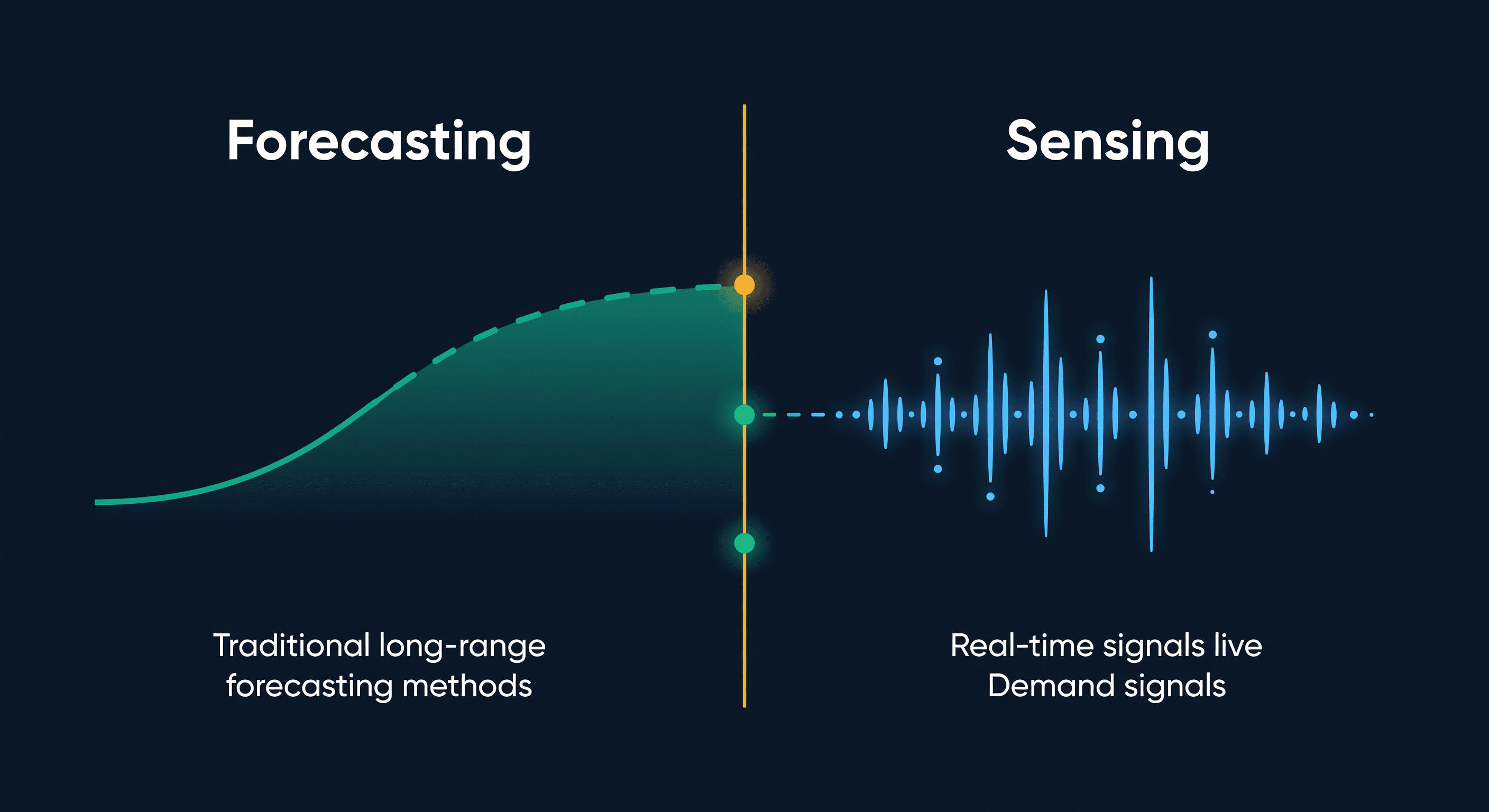
Demand Sensing vs Forecasting for E-commerce
What demand sensing actually is, how it differs from forecasting, why most e-commerce sellers only need one of them, and the practical middle ground.
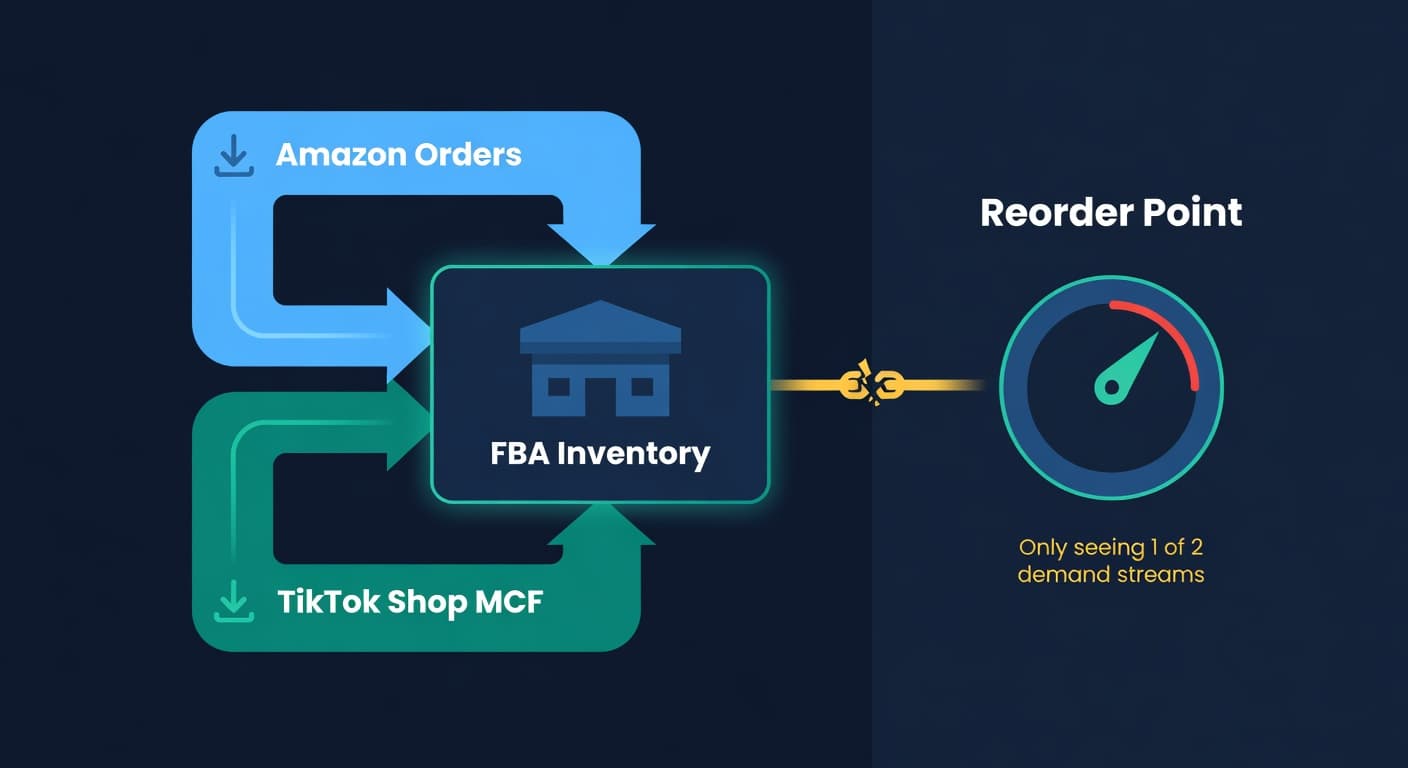
Your FBA Reorder Math Is Wrong If You Sell on TikTok Shop
TikTok Shop orders fulfilled by Amazon MCF drain your FBA inventory without showing up in your velocity data. Here's how to fix your reorder points.
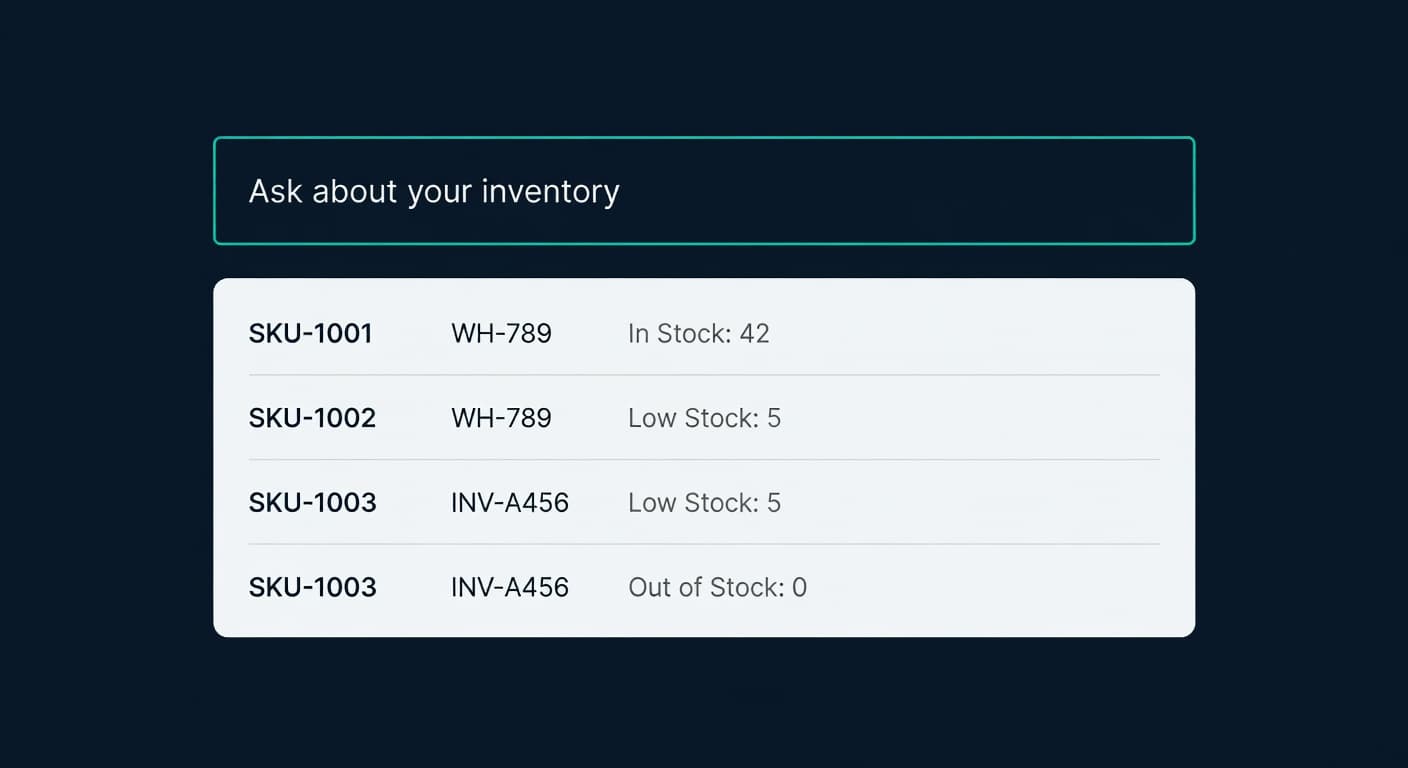
Ask Your Inventory a Question. Get a Real Answer.
Ask ReplenishRadar queries your live inventory data in plain English. Not a chatbot. Real numbers from your real stores, in seconds.
