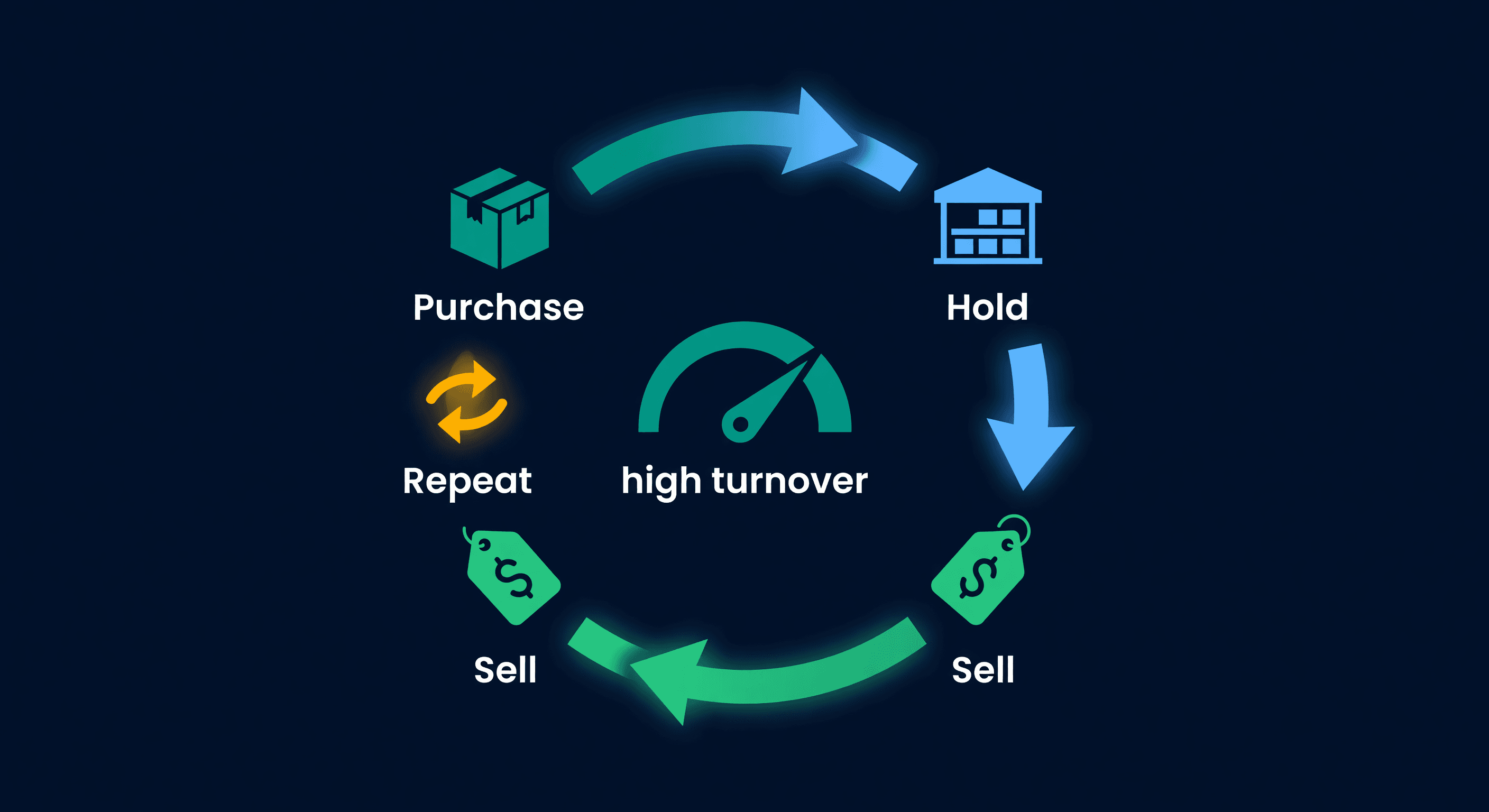
Inventory Turnover Ratio: Formula, Benchmarks, and Fixes
Key takeaway: Inventory Turnover = Cost of Goods Sold / Average Inventory. Target 6-8 turns per year for e-commerce. Low turnover signals slow-moving stock tying up cash; high turnover without stockouts signals healthy operations.
Most Sellers Have No Idea How Their Inventory Is Performing
Inventory turnover measures how many times you sell and replace inventory in a given period. Put differently: how hard is your capital working?
A turnover of 6 means you cycle through your entire inventory 6 times per year - roughly every 2 months. I have seen sellers sit at a turnover of 2 and wonder why they are always short on cash. That number is the answer.
The Formula
Standard Calculation
Inventory Turnover = Cost of Goods Sold (COGS) / Average Inventory
Worked Example
Annual COGS: $500,000
Beginning Inventory: $80,000
Ending Inventory: $70,000
Average Inventory: ($80,000 + $70,000) / 2 = $75,000

Turnover = $500,000 / $75,000 = 6.67 turns per year
Days Inventory Outstanding (DIO)
Convert turnover to days:
Days of Inventory = 365 / Turnover Ratio
DIO = 365 / 6.67 = 55 days
Your inventory sits for 55 days on average before selling. That is 55 days of tied-up cash, warehouse space, and risk. Run your own numbers through our inventory turnover calculator - or the days of supply calculator if you want the per-SKU view.
Industry Benchmarks
| Industry | Typical Turnover | Days on Hand |
|---|---|---|
| Fast fashion | 8-12 | 30-45 days |
| Consumer electronics | 8-12 | 30-45 days |
| General apparel | 4-6 | 60-90 days |
| Home goods | 4-6 | 60-90 days |
| Specialty/niche | 2-4 | 90-180 days |
| Luxury goods | 1-3 | 120-365 days |
For Shopify/Amazon sellers: aim for 6-8 turns minimum. Top performers hit 10-12.
Cash Flow Impact
This is where turnover stops being an academic number and starts being a cash flow lever. If you have $100,000 in inventory turning 4x/year vs. 8x/year:
| Turnover | Inventory Needed | Capital Freed |
|---|---|---|
| 4x | $100,000 | - |
| 8x | $50,000 | $50,000 |
Doubling turnover frees $50,000. That is money you can put into marketing, new products, or just keeping the lights on during a slow month.
Slow-moving inventory also racks up costs you might not be tracking: warehouse space, FBA long-term storage fees, insurance, and the quiet death of obsolescence. I once had a client discover that 30% of their catalog had not sold a single unit in 6 months. They were paying to store products nobody wanted.
How to Improve Turnover
Better Demand Forecasting
Accurate forecasting is the highest-impact fix. Bad forecasts cause both overordering on slow movers and understocking on fast movers. Seasonal miscalculations make it worse. Get the forecast right and turnover improves almost automatically.
Reduce Lead Times
Shorter lead times mean you can order less per cycle and still avoid stockouts. Negotiate with suppliers, consider domestic alternatives for your fastest-moving SKUs, and use air freight for items where the margin justifies it.
Implement ABC Analysis
Focus on A items that turn fastest. Accept lower turnover on C items but minimize their inventory investment. We spend too much time trying to fix underperforming SKUs when the real opportunity is doubling down on the winners.
Liquidate Dead Stock
Products sitting 6+ months are dead weight. Bundle them with fast movers, discount aggressively, sell to liquidators, or donate for the tax benefit. Every dollar locked in dead stock is a dollar you cannot spend on products that actually sell.
Right-Size Safety Stock
Excessive safety stock kills turnover. Calculate based on actual demand variability and measured lead-time variation - not fear. I see sellers carrying 90 days of safety stock on products with a 7-day domestic lead time. That is not caution. That is waste.
Order Smaller, More Often
Order smaller quantities more frequently when lead times allow, supplier minimums are low, and storage costs are high. This trades slightly higher per-unit costs for significantly better cash flow.
Per-SKU vs. Overall Turnover
Overall turnover hides individual performance. Always calculate per SKU:
| SKU | Annual Sales | Avg Inventory | Turnover |
|---|---|---|---|
| SKU-A | $100,000 | $8,333 | 12 |
| SKU-B | $50,000 | $25,000 | 2 |
| SKU-C | $30,000 | $10,000 | 3 |
SKU-B is dragging down your overall numbers. Either improve its velocity or cut inventory allocation. An overall turnover of 6 does not mean everything is fine - it might mean some SKUs at 12 are masking others at 2.
Turnover by Channel
Multi-channel sellers should track turnover separately by location:
| Location | Turnover | Action |
|---|---|---|
| FBA | 10 | Performing well |
| Warehouse | 4 | Needs improvement |
| 3PL | 6 | Acceptable |
Low FBA turnover means long-term storage fees eating your margins. Low warehouse turnover means tied-up capital doing nothing.
The Turnover-Stockout Tradeoff
Pushing turnover too high causes stockouts. There is a balance:
- Below 4: Capital sitting idle, storage costs piling up
- 6-10: Healthy cash flow with adequate availability
- Above 12: Frequent stockouts, lost sales, unhappy customers
Track turnover alongside stockout rate. If your turnover hits 12 but your stockout rate is 15%, you have gone too far.
Tracking Trends
Single calculations are snapshots. Trends tell the story.
Q1: 5.2 turns
Q2: 5.8 turns
Q3: 6.4 turns
Q4: 7.1 turns
An improving trend means your operations are tightening up. A declining trend means something changed - a supplier got slower, a forecast went wrong, or dead stock accumulated.
We built turnover tracking into ReplenishRadar for exactly this reason. The system calculates turnover per SKU and overall, automatically, across your Shopify and Amazon inventory. You see the trend without building a spreadsheet to track it.
Try ReplenishRadar free for 14 days ->
Related Reading:
Frequently Asked Questions
Get notified when it matters
Amazon and Shopify change the rules constantly. We'll email you when something affects your business.
See what your inventory is really doing
Doing $5M+ in revenue? Talk to our team
Related Posts
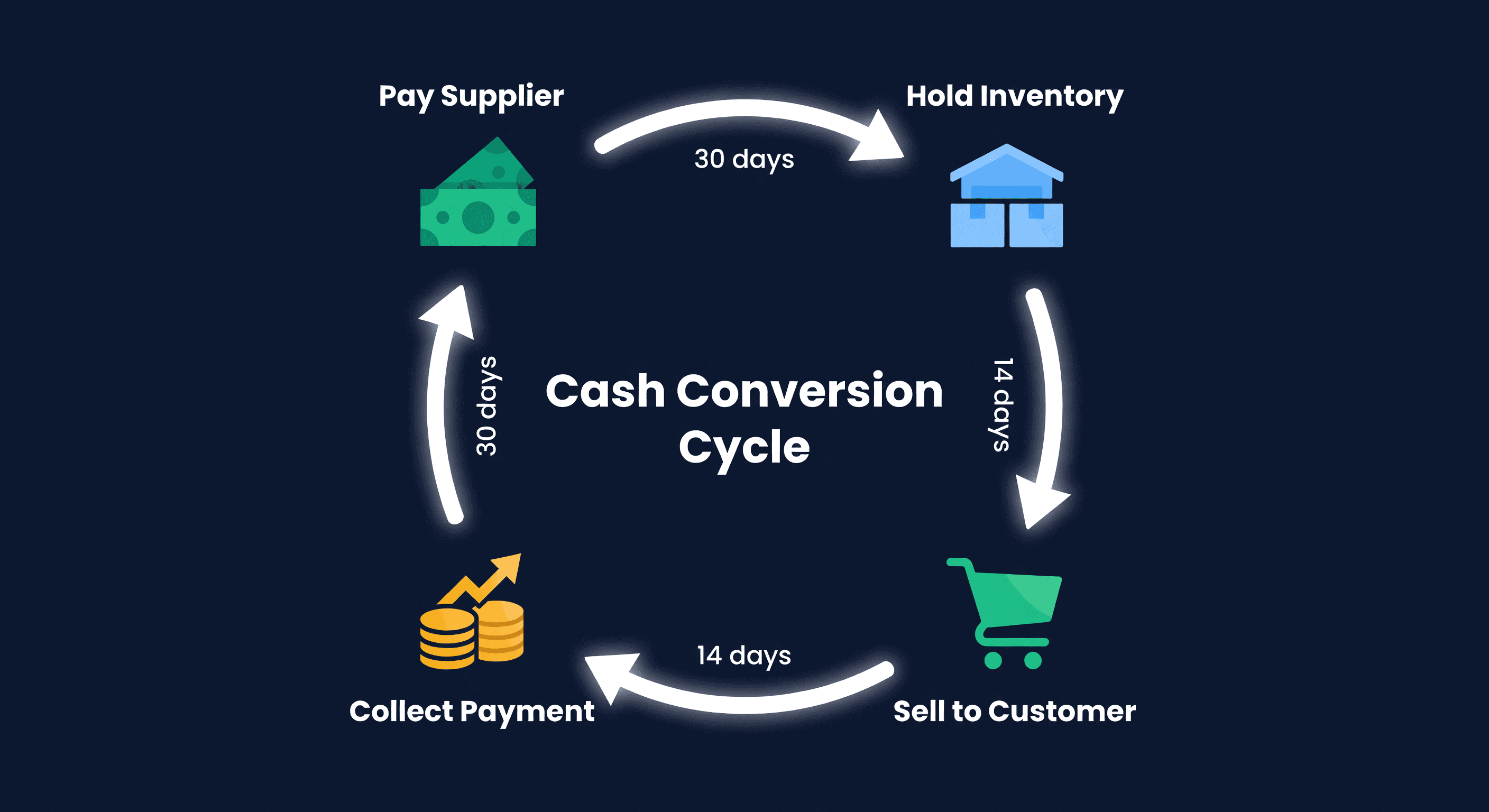
Cash Conversion Cycle for E-commerce Sellers
The CCC formula (DIO + DSO - DPO) explained with real e-commerce numbers. Learn what good looks like and how to shorten yours.
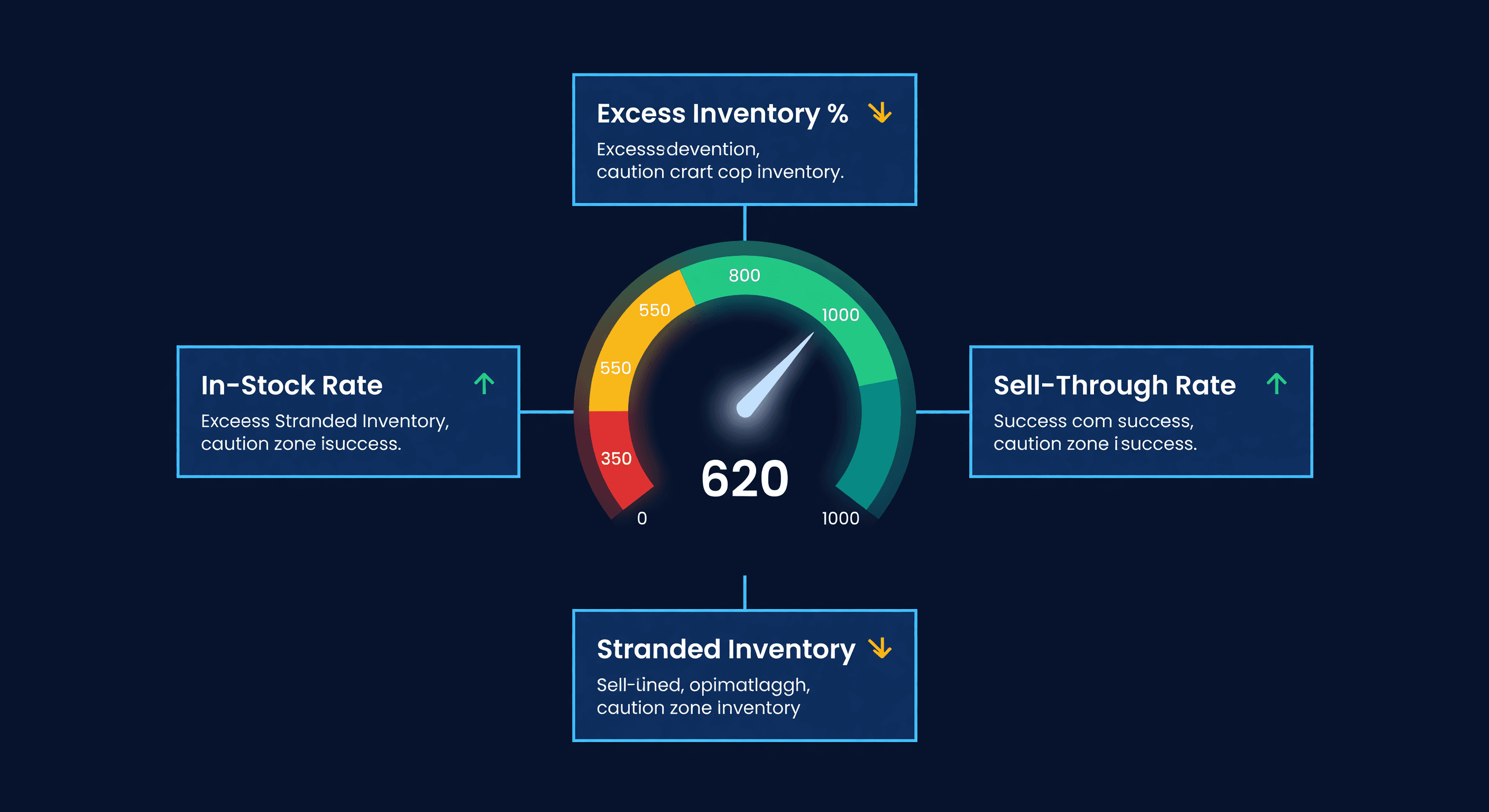
Amazon IPI Score: What It Is and How to Fix It
Your Amazon IPI score controls your FBA storage limits. Learn what the 4 factors actually measure, the score thresholds, and how to improve each one.
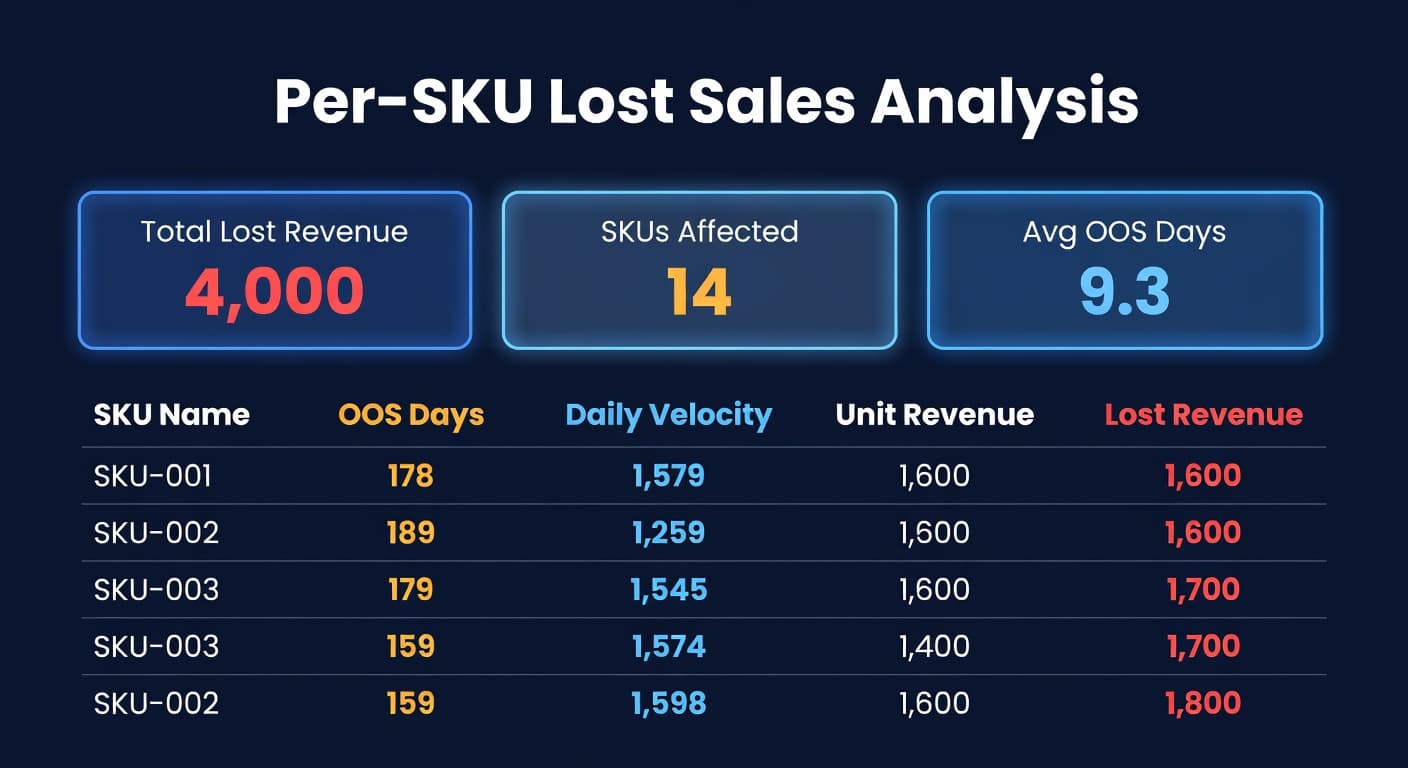
What Your Stockouts Actually Cost (Per-SKU)
Most sellers track what sold but not what didn't. Per-SKU lost sales analysis reveals the exact revenue each stockout costs.
