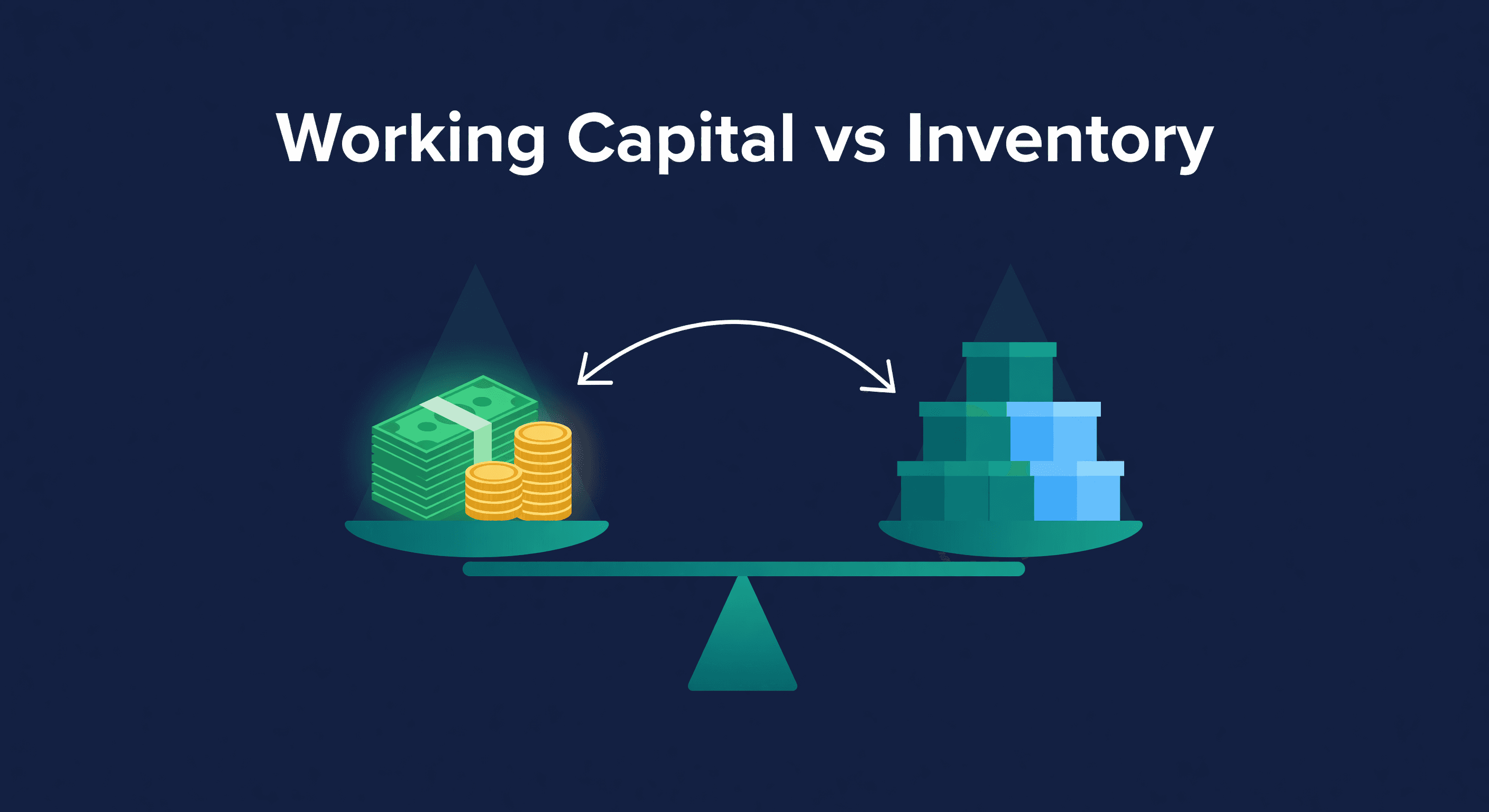
Working Capital and Inventory: Improve E-commerce Cash Flow
Key takeaway: Keep 20-40% of working capital in inventory, not more. Every dollar locked in slow-moving stock is a dollar you can't invest in growth, marketing, or new products. Use the Cash Conversion Cycle formula to track how long capital stays trapped in inventory.
Every Dollar in Inventory Is a Dollar You Cannot Spend
For most e-commerce sellers, inventory is the single largest use of working capital. Not payroll. Not marketing. Inventory.
The question that matters is not "Do I have enough stock?" It is: "Am I tying up too much cash in products that are not selling fast enough?" I have worked with sellers who had $200,000 in inventory and $12,000 in their bank account. They were profitable on paper but could not make payroll. The cash was sitting on warehouse shelves.
The Cash Conversion Cycle
This is the number that tells you how long your cash is stuck:
Cash -> Inventory -> Sale -> Cash (received)
The Formula
Cash Conversion Cycle = DIO + DSO - DPO

DIO = Days Inventory Outstanding (how long inventory sits)
DSO = Days Sales Outstanding (how long until payment)
DPO = Days Payable Outstanding (how long you have to pay suppliers)
E-commerce Example
DIO: 45 days (inventory sits 45 days)
DSO: 0 days (customers pay at checkout)
DPO: 30 days (you pay suppliers in 30 days)

Cash Cycle = 45 + 0 - 30 = 15 days
Your cash is tied up for 15 days per inventory cycle. That sounds manageable until you multiply it by $200,000 in inventory. It also flatters marketplace sellers: the customer pays at checkout, but the payout reaches your bank later. The day-by-day timeline further down shows how much later.
How Much Capital Is Trapped?
Average Inventory Value = (Beginning + Ending Inventory) / 2
Compare to total working capital:
Working Capital = Current Assets - Current Liabilities
Inventory % = Average Inventory / Working Capital
What the Numbers Mean
| Inventory % of Working Capital | Assessment |
|---|---|
| < 15% | Possibly understocked |
| 15-30% | Healthy range |
| 30-50% | Watch closely |
| > 50% | You have a capital problem |
If you are above 50%, your inventory is choking your business. You may be profitable but cash-poor - and cash-poor kills more e-commerce businesses than low margins do.
The True Cost of Overstocking
Excess inventory costs far more than the purchase price:
| Cost Type | Annual Impact |
|---|---|
| Cost of capital | 8-15% of inventory value |
| Storage/warehousing | 2-5% |
| Insurance | 0.5-1% |
| Shrinkage/damage | 1-3% |
| Obsolescence risk | 2-10% |
| Total carrying cost | 15-35% |
A $100,000 overstock costs $15,000-$35,000 annually just to hold. That is money evaporating while the product sits there. And I am not even counting the opportunity cost of what you could have done with that $100,000.
Six Ways to Free Up Capital
1. Improve Inventory Turnover
Higher turnover means less inventory needed for the same revenue. Illustrative numbers:
| Scenario | Annual Sales | Turnover | Inventory Needed |
|---|---|---|---|
| Current | $600,000 | 4x | $150,000 |
| Improved | $600,000 | 8x | $75,000 |
| Capital freed | $75,000 |
That is not a rounding error. That is $75,000 back in your bank account.
2. Reduce Lead Times
Shorter lead times mean smaller safety stock, which means less capital locked up:
Current: 60-day lead time -> 90 days of inventory
Improved: 30-day lead time -> 45 days of inventory
Capital freed: ~50% reduction
Options: domestic suppliers for fast movers, air freight where the margin justifies it, vendor-managed inventory, or dropship for your slowest-moving products.
3. Apply ABC Analysis
ABC analysis tells you where to focus capital:
| Category | % of SKUs | % of Revenue | Capital Allocation |
|---|---|---|---|
| A items | 20% | 80% | High investment |
| B items | 30% | 15% | Moderate |
| C items | 50% | 5% | Minimal |
Stop tying up capital in slow-moving C items. Run the check on your own catalog: add up the stock value of your C items, then compare it with what they bring in each month. When the stock value is a hundred times the monthly revenue or more, that cash belongs somewhere else.
4. Just-in-Time Where Possible
Order smaller quantities more frequently for products with short lead times, low supplier minimums, and predictable demand. You trade slightly higher per-unit costs for freed capital. Usually worth it.
5. Negotiate Payment Terms
Extend DPO (Days Payable Outstanding). Net 30 becomes Net 45 or Net 60. Every extra day of payment terms frees cash. This is one of the most underused levers in e-commerce - most sellers never even ask.
6. Use Inventory Financing for Seasonal Builds
For Q4 inventory builds, consider inventory lines of credit, PO financing, or revenue-based financing. The rule: cost of capital must be lower than your gross margin, and the inventory must actually sell. Do not finance speculative orders.
Working Capital Across the Year
E-commerce cash needs are not flat:
| Period | Inventory Build | Cash Need |
|---|---|---|
| Q1 | Low | Lower |
| Q2 | Moderate | Moderate |
| Q3 | High (Q4 prep) | Highest |
| Q4 | Peak sales, depleting | Converting to cash |
Q3 is when the cash crunch hits hardest. You are buying Q4 inventory but Q4 revenue has not started. Plan financing for Q3 builds. The cash comes back in Q4.
One Purchase Order, Day by Day
The cash conversion cycle is an average. Your bank account does not pay averages. It pays a deposit on one date, a balance on another, and receives marketplace money on a third. So walk a single order through the calendar.
Illustrative assumptions, not a real order: a $12,000 purchase at item cost (freight and duty not included), 30% deposit when you place the PO, the 70% balance due before the goods leave the factory, 35 days of production, 35 days of ocean freight and FBA receiving, Amazon releasing each sale 7 days after the customer receives it, and payouts on a 14-day settlement cycle.
| Day | What happens | Cash out | Cash in |
|---|---|---|---|
| 0 | PO placed, deposit paid | $3,600 | $0 |
| 35 | Balance paid before shipment | $8,400 | $0 |
| 70 | Units received and sellable at FBA | $0 | $0 |
| 72 | First orders delivered to customers | $0 | $0 |
| 79 | Those first sales released from reserve | $0 | $0 |
| 84 | First settlement that includes them | $0 | First payout |
| 90 | A customer returns a unit you were already paid for | $0 | Refund deducted from the next payout |
By day 35 you have paid the full $12,000. The first dollar from this order reaches your bank around day 84. That is 12 weeks of the whole order sitting on your side of the ledger, and the example has no customs delay, no receiving backlog and no slow first week of sales. Real orders usually have at least one of those.
Two details in that table catch people out.
Released is not the same as sold. If your account is on a delivery-date-based reserve, Amazon holds sale proceeds for a period after delivery before they count toward your payout. Its transaction reports now mark each sale as deferred or released and show the release date (Amazon's announcement). A sale on day 72 is not money you can send a supplier on day 72.
Money that arrived can leave again. A refund on an order you were already paid for comes out of a later payout. Shopify Payments works the same way. Refunds come off your next payout, chargebacks and dispute fees are deducted, and a negative balance reduces what you receive (Shopify Help Center). A chargeback is taken from your next available payout (Shopify chargebacks). So count a payout as cash when it lands, and still expect part of it to come back out later.
Keep the Buying Plan and the Bank Balance Apart
I keep two lists, and I never let one answer the other's question.
The buying plan says which products you need, how many, and the date you must commit to the supplier. It comes from demand, lead time and stock on hand. The cash calendar says what your bank account will hold on the day each deposit and balance is due. It comes from your bank, your payout reports and your other bills.
A forecast that says you need 2,000 units for March tells you nothing about whether you can pay for them in January. And a pending payout is a forecast too. My rule: schedule every supplier balance against money that is already released, not against money you expect to be released. If the two lists disagree, shrink the order or move the date before you sign the PO, because after the deposit leaves your account those levers are gone.
Multi-Channel Complications
Multi-channel sellers face a split that makes capital decisions harder:
FBA inventory is tied up until it sells. Long-term storage fees punish slow movers. Removal takes time. You have less flexibility.
Warehouse inventory is more flexible - you can reallocate between channels, adjust quantities, and storage costs are usually lower. But it is still tied-up capital.
The right split depends on your velocity by channel. Do not send everything to FBA because it is convenient. If a product turns slowly at FBA, you are paying Amazon to store your working capital.
Measure Monthly
| Metric | Target |
|---|---|
| Inventory Turnover | 6-10x annually |
| Days Inventory Outstanding | 30-60 days |
| Inventory % of Working Capital | 20-40% |
| Cash Conversion Cycle | < 30 days |
ReplenishRadar sits on the buying-plan side of that split. A suggested order built from your demand forecast shows its item cost before you approve it, and you can set a dollar spend cap per supplier or for the whole account so automatic ordering stops at a number you chose. That cap is a number you type in. ReplenishRadar does not read your bank balance or your payout schedule, so it cannot tell you what you can afford. Your cash calendar answers that question.
Try ReplenishRadar free for 14 days ->
Related Reading:
Frequently Asked Questions
Get notified when it matters
Amazon and Shopify change the rules constantly. We'll email you when something affects your business.
See what your inventory is really doing
Doing $5M+ in revenue? Talk to our team
Related Posts
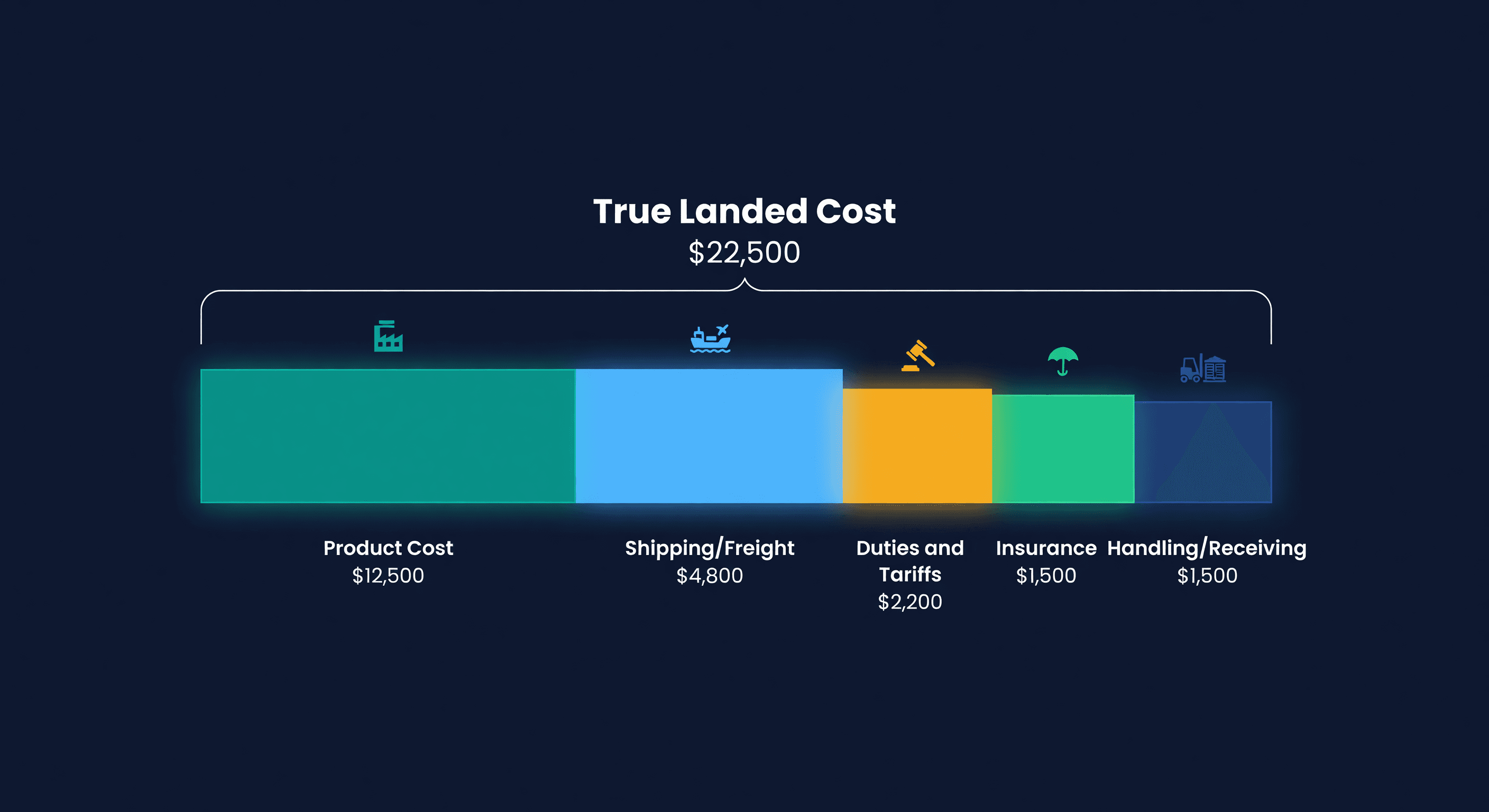
How to Calculate True Landed Cost
Your supplier invoice is not your real cost. Here's the landed cost formula with a worked example showing every hidden expense per unit.
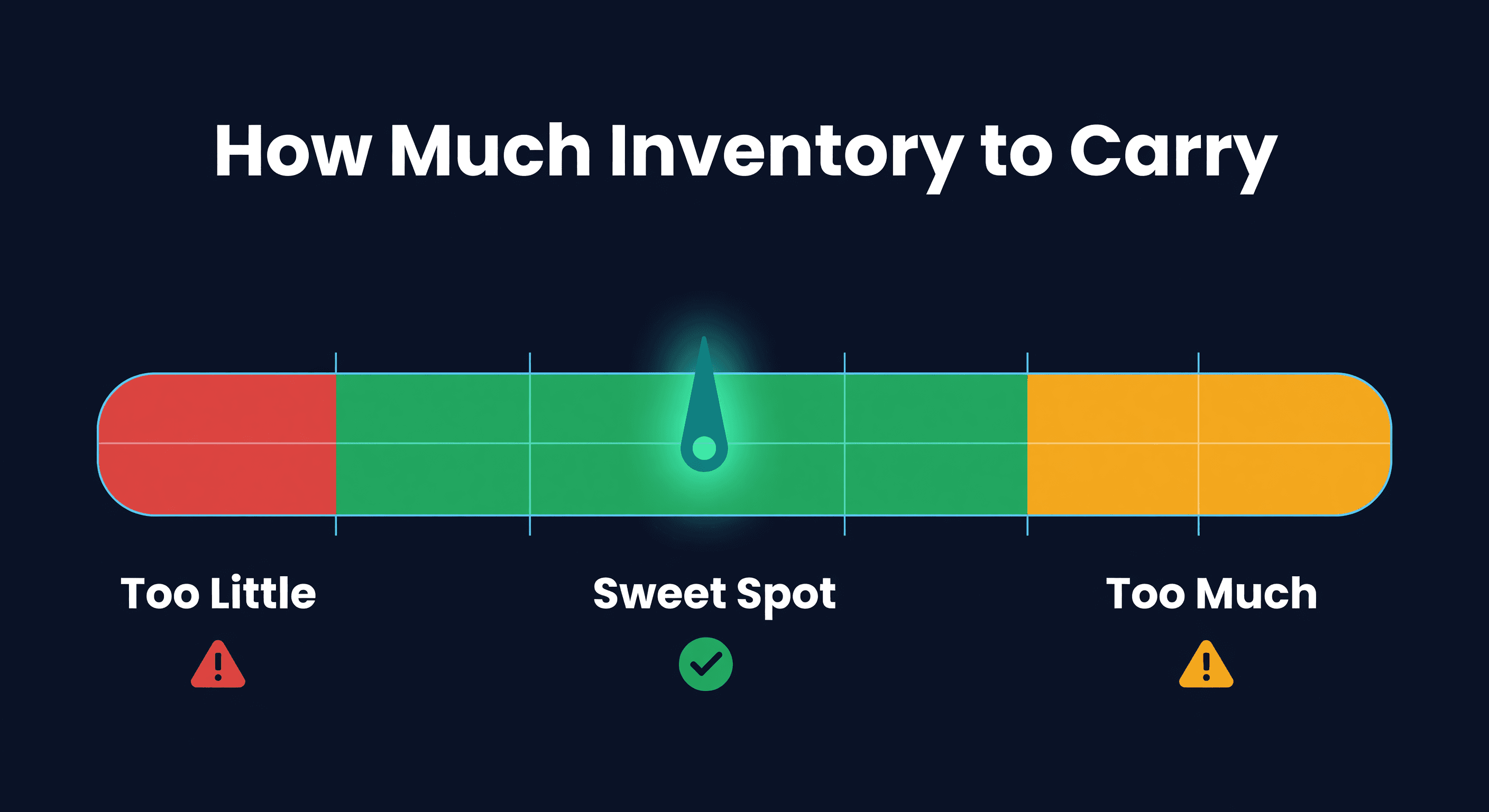
How Much Inventory Should You Carry?
The formula for optimal inventory levels, carrying cost math, and a worked example for a $500K inventory business. Stop guessing, start calculating.
7 Inventory Mistakes That Kill Cash Flow
The 7 most common inventory management mistakes that drain cash. Real numbers on what each one costs and how to fix it.
