Your FBA Reorder Math Is Wrong If You Sell on TikTok Shop

There is a reorder point bug hiding in your spreadsheet right now and you probably do not know about it.
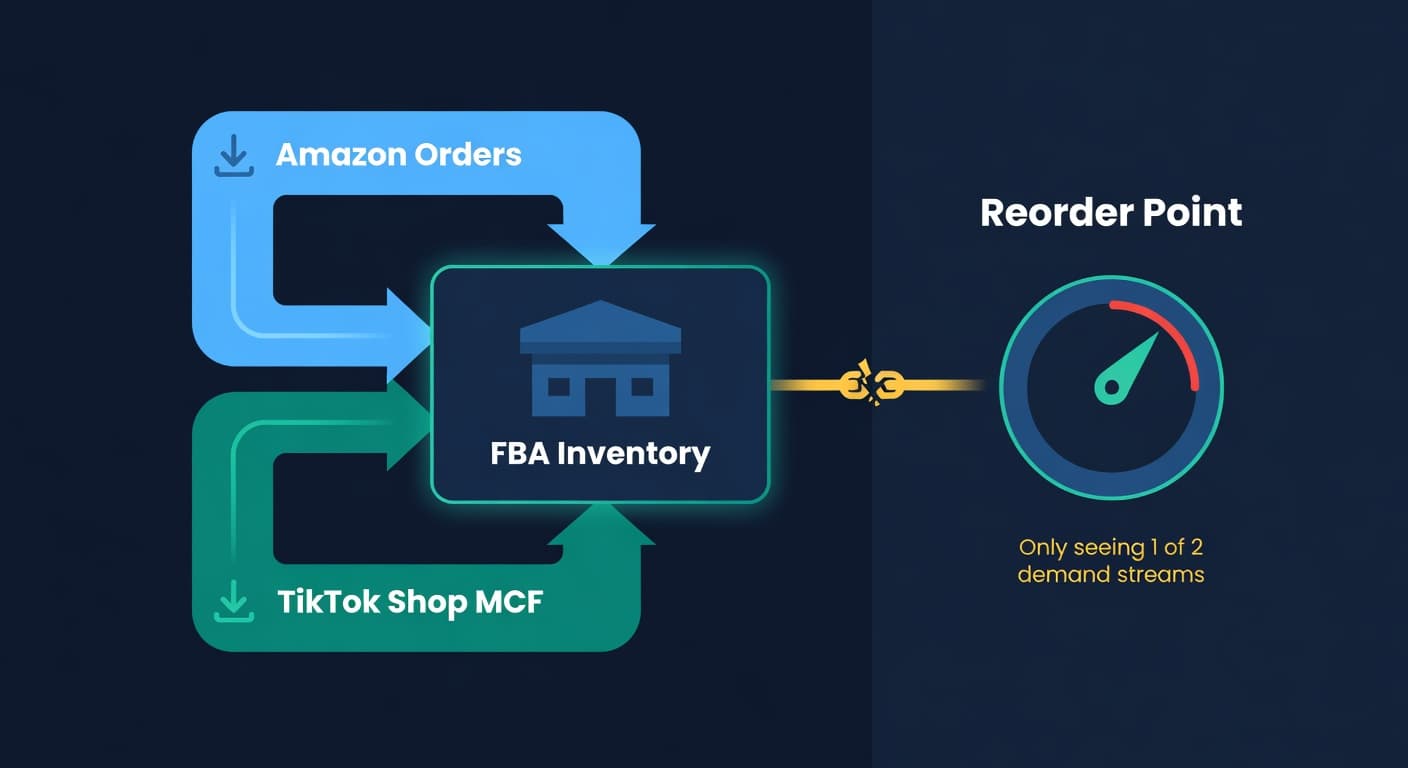
If you sell on TikTok Shop and use Amazon MCF to fulfill those orders, your FBA inventory is being consumed by two demand streams. Amazon orders. TikTok orders. Same warehouse, same stock, same units disappearing from the shelf. But your reorder point formula? It is only looking at one of them.
I have been watching this problem grow since TikTok officially confirmed MCF support in February 2026. The sellers who jumped on TikTok Shop early are the ones getting hit hardest, because their TikTok volume has had months to ramp up while their inventory math stayed frozen on Amazon-only data.
What MCF Actually Does to Your Inventory
Quick refresher for anyone who skipped this part. Amazon Multi-Channel Fulfillment lets you ship non-Amazon orders from your FBA inventory. You sell on TikTok Shop, the order gets routed to Amazon, Amazon picks and ships from your FBA stock.
The problem is not MCF itself. MCF works fine. The problem is what your inventory tools see afterward.
Most tools pull sales velocity from Amazon's order data. They see 100 units sold on Amazon last week and calculate your reorder point from that number. What they miss is the 25 units that MCF shipped to TikTok customers from the exact same inventory pool. Your real velocity was 125 units. Your reorder point is based on 100.
That is a 20% error. On a SKU with a 14-day lead time, you are carrying roughly 50 fewer units of safety stock than you should be.
The Math That Breaks
Here is how a standard reorder point looks for a single-channel seller:
Reorder Point = Daily Velocity × Lead Time + Safety Stock
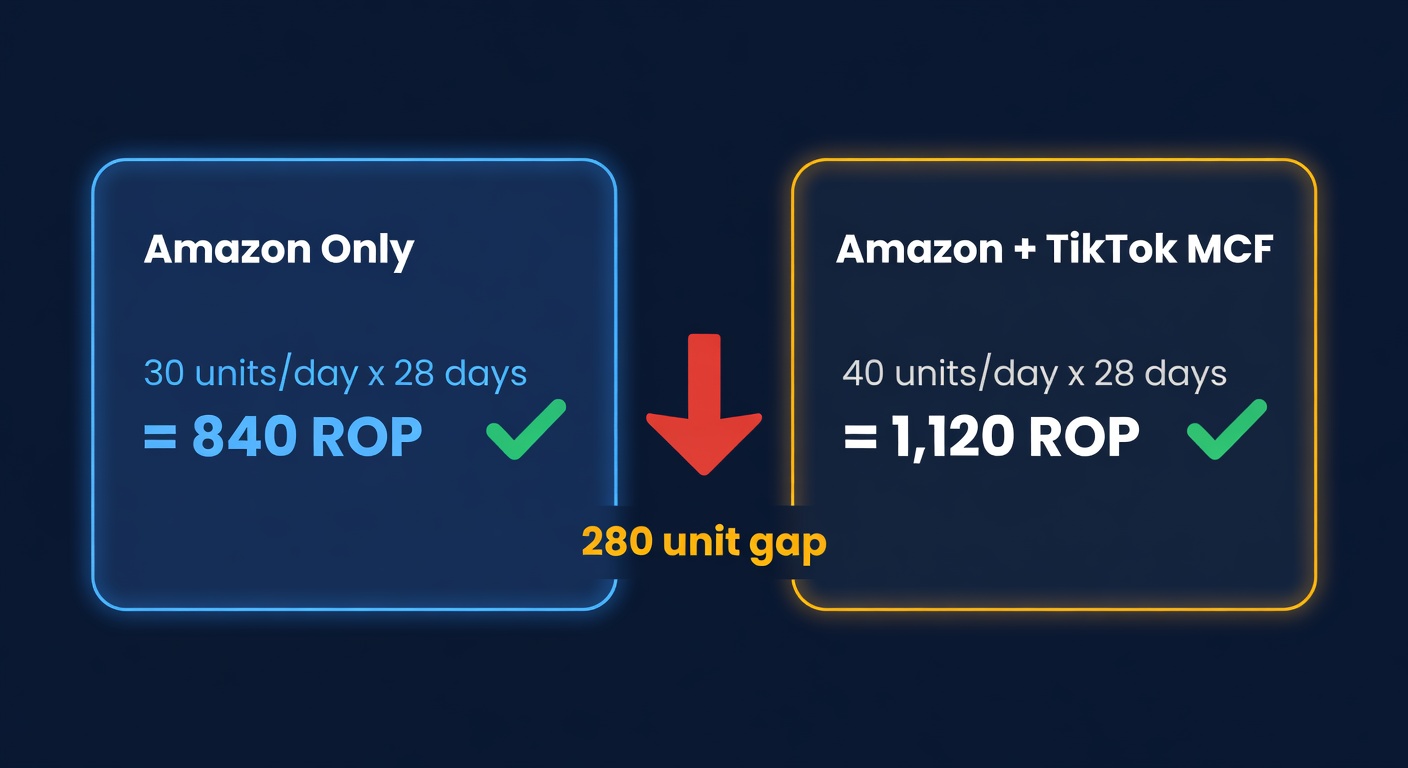
Say you sell 30 units per day on Amazon. Lead time is 21 days. Safety stock is 7 days of coverage.
ROP = 30 × 21 + (30 × 7) = 630 + 210 = 840 units
Now add TikTok. You are doing 10 units per day via MCF. Your tool does not count those. It still says 30 units per day.
Your actual velocity is 40 units per day. The correct reorder point:
ROP = 40 × 21 + (40 × 7) = 840 + 280 = 1,120 units
The gap is 280 units. If your supplier lead time is three weeks, that 280-unit shortfall means you run out roughly a week before your next shipment arrives. And because your tool thinks you are fine at 840, it does not flag the problem until it is too late.
Why This Is Worse Than a Normal Forecasting Miss
A bad forecast based on seasonality or a promotional spike is visible. You can see a surge in orders and react. The MCF blind spot is invisible. Your Amazon dashboard shows steady sales. Your inventory level drops faster than expected, but unless you are manually reconciling units shipped versus units sold on Amazon, there is no alert. No flag. Nothing.
I have talked to sellers who blamed shrinkage or phantom inventory errors before realizing the gap was MCF fulfillment volume they forgot to account for.
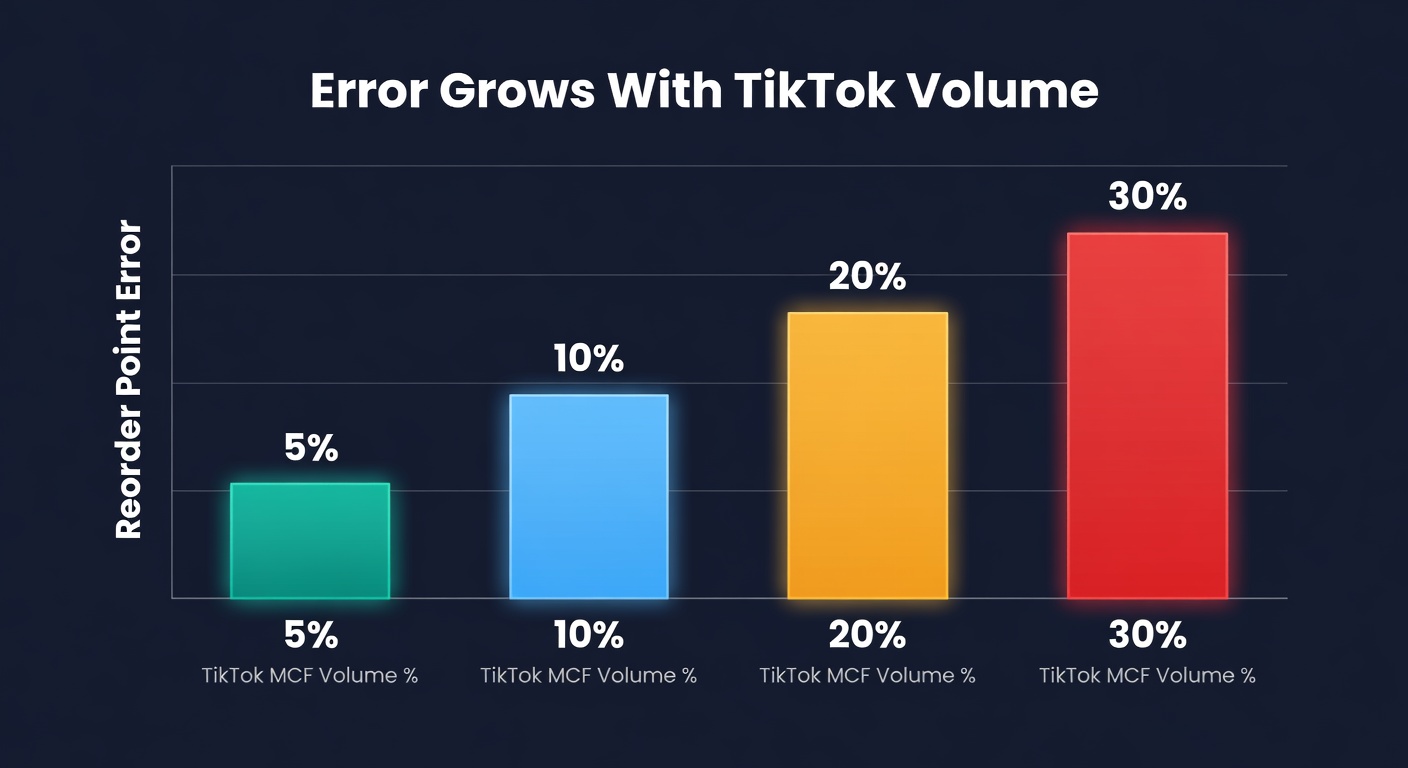
The other thing that makes this nasty: it scales with your TikTok success. The better TikTok performs, the worse your reorder math gets. A seller doing 5% of volume via TikTok MCF has a small blind spot. A seller doing 30% - and I am seeing this more often as TikTok Shop grows - has reorder points that are off by nearly a third.
How to Fix It Right Now
You do not need a TikTok integration to fix this. The data is already in Amazon Seller Central.
Step 1: Pull your MCF volume. In Seller Central, go to Reports > Fulfillment > Multi-Channel Fulfillment. This shows every MCF order, including the ones routed from TikTok. Export the last 30-90 days.
Step 2: Calculate your blended velocity. For each SKU, add MCF units shipped to your Amazon units sold. Divide by the number of days.
| SKU | Amazon Units (30 days) | MCF Units (30 days) | Total | Blended Daily Velocity |
|---|---|---|---|---|
| Widget-A | 900 | 210 | 1,110 | 37.0 |
| Widget-B | 600 | 180 | 780 | 26.0 |
| Widget-C | 450 | 30 | 480 | 16.0 |
Widget-B tells the story. Without MCF, your velocity looks like 20 units per day. With MCF, it is 26. On a 21-day lead time, that is 126 extra units you need on hand. Miss that and you are stocking out.
Step 3: Recalculate your reorder points and safety stock. Plug the blended velocity into your existing formulas. Every formula that uses "daily sales" or "average velocity" needs the blended number, not just Amazon. That means your reorder point, your safety stock, and your stockout risk assessment are all affected.
Step 4: Set a recurring reminder. This is not a one-time fix. Your TikTok-to-Amazon ratio will change as your TikTok Shop grows. I would rerun this monthly at minimum.
The Bigger Problem: Invisible Demand Streams
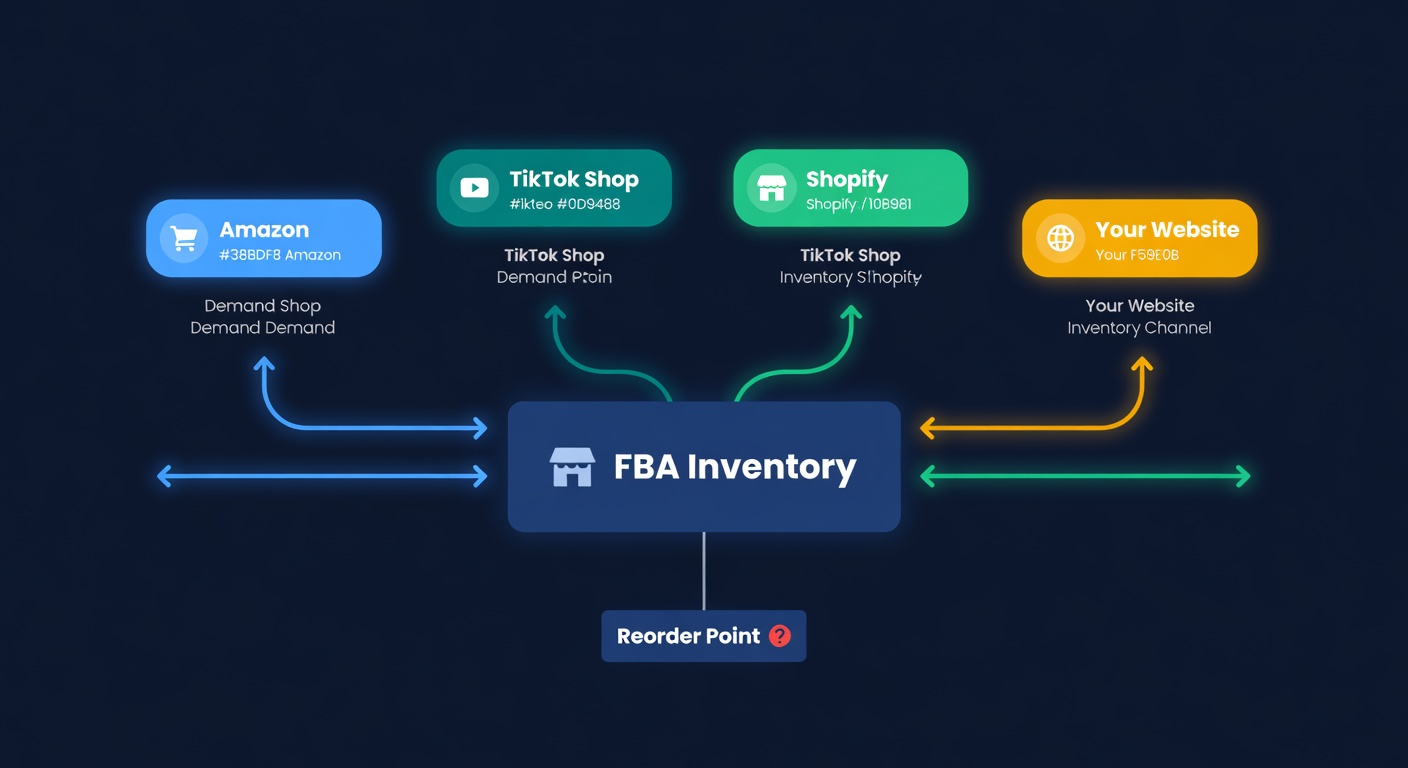
TikTok MCF is the most common version of this right now, but it is not the only one. Any channel fulfilled by Amazon MCF creates the same blind spot. Shopify orders routed through MCF. Your own website orders. Walmart orders. If it ships from FBA but is not an Amazon sale, your velocity data is understated.
This is really a multi-channel inventory problem disguised as a single-channel forecasting error. And it is going to get worse as sellers diversify beyond Amazon.
What ReplenishRadar Does Here
We are building multi-channel velocity tracking that pulls MCF-attributed demand alongside standard FBA order data. When your TikTok orders flow through MCF, that volume shows up in your velocity calculations automatically. Your reorder points reflect what is actually leaving the warehouse, not just what Amazon's order report says you sold.
The manual version of this - exporting MCF reports, merging spreadsheets, recalculating every SKU - takes a couple hours per month if you are diligent about it. Most sellers are not diligent about it, which is how stockouts happen on SKUs that your tools said had plenty of runway.
Try ReplenishRadar free for 14 days ->
The Timeline Matters
TikTok Shop is growing fast. Amazon confirmed official MCF support in February 2026. Tools like AfterShip Feed, GeekSeller, and WebBee make the MCF connection trivial to set up. That means the number of sellers with this blind spot is growing every week.
If you are already selling on TikTok Shop via MCF, go check your reorder points today. If you are planning to start, build the blended velocity calculation into your workflow from day one. Do not bolt it on later after your first stockout teaches you the lesson the hard way.
The inventory that stocks out is the inventory your tool did not know was selling.
Related Reading:
Frequently Asked Questions
Get notified when it matters
Amazon and Shopify change the rules constantly. We'll email you when something affects your business.
See what your inventory is really doing
Doing $5M+ in revenue? Talk to our team
Related Posts
Best Inventory Forecasting Software: 7 Tools for 2026
Seven inventory forecasting tools for Shopify and Amazon sellers, compared on real entry price, which channels each one can see, and what it does with the forecast.
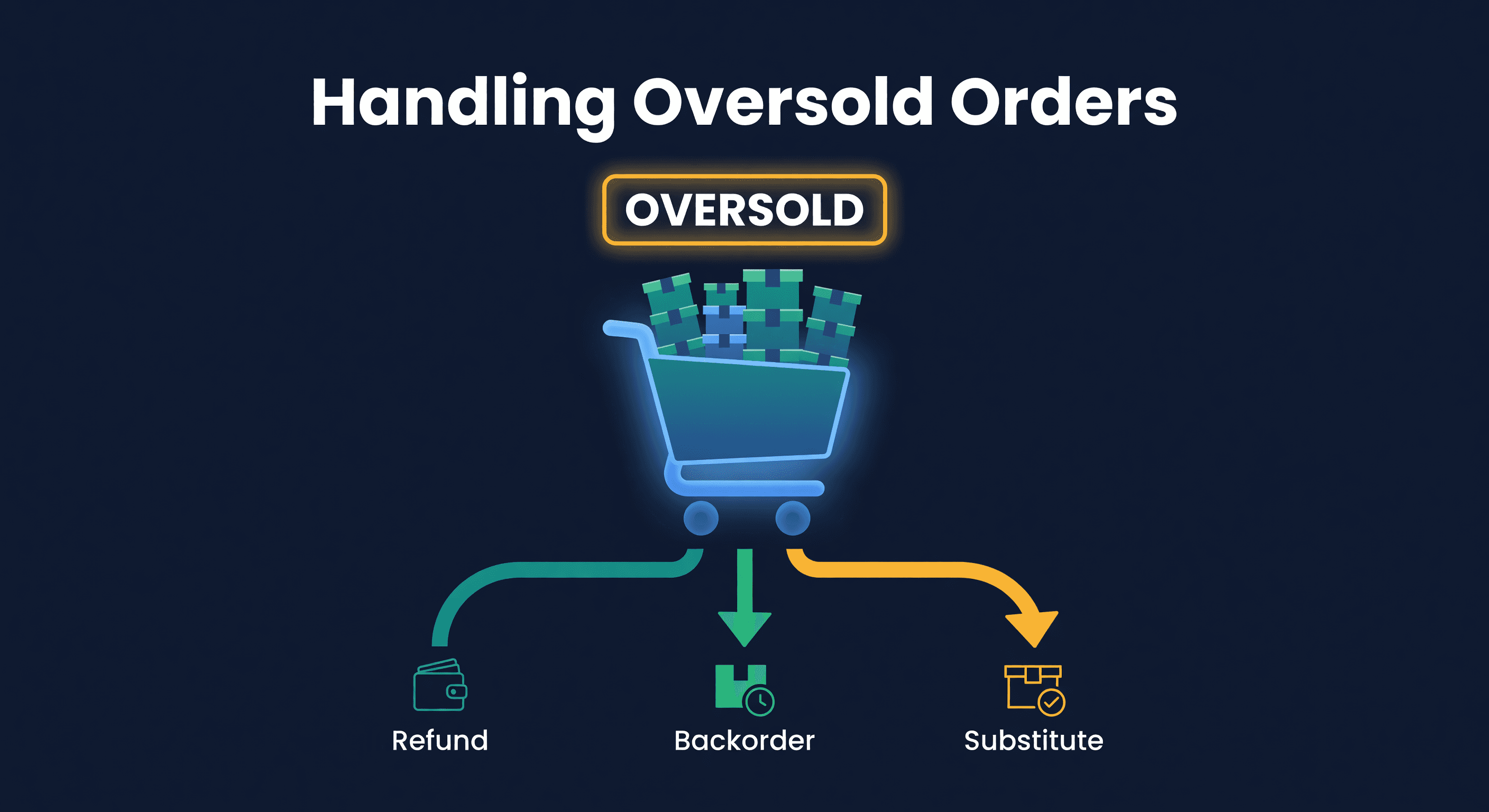
How to Handle Oversold Orders in E-commerce
Why overselling happens on multi-channel stores, what it costs you, and the prevention strategies that actually work, from buffer stock to real-time push sync.
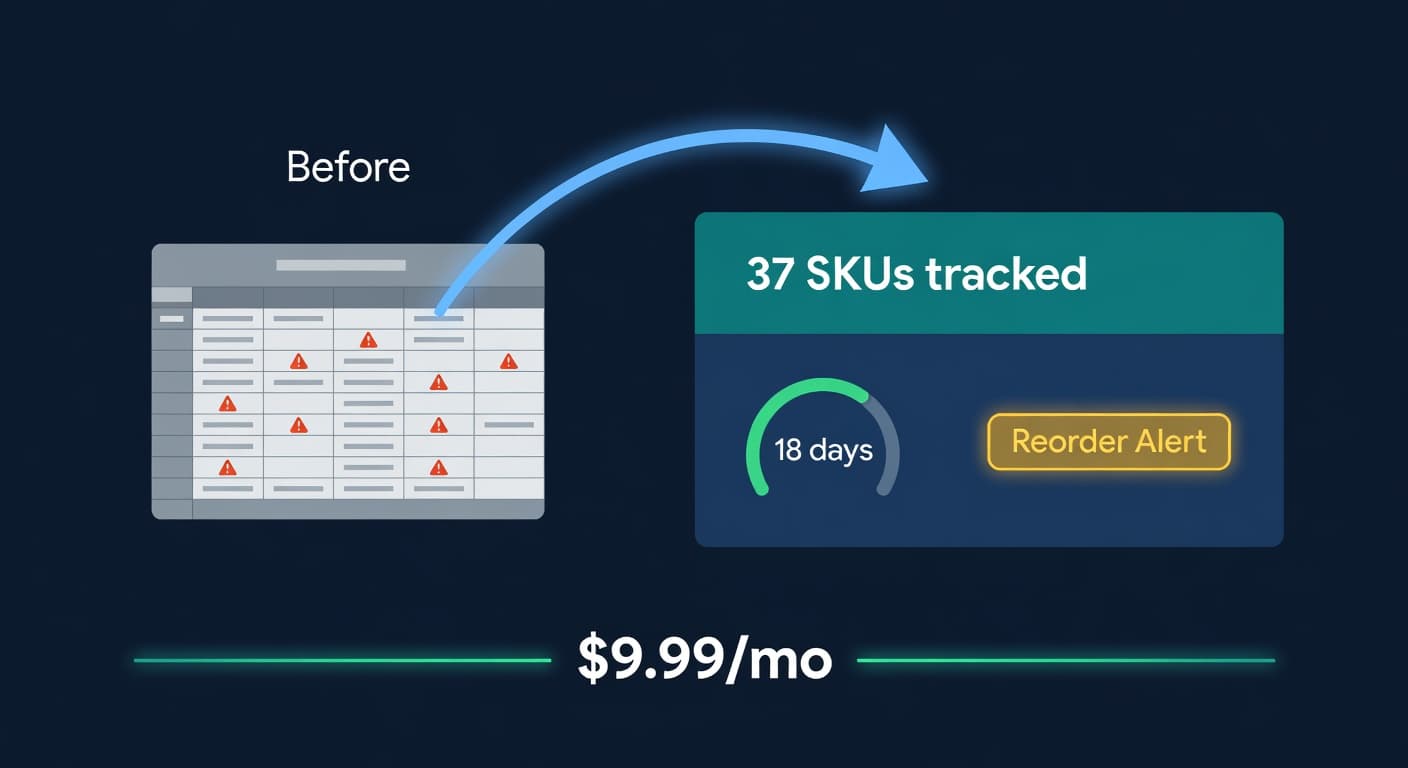
Inventory Lite: Who It's For, What It Does, When to Upgrade
Lite is $9.99/mo for hybrid Shopify + Amazon sellers under 50 SKUs and $10k/30d. Here is what it covers and when you outgrow it.
