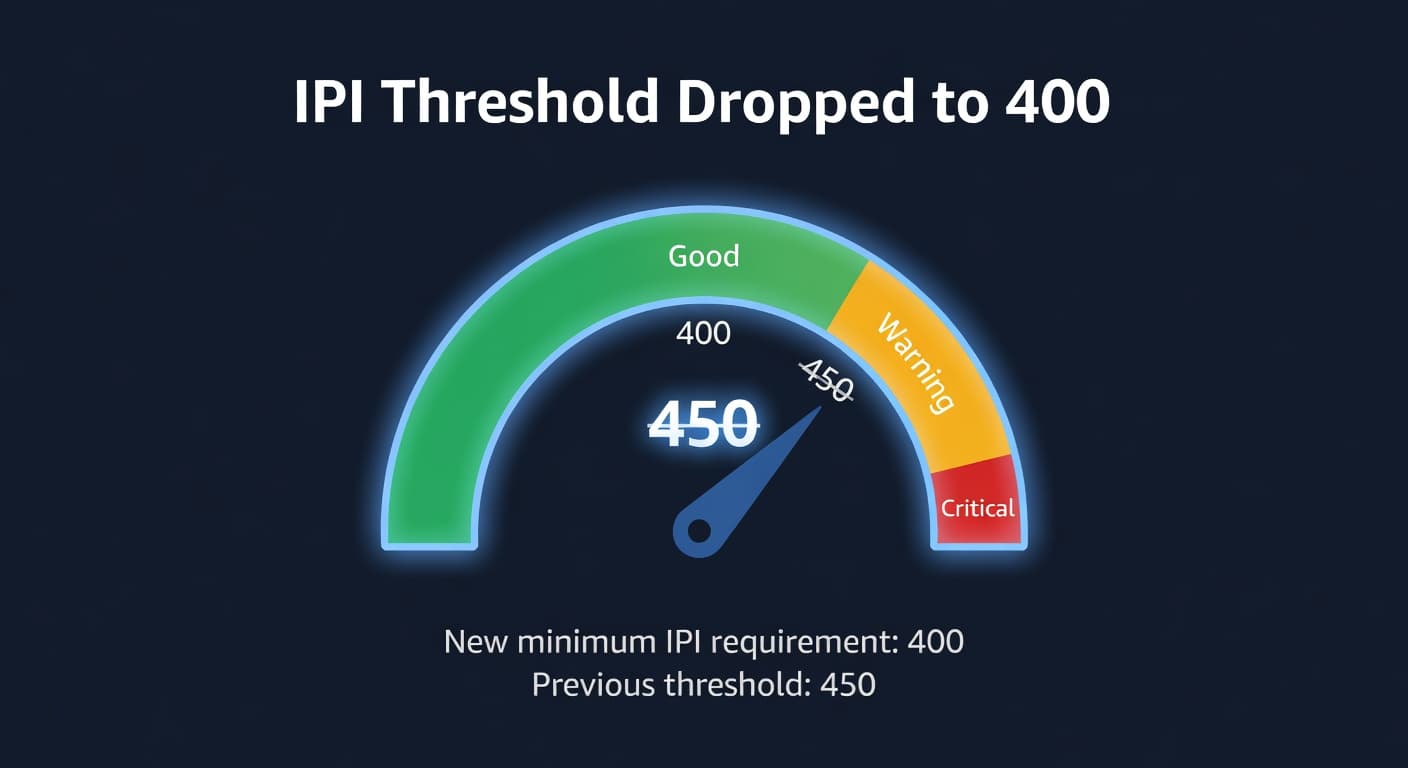
Amazon IPI Threshold Dropped to 400. Here's Why.
Amazon Just Gave 15% of FBA Sellers Their Storage Back
Amazon quietly lowered the IPI threshold from 450 to 400 for Q2 2026 storage limits. The announcement came through Seller Central notifications in early March. If you were not watching, you might have missed it.
This is good news, but only for a specific slice of sellers. Let me break down who benefits, who doesn't, and what to do about it.
Who This Helps
If your IPI score was sitting between 400 and 449, you just went from storage-limited to unrestricted. That is roughly 12-15% of active FBA sellers based on what I have seen across the accounts we work with. These sellers were stuck in a frustrating loop: limited storage meant they couldn't send enough fast-moving inventory, which hurt sell-through, which hurt IPI, which kept storage limited.
Breaking out of that loop matters. One seller I talked to had an IPI of 430. Their top 5 ASINs were constantly understocked at FBA because they were burning their capacity allocation on 150 slow-moving SKUs. They lost an estimated $4,200/month in sales from stockouts on their best products. That constraint is now gone.
Who This Doesn't Help
If your IPI was already above 450, nothing changed for you. You had unrestricted storage before, and you still do. The threshold change is irrelevant.
If your IPI is below 400, you are still limited. And the gap between 400 and wherever you sit is the gap you need to close. The playbook has not changed.
The IPI Threshold History
Amazon has moved this number around more than sellers realize.
| Period | IPI Threshold | Context |
|---|---|---|
| 2021 H1 | 500 | Post-COVID capacity crunch |
| 2021 H2 | 450 | Slight relief |
| 2022-2024 | 350-450 | Fluctuated quarterly |
| 2025 | 450 | Held steady all year |
| Q2 2026 | 400 | Current |
The trend is downward. Amazon has been building fulfillment centers at an aggressive pace since 2022, and more capacity means they can afford to be less restrictive. I would not be surprised to see 350 by late 2026 or early 2027. But I would also not plan around that - Amazon can reverse course in a single quarter if capacity tightens.
What To Do If You're Between 400 and 500
You're safe now, but barely. An IPI of 420 gives you a 20-point cushion. That can evaporate in a single quarter if you let excess inventory accumulate or a batch of listings gets stranded.
Here is what I would do this week:
Audit your excess inventory report. Go to Seller Central > Inventory > Inventory Planning > Manage Excess Inventory. Sort by estimated excess cost. Remove or liquidate anything that has been sitting for 90+ days with fewer than 5 units sold in the last 30 days. This is the fastest IPI lever.
Fix every stranded listing. Stranded inventory is a zero on sell-through. It drags your IPI down with no upside. Most stranded listings are fixable in 10 minutes - pricing errors, suppressed listings, incomplete detail pages. Check the Stranded Inventory report and resolve every single one.
Don't over-celebrate by shipping everything. The worst reaction to getting your storage back is immediately filling it. I have seen sellers go from 400 IPI with limits to 430 IPI without limits, immediately ship 3 months of inventory to FBA, then get hit with massive Q4 storage fees. The threshold change means you can send more. It does not mean you should.
The Storage Sweet Spot Has Not Changed
Even with a lower threshold, the economics of FBA storage still point to the same range: 30-45 days of supply for fast movers, 14-21 days for slow movers. The low-inventory-level fee penalizes you below 28 days. The long-term storage fees punish you above 90 days. That band has not changed. The IPI threshold just determines whether Amazon lets you play in that band at all.
We track days of supply and IPI-relevant metrics inside ReplenishRadar. When your sell-through starts slipping on a SKU, you get a warning before it tanks your score. That early signal is worth more than scrambling to fix things after the quarterly snapshot.
Try ReplenishRadar free for 14 days
Related Reading:
Frequently Asked Questions
Get notified when it matters
Amazon and Shopify change the rules constantly. We'll email you when something affects your business.
See what your inventory is really doing
Doing $5M+ in revenue? Talk to our team
Related Posts
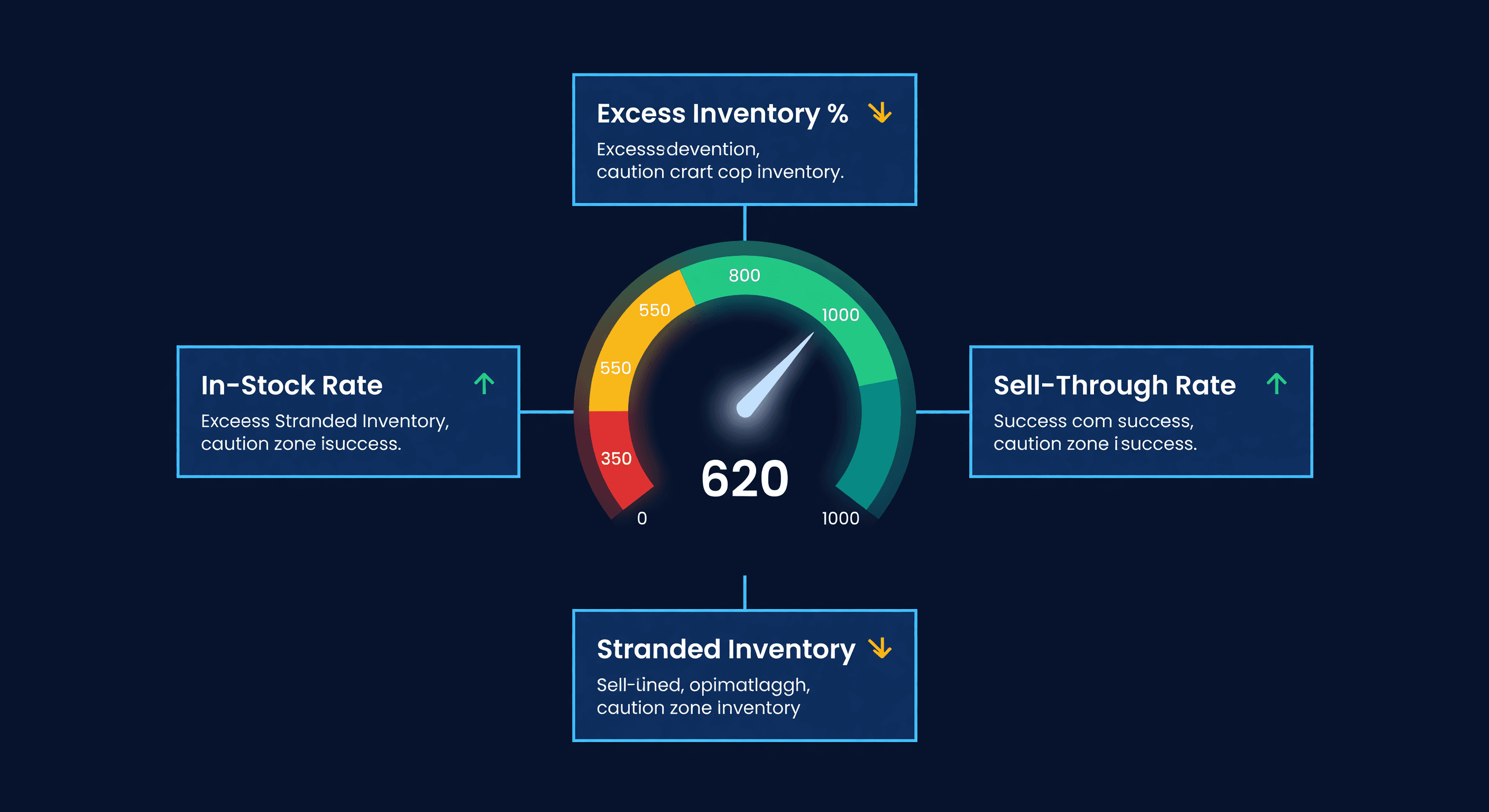
Amazon IPI Score: What It Is and How to Fix It
Your Amazon IPI score controls your FBA storage limits. Learn what the 4 factors actually measure, the score thresholds, and how to improve each one.
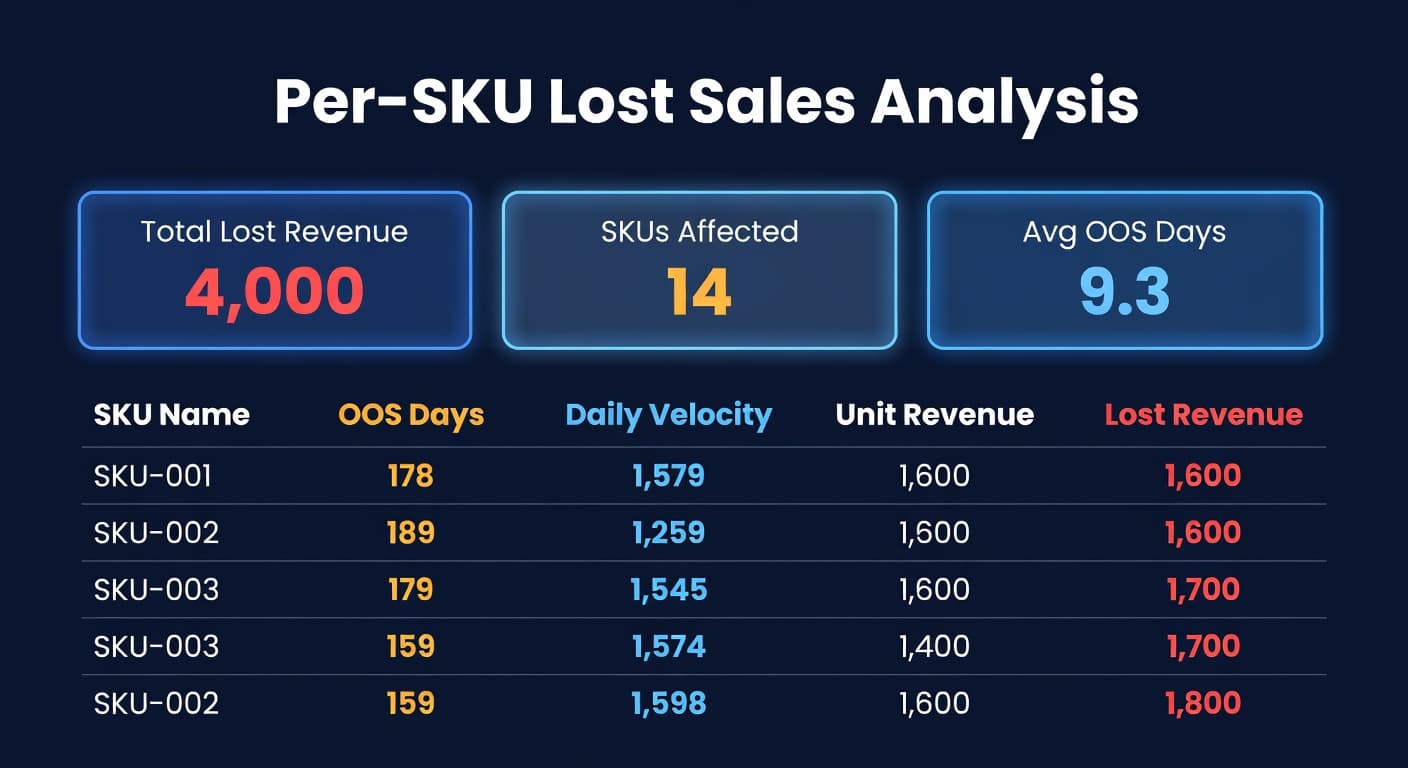
What Your Stockouts Actually Cost (Per-SKU)
Most sellers track what sold but not what didn't. Per-SKU lost sales analysis reveals the exact revenue each stockout costs.
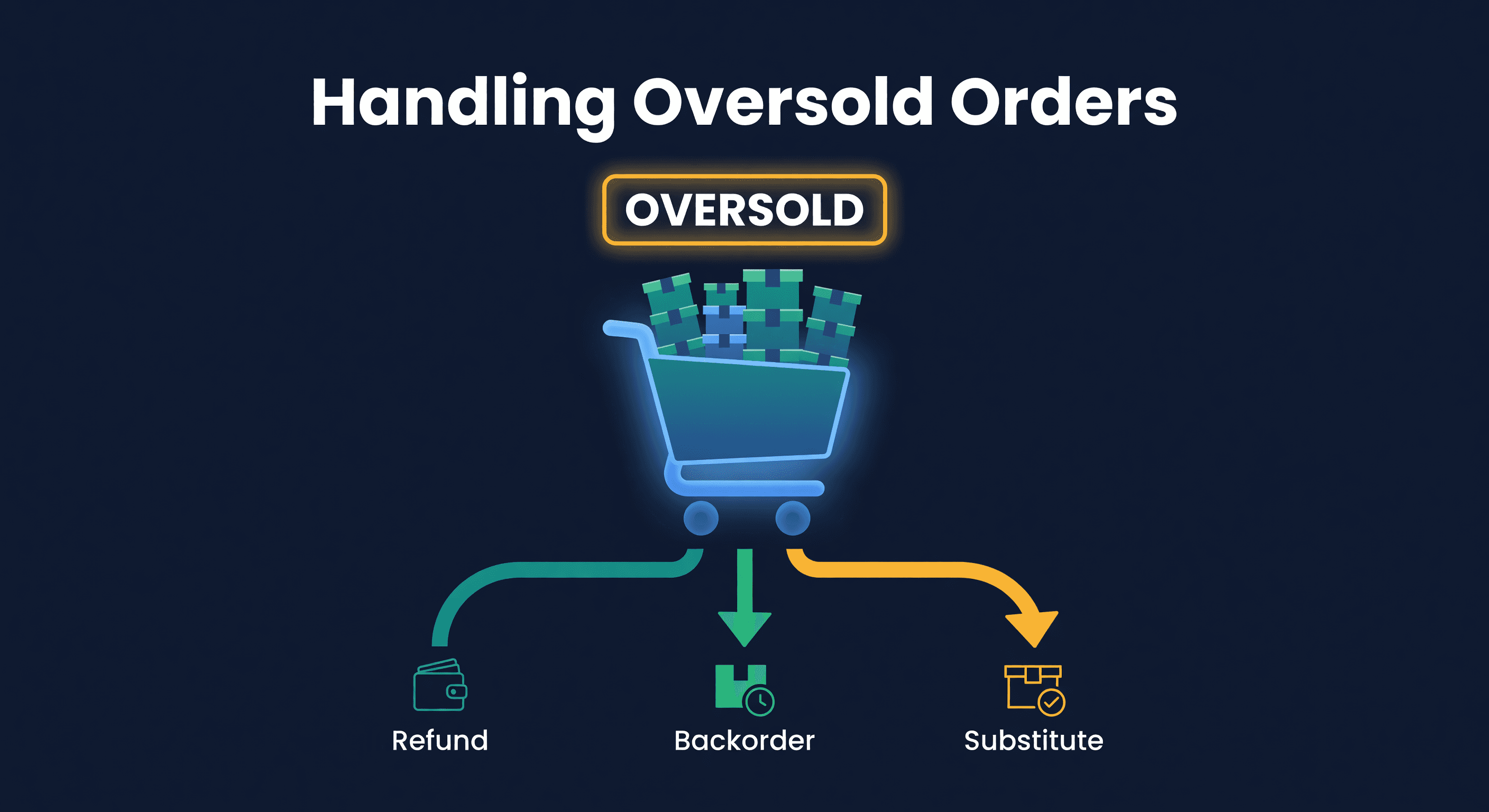
How to Handle Oversold Orders in E-commerce
Why overselling happens on multi-channel stores, what it costs you, and the prevention strategies that actually work, from buffer stock to real-time push sync.
