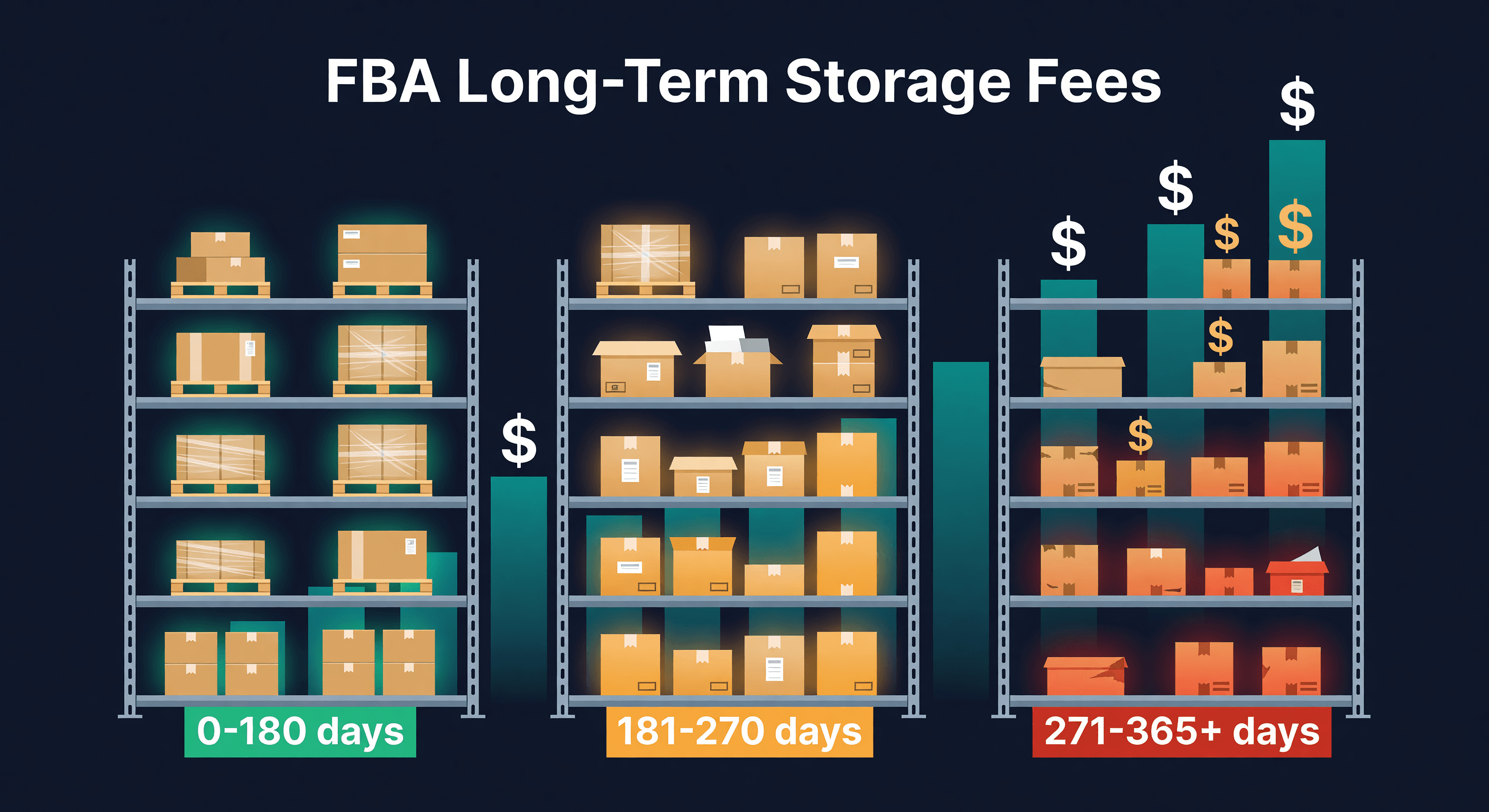
FBA Long-Term Storage Fees: How to Avoid Them in 2026
Key takeaway: Amazon charges aged inventory surcharges after 181 days, and the fees keep climbing through 456+ days. Long-term storage costs can exceed original product cost within 12 months. Remove or liquidate at-risk stock before the monthly assessment.
You Are Paying Amazon to Store Your Mistakes
Sending too much inventory to Amazon feels safe. You will not stock out, your listing stays active, Prime customers get fast delivery. But Amazon charges for that comfort, and the charges escalate the longer inventory sits.
I learned this the hard way with 400 units of a seasonal product that missed its window. Monthly storage fees are annoying. The aged inventory surcharge that kicks in at 181 days is the one that actually hurts. By month 12, the surcharge on those 400 units had exceeded what I paid the supplier for them.
FBA Fee Structure
Monthly Storage Fees (All Inventory)
| Period | Standard-Size | Oversize |
|---|---|---|
| January - September | $0.78/cu ft | $0.56/cu ft |
| October - December | $2.40/cu ft | $1.40/cu ft |
Q4 rates are roughly 2.5-3x higher because Amazon needs warehouse space for holiday volume.
Aged Inventory Surcharge (181+ Days)
Units stored longer than 180 days incur a surcharge on top of monthly storage:
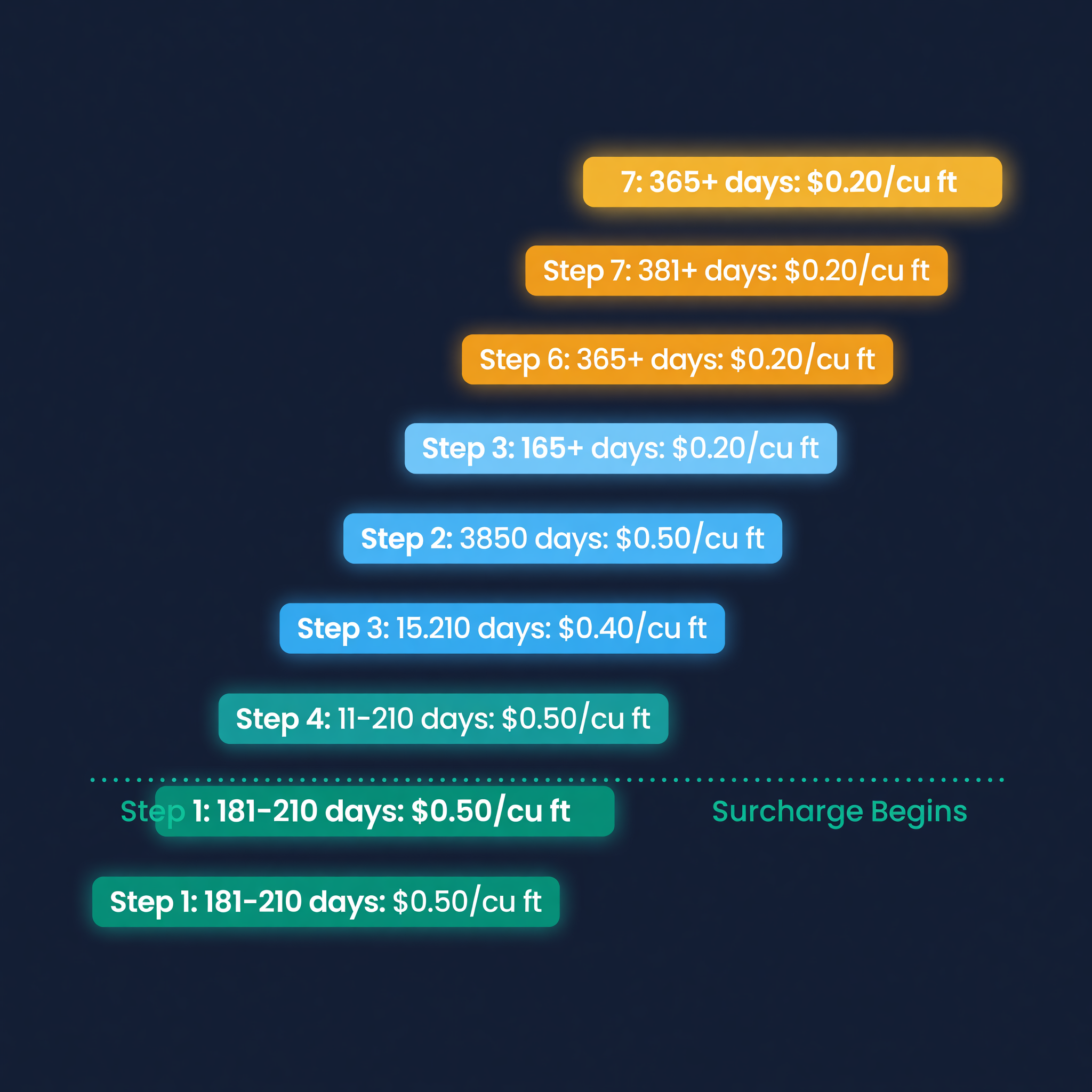
| Inventory Age | Surcharge per Cubic Foot | Surcharge per Unit (minimum) |
|---|---|---|
| 181-210 days | $0.50/cu ft | N/A |
| 211-240 days | $1.00/cu ft | N/A |
| 241-270 days | $1.50/cu ft | N/A |
| 271-300 days | $5.45/cu ft | N/A |
| 301-330 days | $5.70/cu ft | N/A |
| 331-365 days | $5.90/cu ft | N/A |
| 366-455 days | $6.90/cu ft | $0.30/unit |
| 456+ days | $7.90/cu ft | $0.35/unit |
For inventory aged 366+ days, Amazon charges whichever is greater: the per-cubic-foot rate or the per-unit minimum.
Example: 100 units at 0.25 cu ft each, aged 300 days:
Surcharge: 100 x 0.25 x $5.45 = $136.25/month
Monthly storage: 100 x 0.25 x $0.78 = $19.50/month
Total: $155.75/month ($1.56 per unit)
How Inventory Age Is Calculated
Amazon uses FIFO (first in, first out). The oldest units are counted first:
Shipment 1: 200 units received January 1
Shipment 2: 100 units received April 1
Sold: 150 units between January and July

Remaining on July 1:
- 50 units aged 181 days (from Shipment 1) - surcharge applies
- 100 units aged 91 days (from Shipment 2) - no surcharge
How to Identify At-Risk Inventory
In Seller Central, pull the FBA Inventory Age report (Reports > Fulfillment > Inventory Age). Then calculate days of supply for each SKU:
Days of Supply = FBA Units on Hand / Average Daily Sales
Our days of supply calculator runs this per SKU if you want to check your own numbers.
| Days of Supply | Risk Level | Action |
|---|---|---|
| Under 30 | Low (stockout risk) | Restock soon |
| 30-90 | Healthy | Monitor normally |
| 91-150 | Elevated | Plan to accelerate sales |
| 151-180 | High | Act now before surcharge |
| 181+ | Active surcharge | Remove, liquidate, or promote |
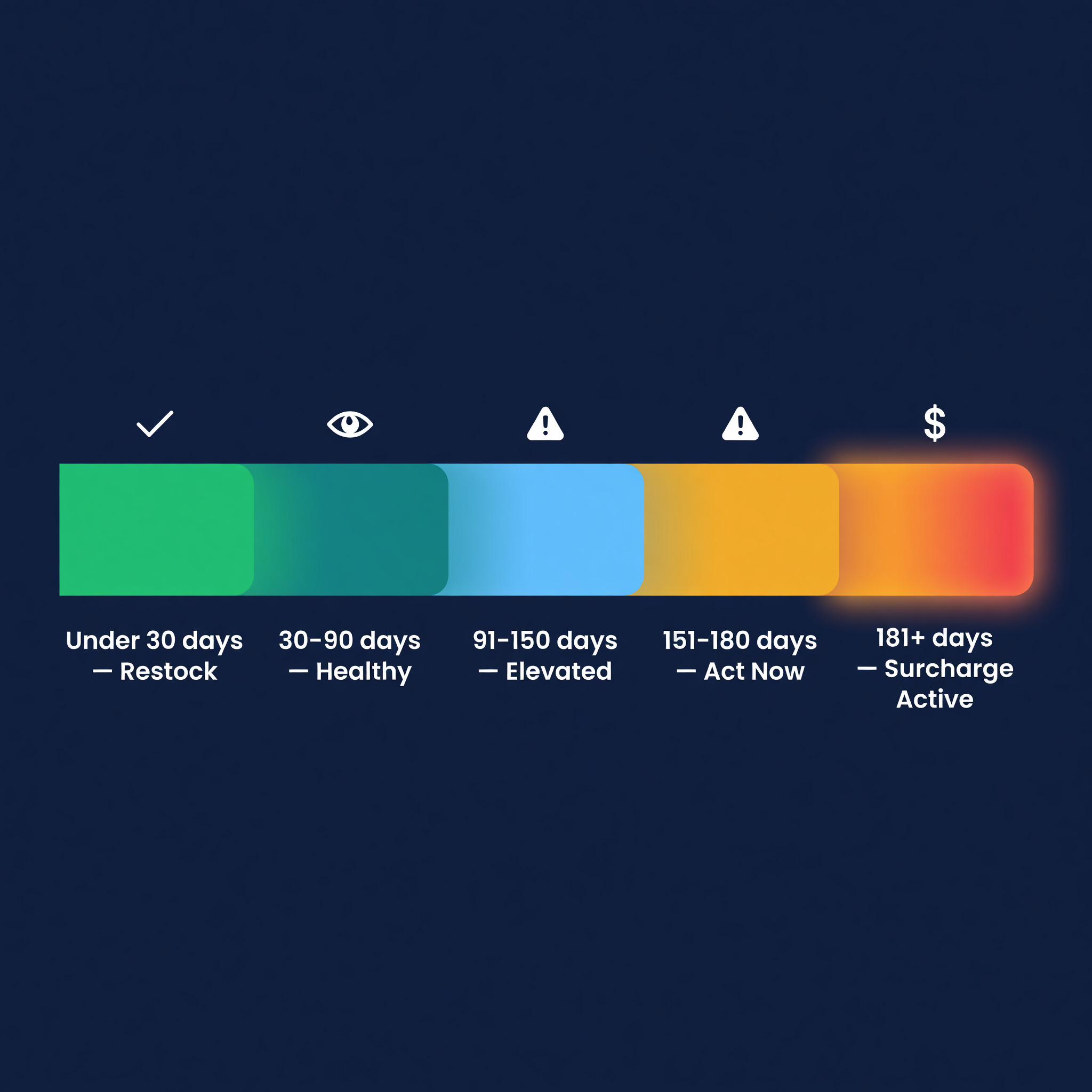
If you see the 91-180 day bracket growing month over month, you have 90 days to act before surcharges begin. That sounds like plenty of time. It is not, because the first two weeks usually go to denial.
The Removal vs. Storage Fee Math
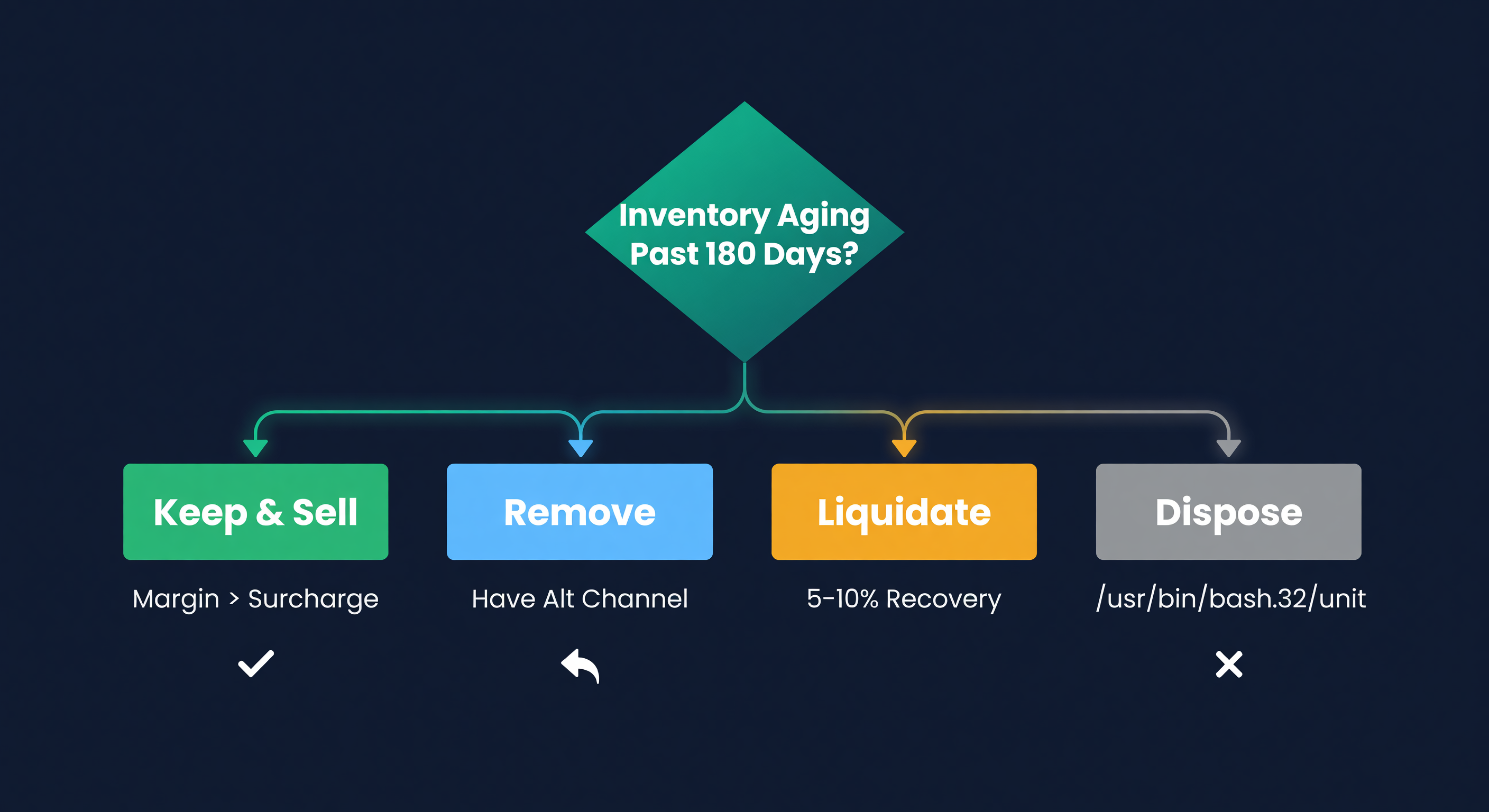
When inventory is aging, you have four options.
Option 1: Keep and sell through. Works when margin exceeds cumulative surcharges:
200 units, 2 sales/day, current age 160 days
Sell-through takes 100 days (units age to 260 days)
Estimated surcharges over sell-through: ~$228
Cost per unit: ~$1.14 - profitable if margin exceeds this
Option 2: Create a removal order. Amazon ships inventory back to you:
| Size Tier | Removal Fee per Unit |
|---|---|
| Standard-size | $0.97 |
| Oversize | $1.78 |
You get the inventory back and can sell it on Shopify, wholesale, or discount channels.
Option 3: Liquidation. Amazon sells to liquidation buyers at 5-10% of retail. Net recovery after fees is roughly $1-2 per unit on a $25 product.
Option 4: Disposal. Amazon destroys the inventory. Standard-size costs $0.32/unit. Zero recovery but cheapest to execute.
| Factor | Keep & Sell | Remove | Liquidate | Dispose |
|---|---|---|---|---|
| Product still sells | Required | Optional | N/A | N/A |
| Have alternate channel | N/A | Required | N/A | N/A |
| Unit margin > surcharge | Required | N/A | N/A | N/A |
| Maximizes recovery | If margin holds | If resellable | Partial | None |
Stop Aged Inventory Before It Starts
Right-Size FBA Shipments
| Sales Velocity | Recommended FBA Supply | Reasoning |
|---|---|---|
| 10+ units/day | 4-6 weeks | Fast sell-through, restock frequently |
| 3-9 units/day | 6-8 weeks | Balance availability and aging risk |
| 1-2 units/day | 4-6 weeks | Keep lean, accept some stockout risk |
| Under 1 unit/day | 2-4 weeks or FBM | Storage cost may exceed FBA benefit |
Act at 90 Days, Not 180
At 90 days you still have a full quarter before surcharges begin. Run promotions, lower prices 10-20%, increase PPC, or create removal orders for excess beyond 60 days of supply. We set our alerts at 90 days for exactly this reason.
Volume Discounts Are a Trap
Supplier discount for 1,000 units: saves $500
Storage surcharge on 600 excess units over 6 months: ~$900
Net result: lost $400
I see sellers fall for this constantly. The per-unit savings look good on the PO. They look terrible on the storage invoice six months later.
Use Proactive Removal Orders
Amazon needs 10-14 business days to process removals. Initiate at day 160 to clear units before the 181-day surcharge.
Monthly Assessment Calendar
The surcharge is assessed on the 15th of each month:
| Your Action | When |
|---|---|
| Run FBA Inventory Age report | 1st of each month |
| Identify units hitting 150+ days | 1st of each month |
| Create removal orders for excess | By the 1st (14 days before assessment) |
| Launch promotions on aging stock | Immediately when identified |
| Review previous month's surcharge | 16th-18th (after charge posts) |
Keeping FBA Lean
The manual version of this - pulling Inventory Age reports, calculating days of supply per SKU, cross-referencing velocity, deciding keep-vs-remove for each ASIN - takes hours every month. And most sellers only do it when they see the charge on their statement, which is already too late.
ReplenishRadar runs this math on every sync. The system flags SKUs with declining velocity that are on track to age past 180 days at current sell-through rates. When FBA inventory crosses the 90-day or 150-day mark, you get an alert - not a surprise fee. Transfer recommendations are sized to 4-6 weeks of actual velocity per SKU, so you stop sending three months of stock and hoping for the best. And when the numbers say removing is cheaper than storing, the system tells you that too.
Most sellers who get hit by long-term storage fees did not have a demand problem. They had a visibility problem.
Try ReplenishRadar free for 14 days -> and see which FBA SKUs are aging toward surcharges right now.
Related Reading:
Frequently Asked Questions
Get notified when it matters
Amazon and Shopify change the rules constantly. We'll email you when something affects your business.
See what your inventory is really doing
Doing $5M+ in revenue? Talk to our team
Related Posts
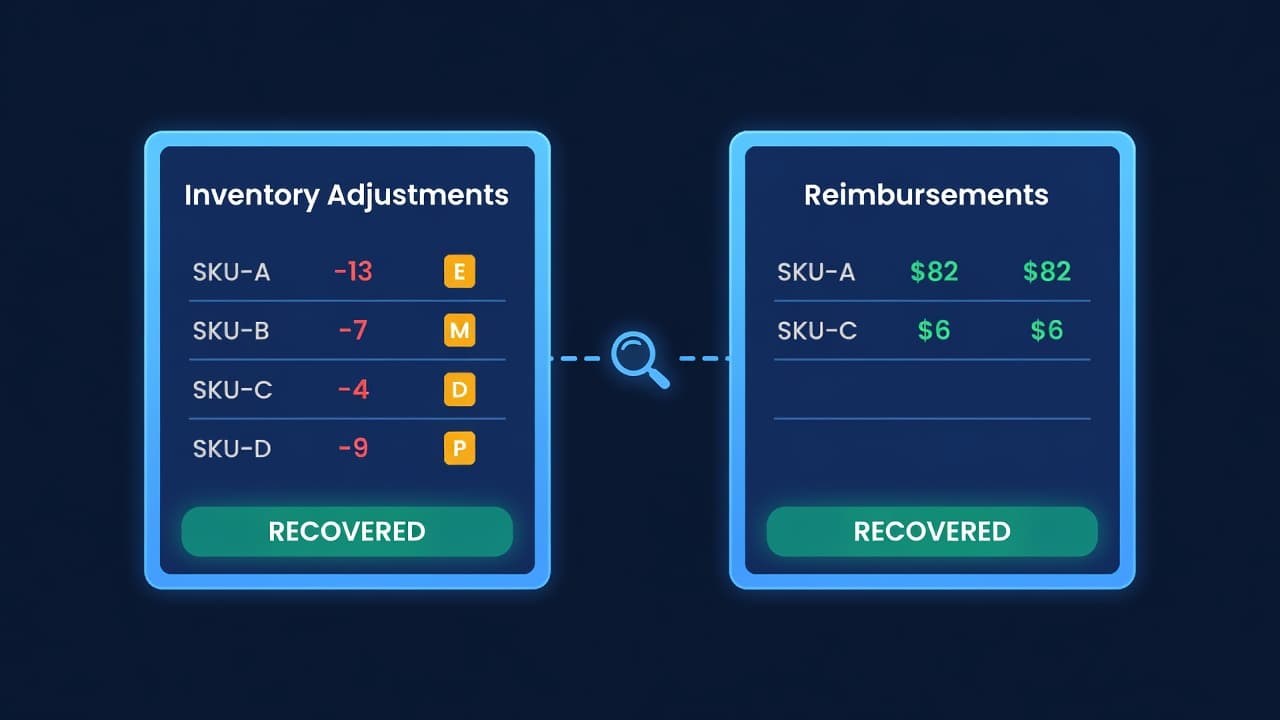
Amazon Lost Inventory: How to Get Reimbursed
How to find lost or damaged FBA inventory, file reimbursement claims with Amazon, and stop leaving 1-3% of your FBA revenue on the table.
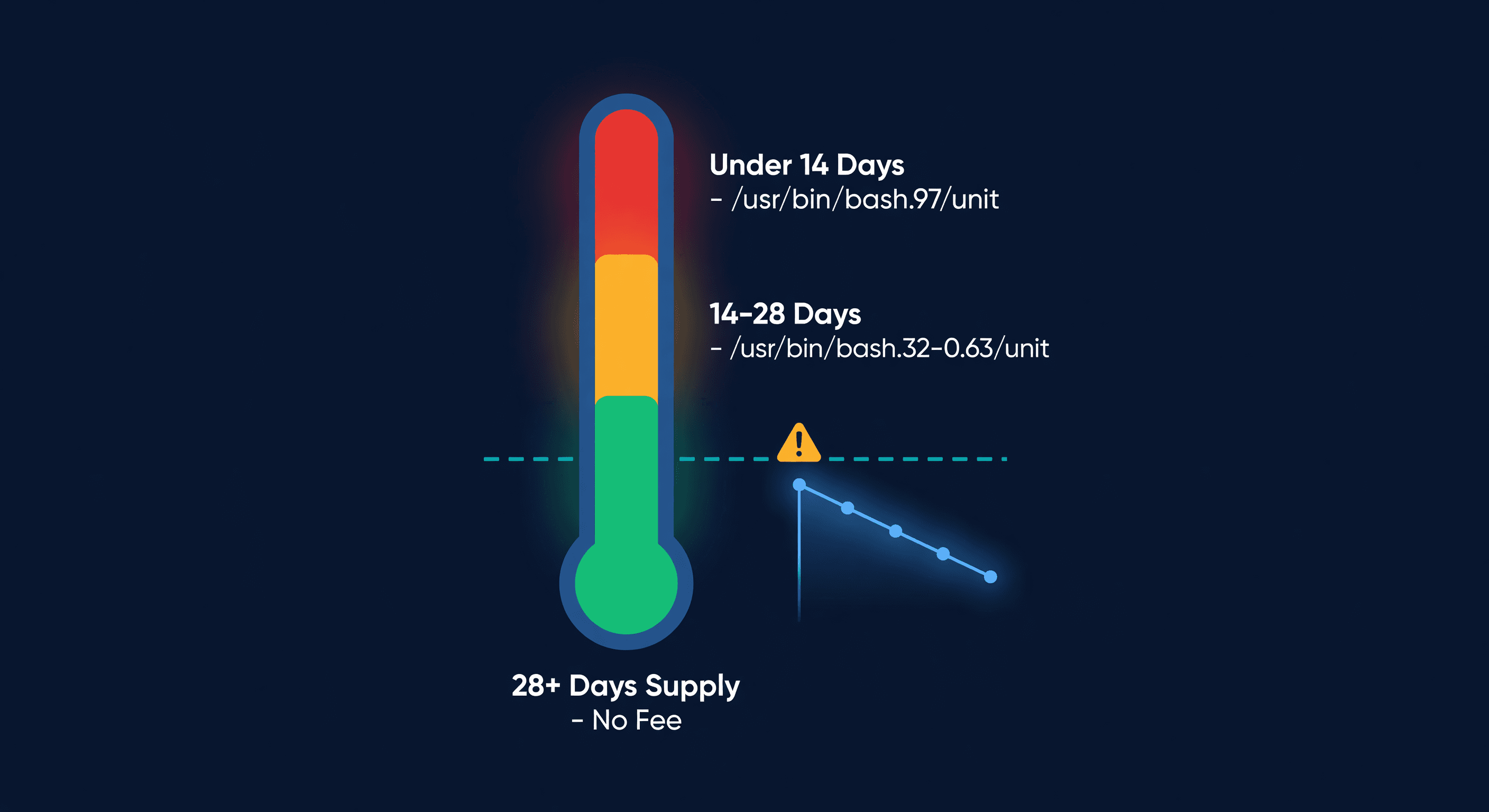
Amazon Low-Inventory-Level Fee Explained
How Amazon's low-inventory-level fee works, which products are exempt, fee amounts by days of supply, and how to avoid it without triggering storage fees.
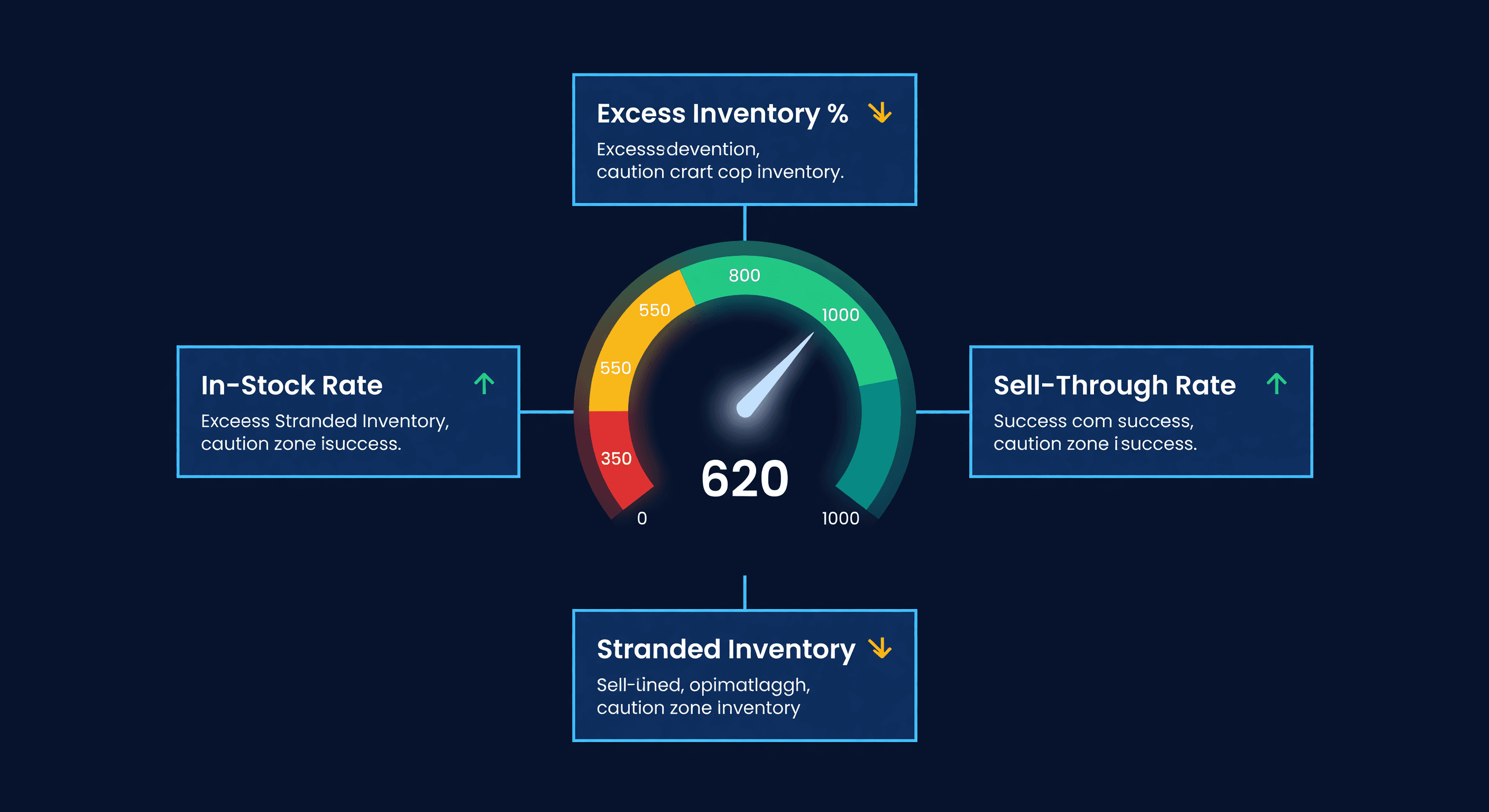
Amazon IPI Score: What It Is and How to Fix It
Your Amazon IPI score controls your FBA storage limits. Learn what the 4 factors actually measure, the score thresholds, and how to improve each one.
