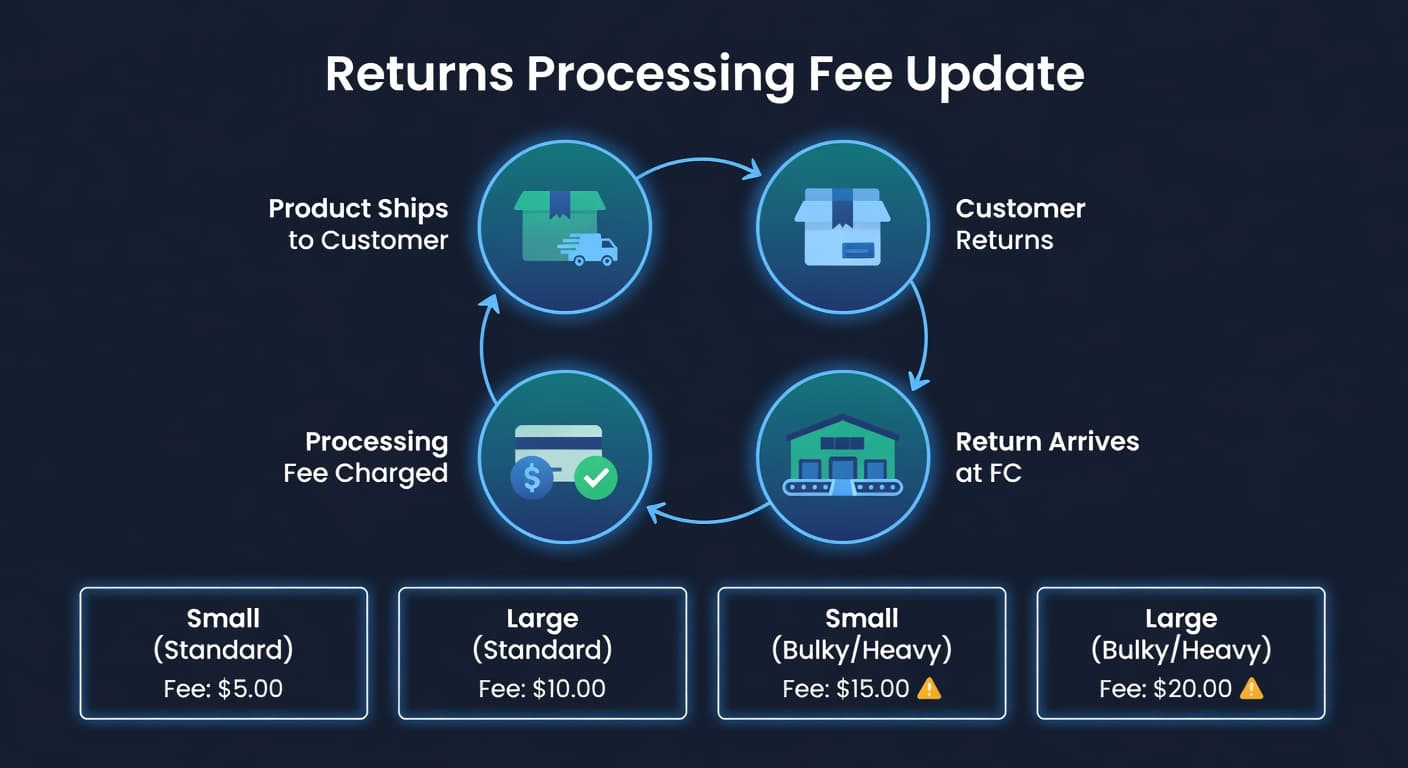
Amazon Returns Processing Fee 2026: How Much It Costs + How to Avoid

Updated May 2026 with the current rate table and category list.
TL;DR: Amazon Returns Processing Fee at a Glance
- How much: $1.78 to $6.02 per returned unit, depending on size tier
- Who pays: FBA sellers in apparel, shoes, watches, jewelry, luggage, handbags, and sunglasses with return rates above Amazon's category threshold (roughly 20-22% in apparel)
- When it hits: Per returned unit, not per unit sold
- How to avoid it: Get your return rate below the category threshold by improving listings, sizing, and photos - or move high-return SKUs to FBM
| Size Tier | 2026 Rate |
|---|---|
| Small standard | $1.78 |
| Large standard (1 lb) | $2.12 |
| Large standard (2 lb) | $2.48 |
| Small oversize | $3.95 |
| Large oversize | $6.02 |
Amazon Now Charges Sellers for Having High Return Rates
Amazon expanded its returns processing fee in September 2025, bringing more product categories under the policy and adjusting the per-unit rates upward. If you sell in categories with high return rates - and especially if your individual ASINs have above-average returns - this hits your margins directly.
The returns processing fee was originally introduced for apparel and shoes in 2024. The idea was straightforward: categories with high return rates impose higher costs on Amazon's reverse logistics, and Amazon does not want to absorb those costs. So they charge sellers a per-unit fee on returned items when the return rate exceeds a category-level threshold.
What Changed in September 2025
Three things.
More categories. Amazon added handbags, luggage, watches, jewelry, and sunglasses to the returns processing fee program. These categories join apparel and shoes, which were already covered. If you sell in any of these categories through FBA, you are now subject to the fee.
Higher rates. Per-unit rates went up across the board.
| Size Tier | Previous Rate | Updated Rate | Increase |
|---|---|---|---|
| Small standard | $1.51 | $1.78 | +$0.27 |
| Large standard (1 lb) | $1.78 | $2.12 | +$0.34 |
| Large standard (2 lb) | $2.12 | $2.48 | +$0.36 |
| Small oversize | $3.41 | $3.95 | +$0.54 |
| Large oversize | $5.15 | $6.02 | +$0.87 |
Lower thresholds for some categories. Amazon adjusted the return rate thresholds downward in several categories. In apparel, the threshold moved from roughly 25% to 20-22% for some sub-categories. This means more sellers in those categories will exceed the threshold and start paying the fee.
The Real Impact: A Worked Example
Take an apparel seller with a $25 average selling price and a 22% return rate on a large standard item. They sell 1,000 units per month.
- Returned units per month: 220
- Returns processing fee per unit: $2.48
- Monthly returns processing cost: $546
- Annual cost: $6,552
That is $6,552 per year on a single SKU from returns alone. Before the update, this seller was below the threshold and paid zero. The threshold change pushed them into fee territory, and the higher per-unit rate made it sting.
Now multiply that across 15-20 ASINs in the same category. I have seen apparel sellers looking at $40,000-$80,000 in annual returns processing fees after the September update. For a business doing $1M in revenue, that is a 4-8% margin hit from a single policy change.
What To Do About It
Check every ASIN's return rate. Not the category average. The ASIN-specific rate. You might have 80% of your catalog well below the threshold and 20% dragging you into fee territory. The fix might be as simple as improving the listing on your high-return products.
Improve your listings. Most returns in apparel, shoes, and accessories happen because the product did not match expectations. Better size charts, more accurate photos (no creative lighting that distorts colors), honest descriptions. I know a shoe seller who cut returns from 28% to 19% by adding a "how this shoe fits" comparison table. That 9-point drop moved them below the threshold entirely.
Factor returns into your inventory plan. This is the piece sellers miss. If 20% of your units come back, you need 20% more inventory in the pipeline to maintain the same available-for-sale quantity. Your reorder point and safety stock calculations should account for return rates, not just forward demand. If you want to see how much a stockout on a high-return SKU actually costs, run the numbers through our stockout calculator.
Consider which SKUs still belong in FBA. If a product has a 30% return rate and thin margins, the combination of fulfillment fees, returns processing fees, and restocking logistics might make FBM a better option. At least with FBM, you control the return process and don't pay Amazon's fee on top of it.
How Returns Affect Inventory Forecasting
Returns mess with demand signals. If you sell 1,000 units and 200 come back, your net demand is 800. But the 200 returned units re-enter your FBA inventory (if sellable), which inflates your on-hand count. Without adjusting for this, your forecast overestimates true demand and your inventory levels creep up.
ReplenishRadar accounts for return rates in demand calculations. Our per-SKU forecasting models look at net sales, not gross shipments, so your reorder suggestions reflect what customers actually kept. For categories with high return rates, this distinction is the difference between carrying the right amount of inventory and slowly drowning in returned stock.
Try ReplenishRadar free for 14 days
Related Reading:
- Amazon FBA vs FBM Inventory Planning
- Amazon FBA Fee Increases for 2026
- How to Calculate True Landed Cost
- 7 Inventory Mistakes That Kill Cash Flow
Frequently Asked Questions
Get notified when it matters
Amazon and Shopify change the rules constantly. We'll email you when something affects your business.
See what your inventory is really doing
Doing $5M+ in revenue? Talk to our team
Related Posts
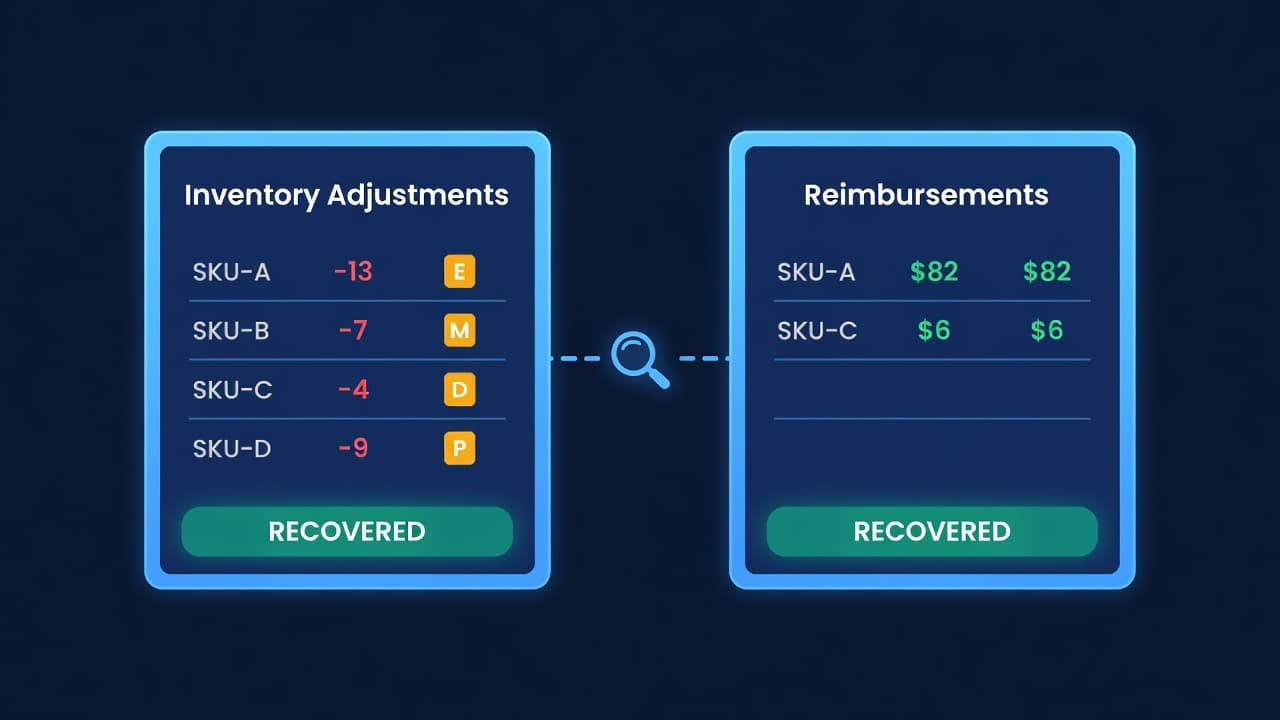
Amazon Lost Inventory: How to Get Reimbursed
How to find lost or damaged FBA inventory, file reimbursement claims with Amazon, and stop leaving 1-3% of your FBA revenue on the table.
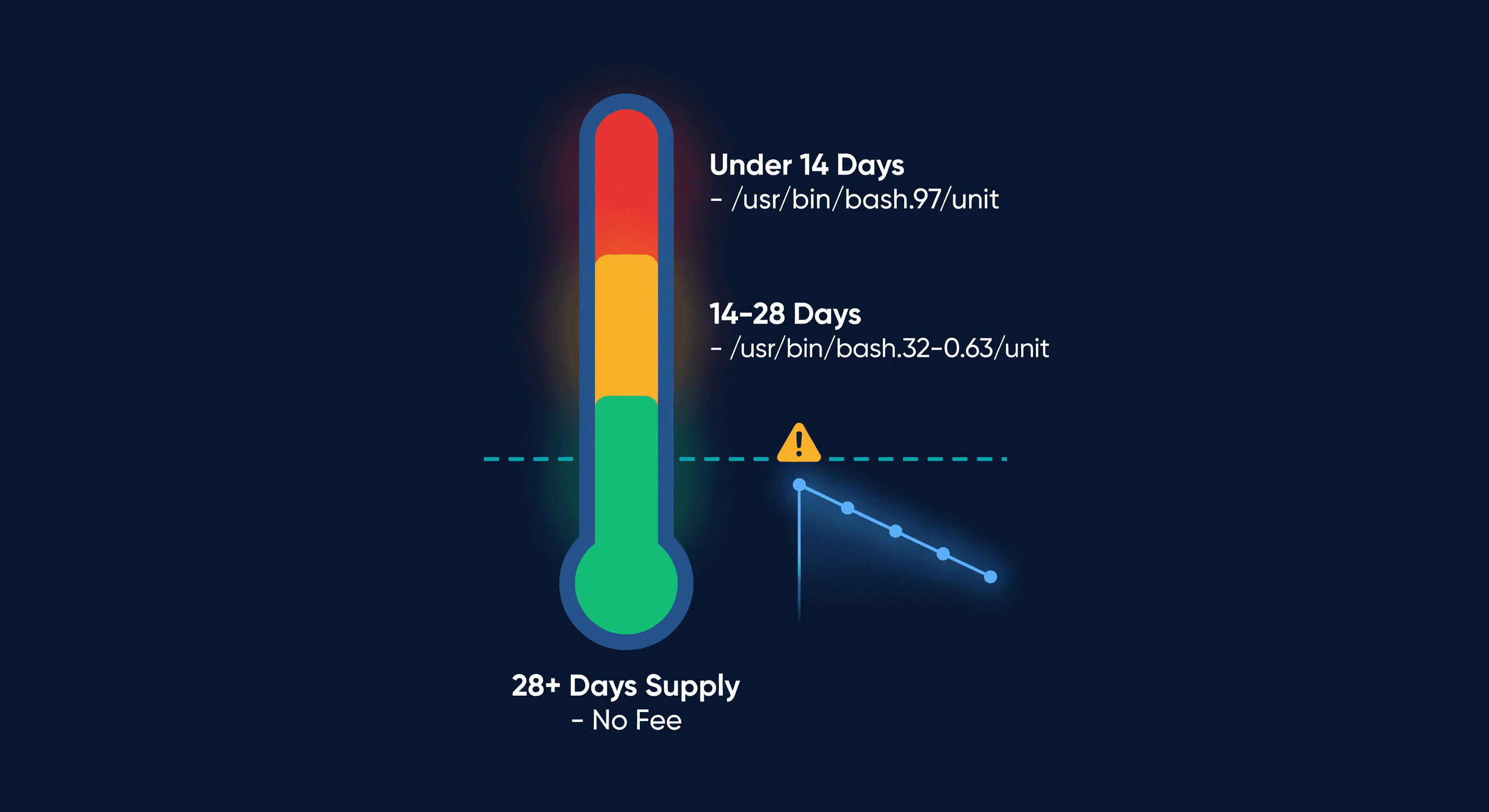
Amazon Low-Inventory-Level Fee Explained
How Amazon's low-inventory-level fee works, which products are exempt, fee amounts by days of supply, and how to avoid it without triggering storage fees.
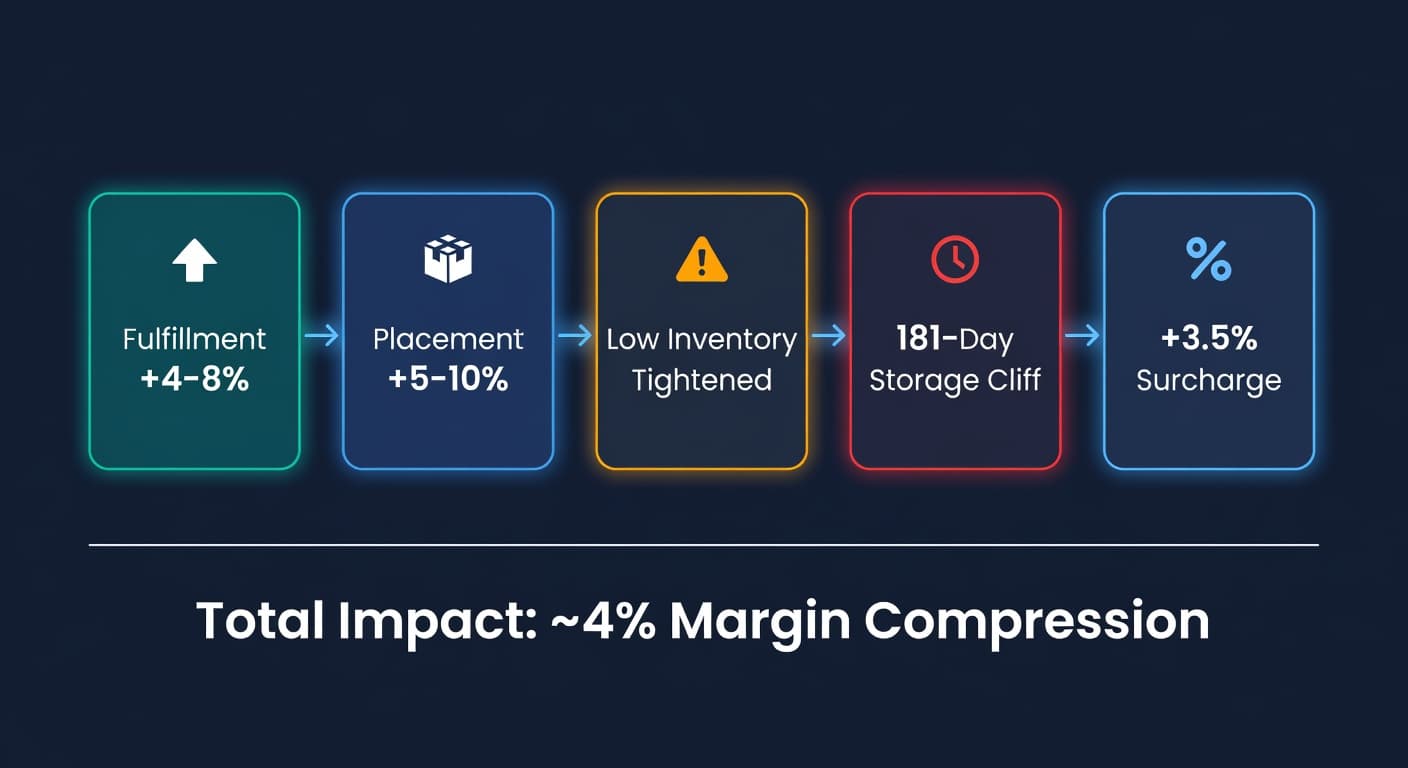
FBA 2026 Fee Survival Guide for Small Sellers
Every 2026 FBA fee change in one place, with mitigation math for sellers doing $50K-$500K in annual FBA revenue.
