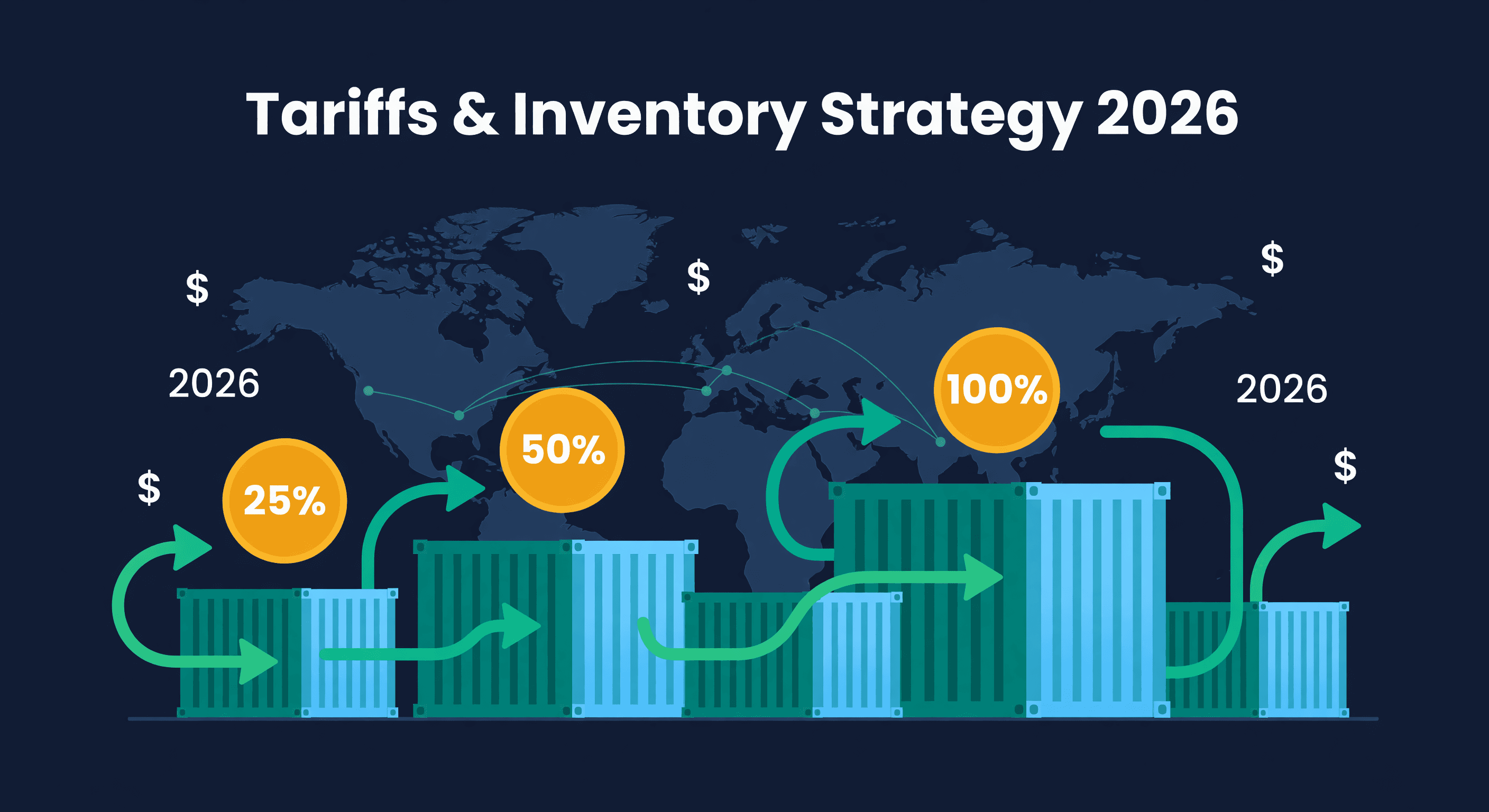
Tariffs and Inventory Strategy in 2026
Key takeaway: Section 301 tariffs add 25-100% to landed cost for China-sourced goods. Pre-buying ahead of tariff increases only pays off if you can sell through the extra stock within 4-6 months. Otherwise, carrying costs eat the tariff savings.
I paid $14,700 in tariffs last quarter. That is not a line item I budgeted for when I first started importing. It is now my fourth-largest expense after COGS, Amazon fees, and shipping. If you source from China - and roughly 60% of Amazon third-party sellers do - tariffs are not a policy abstraction. They are a cost-per-unit number that changes your buying math.
This is not a political post. I do not care whether tariffs are good policy. I care about how they change your inventory decisions. The math is different in 2026 than it was in 2023, and a lot of sellers have not updated their spreadsheets.
Where Tariffs Stand Right Now
Three things matter for e-commerce importers right now.
Section 301 tariffs on China. Originally 25% on most goods, with rates increasing through 2025 and 2026. Some categories - semiconductors, EVs, steel, aluminum, batteries - now face 50-100% tariffs. Consumer goods that most e-commerce sellers import (household items, apparel, electronics accessories, beauty products) generally sit in the 25-50% range depending on HTS classification.
De minimis threshold changes. The $800 de minimis exemption - which let small shipments enter the US duty-free - has been eliminated for Chinese-origin goods as of May 2025. This hit the dropshipping and direct-from-China fulfillment model hard. Every shipment now gets assessed duties and the new per-item processing fees regardless of value.
Tariff uncertainty. Rates have changed multiple times in the past 18 months. The unpredictability itself is a cost. You cannot do a 12-month inventory plan when the tariff rate might change next quarter. I have had three landed cost calculations go stale before the shipment even arrived.
How Tariffs Change Your Landed Cost
Landed cost is what a unit actually costs you by the time it is in your warehouse or FBA. Tariffs slot in between FOB price and your door.
Landed Cost = FOB Price + Freight + Insurance + Tariff Duty + Customs Brokerage + Last Mile
Here is what a 25% tariff does to a real product:
| Cost component | Before tariff | With 25% tariff | With 50% tariff |
|---|---|---|---|
| FOB price | $8.00 | $8.00 | $8.00 |
| Freight (per unit) | $1.20 | $1.20 | $1.20 |
| Insurance | $0.10 | $0.10 | $0.10 |
| Tariff duty | $0.00 | $2.00 | $4.00 |
| Customs brokerage (per unit) | $0.15 | $0.15 | $0.15 |
| Last mile to FBA | $0.80 | $0.80 | $0.80 |
| Total landed | $10.25 | $12.25 | $14.25 |
That 25% tariff added $2.00 per unit - a 19.5% increase in total landed cost. At 50%, it is $4.00 per unit, a 39% increase. On 1,000 units per month, the 25% tariff costs you $24,000 per year. Real money.
The tariff is calculated on the declared value (typically FOB price), not on your total landed cost. But the cascading effect matters: higher landed cost means you need either higher selling prices or lower margins. Both affect how much inventory you should carry and how aggressively you should reorder.
The Pre-Buy Decision
When a tariff increase is announced with a future effective date, you face a decision: order extra inventory now at the current rate, or keep your normal cadence and pay more later.
The math is straightforward.
Pre-buy savings per unit = New tariff cost - Current tariff cost Pre-buy carrying cost per unit per month = Unit landed cost x (Annual carrying rate / 12)
If tariffs are going from 25% to 50% on your $8 FOB product, you save $2.00 per unit by buying now. Your carrying cost at 25% annual rate on a $12.25 landed cost unit is about $0.26 per month.
Break-even = Savings / Monthly carrying cost = $2.00 / $0.26 = 7.7 months
If you can sell the pre-buy inventory within 7 months, you come out ahead. Beyond that, carrying costs eat the tariff savings. That calculation assumes you have the cash and the storage space. Most sellers do not have 7 months of extra working capital sitting around.
My rule: pre-buy only if you can sell through the extra inventory within 4 months. The break-even math might say 7 months, but it does not account for demand uncertainty, potential price erosion, or the opportunity cost of that cash. Four months gives you a margin of safety.
| Pre-buy quantity | Extra months of stock | Carrying cost total | Tariff savings total | Net benefit |
|---|---|---|---|---|
| 1,000 units (1 month) | 1 | $260 | $2,000 | +$1,740 |
| 3,000 units (3 months) | 3 | $2,340 | $6,000 | +$3,660 |
| 5,000 units (5 months) | 5 | $6,500 | $10,000 | +$3,500 |
| 7,000 units (7 months) | 7 | $12,740 | $14,000 | +$1,260 |
| 10,000 units (10 months) | 10 | $26,000 | $20,000 | -$6,000 |
Notice how the net benefit peaks around 3 months of extra stock and then declines. At 10 months, you are actually losing money. The carrying cost curve is steeper than it looks because you are paying to hold all those units for the entire duration, not just the marginal month.
Supplier Diversification
The other response to tariffs is sourcing from countries with lower or zero duty rates. Vietnam, India, Mexico, Turkey, and Indonesia are the most common alternatives to China for consumer goods.
This sounds simple. It is not.
Finding a new supplier takes 2-4 months of sampling and negotiation. Qualifying them (quality, consistency, capacity) takes another 2-3 months of trial orders. Shifting meaningful volume takes 6-12 months. I started diversifying out of China in early 2025, and it took until late 2025 to get my second supplier to a point where I trusted them with 40% of my volume.
A few things I learned the hard way:
The per-unit cost is usually higher outside China. My Vietnamese supplier quotes 15-20% more than my Shenzhen supplier for equivalent products. But after the 25% tariff, the Vietnamese product lands cheaper. Do the full landed cost calculation, not just the FOB comparison.
Lead times change. My China supplier ships in 35 days. My Vietnam supplier ships in 45 days. That extra 10 days means higher safety stock, which means more capital tied up. The tariff savings might partially disappear into the bigger inventory buffer.
Quality varies more than you expect. My first three samples from Vietnam were noticeably different from my China supplier - not worse, just different. Packaging, finish, tolerances. It took two rounds of revisions and a QC visit to get consistency. Budget for this. A $2,000 trip to inspect a factory is cheap compared to receiving 5,000 units that do not match your listing photos.
Trans-shipping is illegal. Some brokers offer to route Chinese goods through Vietnam or another country to avoid tariffs. US Customs and Border Protection investigates this aggressively. The penalties include seizure of goods plus fines up to 4x the duty owed. Do not do it. A legitimate supplier in the alternative country needs to perform "substantial transformation" of the product - meaning real manufacturing, not just relabeling.
HTS Classification: The Tariff You Might Be Overpaying
Every product imported into the US gets a Harmonized Tariff Schedule (HTS) code. The code determines the duty rate. And here is what most sellers do not realize: classification is not always obvious, and different codes carry very different rates.
A silicone kitchen spatula might be classified as "kitchenware of plastics" (lower rate) or "articles of silicone rubber" (higher rate). A phone case could be "telephone accessories" or "articles of plastic." The difference can be 5-15 percentage points in duty.
This is not fraud. HTS classification is a legitimate process, and many products have defensible arguments for multiple codes. A good customs broker will review your classifications and flag opportunities. I reclassified two products last year and saved $8,200 annually in duties without changing suppliers or products.
The investment: a customs broker consultation costs $500-$2,000. If you import more than $50,000/year, the ROI is almost always positive.
How Tariff Uncertainty Affects Safety Stock
Predictable costs are manageable. Unpredictable costs are dangerous. Tariff uncertainty creates a specific inventory problem: the cost of being wrong changes in both directions.
If you stock out and need to reorder, the reorder might happen at a higher tariff rate. Your margin on those units is worse than planned. If you overstock in anticipation of an increase that does not happen, you are sitting on expensive inventory.
I have adjusted my safety stock approach for tariff-sensitive SKUs. Where I would normally use a Z-score of 1.65 (95% service level), I bump it to 1.88 (97%) on anything sourced from China. That is roughly 10-15% more safety stock. The extra carrying cost is insurance against getting caught on the wrong side of a tariff change with zero inventory.
This is not a permanent adjustment. When tariff rates stabilize - if they stabilize - I will revert to normal safety stock levels. The buffer is a response to uncertainty, not to the tariff rate itself.
Tracking Landed Cost Across Suppliers
Once you have suppliers in multiple countries, your landed cost per SKU is no longer a single number. The same product from two different suppliers has two different landed costs, two different lead times, and two different tariff exposures.
We built ReplenishRadar's supplier management to handle exactly this situation. You enter each supplier with their country of origin, lead time, and cost. When tariff rates change, you update the duty rate in one place and the landed cost recalculates across every SKU tied to that supplier. The system also tracks lead time per supplier from your actual PO history, so if your Vietnam supplier is consistently slower than quoted, your reorder points adjust before you stock out. No spreadsheet with twelve tabs and a pivot table that breaks when someone adds a column.
Try ReplenishRadar free for 14 days ->
What to Do This Quarter
If you import from China and have not reviewed your tariff exposure in the past 6 months, here is the short list.
Pull your customs entry summaries for the past year. Add up total duties paid. Divide by total COGS. That percentage is your effective tariff rate. If it is above 15%, tariff strategy is worth your time.
Get a customs broker to review your HTS classifications. One consultation. Budget $1,000 and expect to save 3-5x that annually if you are importing more than $50K/year.
Run the pre-buy math on your top 10 SKUs by volume before any announced rate changes take effect. Use 4 months as your maximum pre-buy horizon.
Start the conversation with one alternative supplier outside China. You do not have to move volume today, but having a qualified backup takes 6+ months to establish. The sellers who diversified in 2024 are in a much better position right now than the ones who are starting in 2026.
Tariffs are not going away. The political momentum behind onshoring and trade rebalancing is bipartisan, and the rates have only moved in one direction. Build the assumption of 25%+ duties into your pricing model permanently. If rates drop, that is margin upside. If they rise again, you are already prepared.
Related Reading:
Frequently Asked Questions
Get notified when it matters
Amazon and Shopify change the rules constantly. We'll email you when something affects your business.
See what your inventory is really doing
Doing $5M+ in revenue? Talk to our team
Related Posts
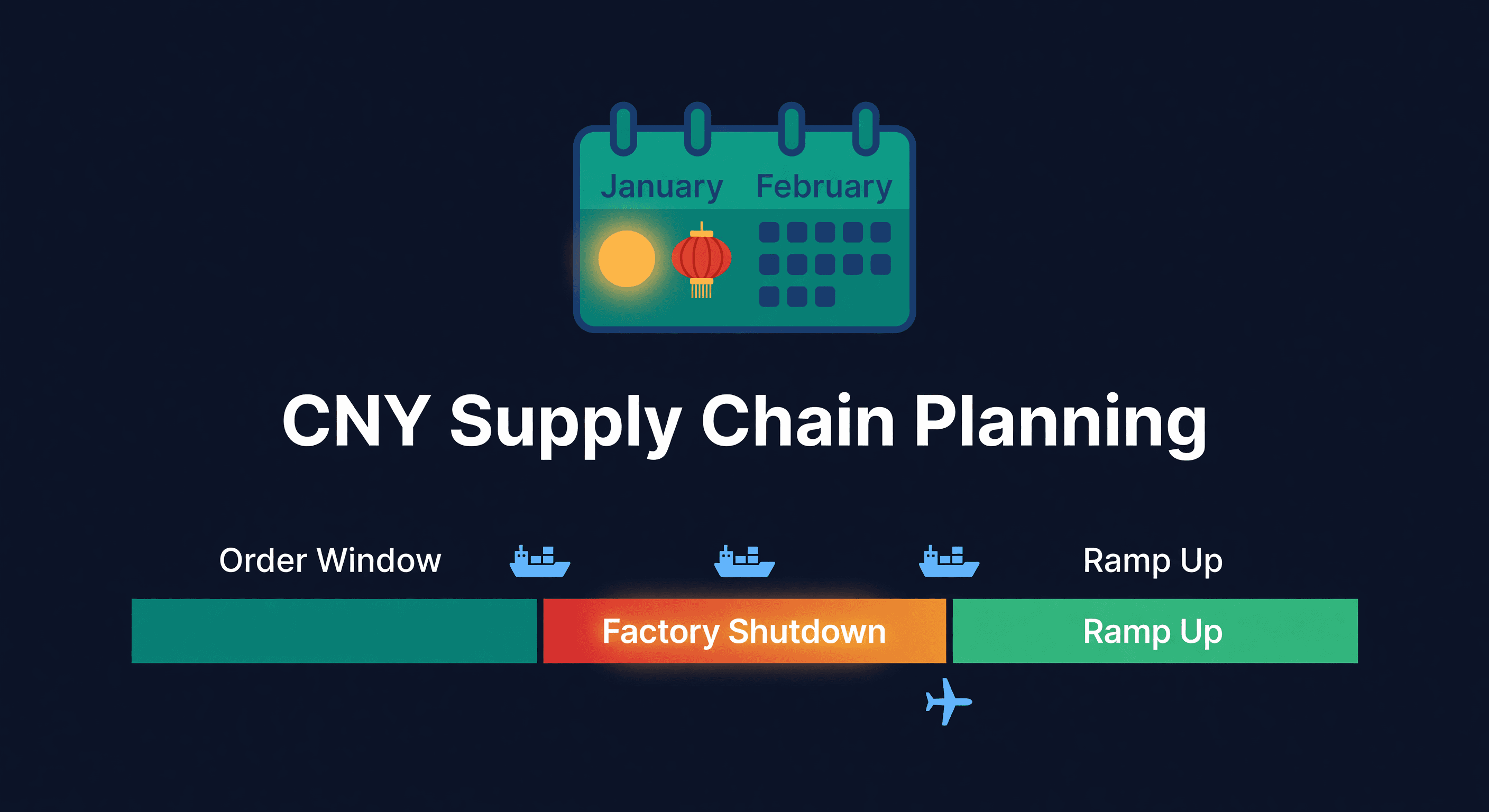
Chinese New Year Supply Chain Planning Guide
How to plan inventory around Chinese New Year factory shutdowns. Timelines, buffer calculations, and the mistakes that leave sellers out of stock for 6 weeks.
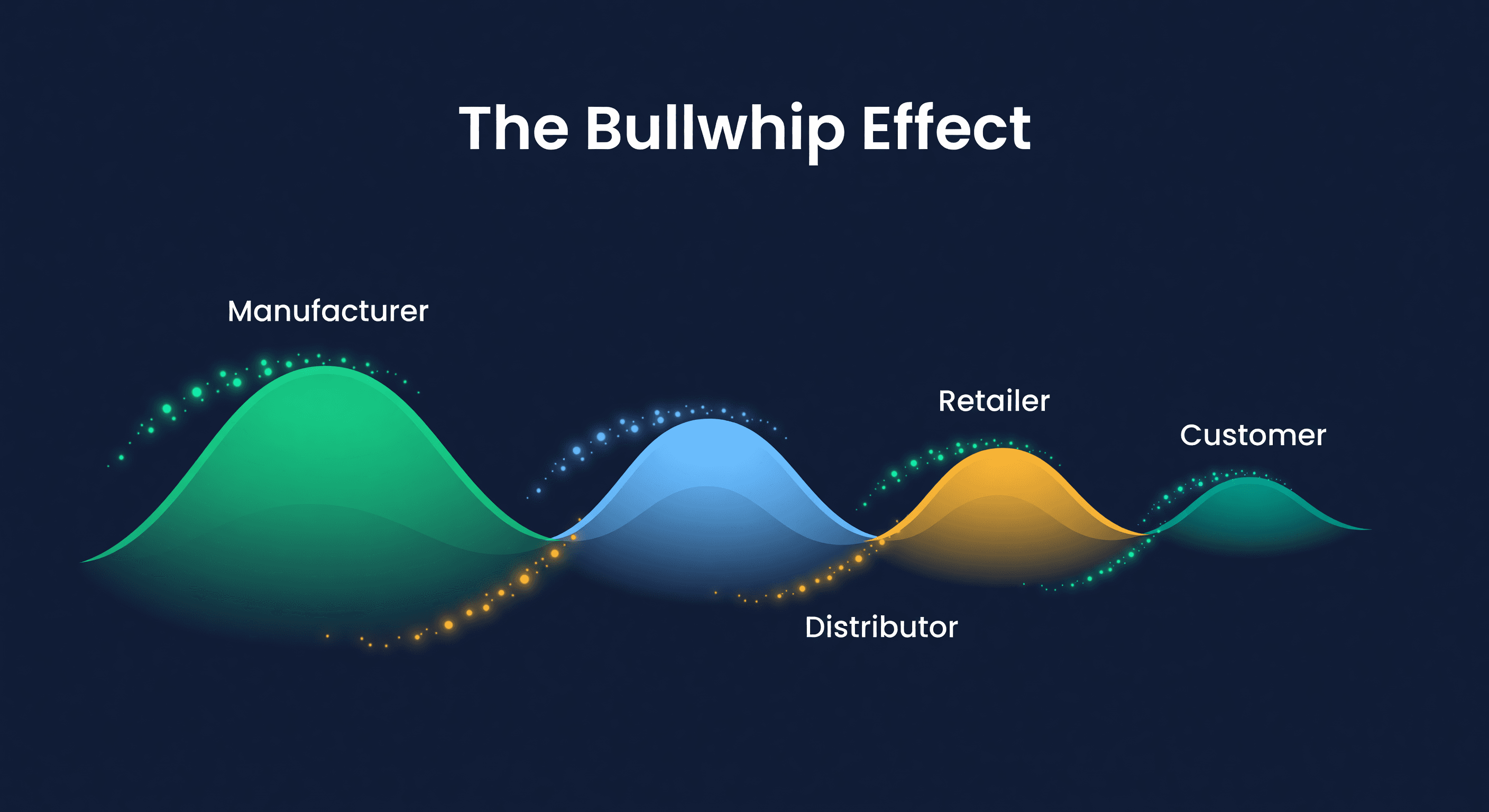
The Bullwhip Effect in E-commerce
How a 20% demand spike becomes a 60% order increase upstream. What the bullwhip effect is, why it happens, and how to stop amplifying demand signals.
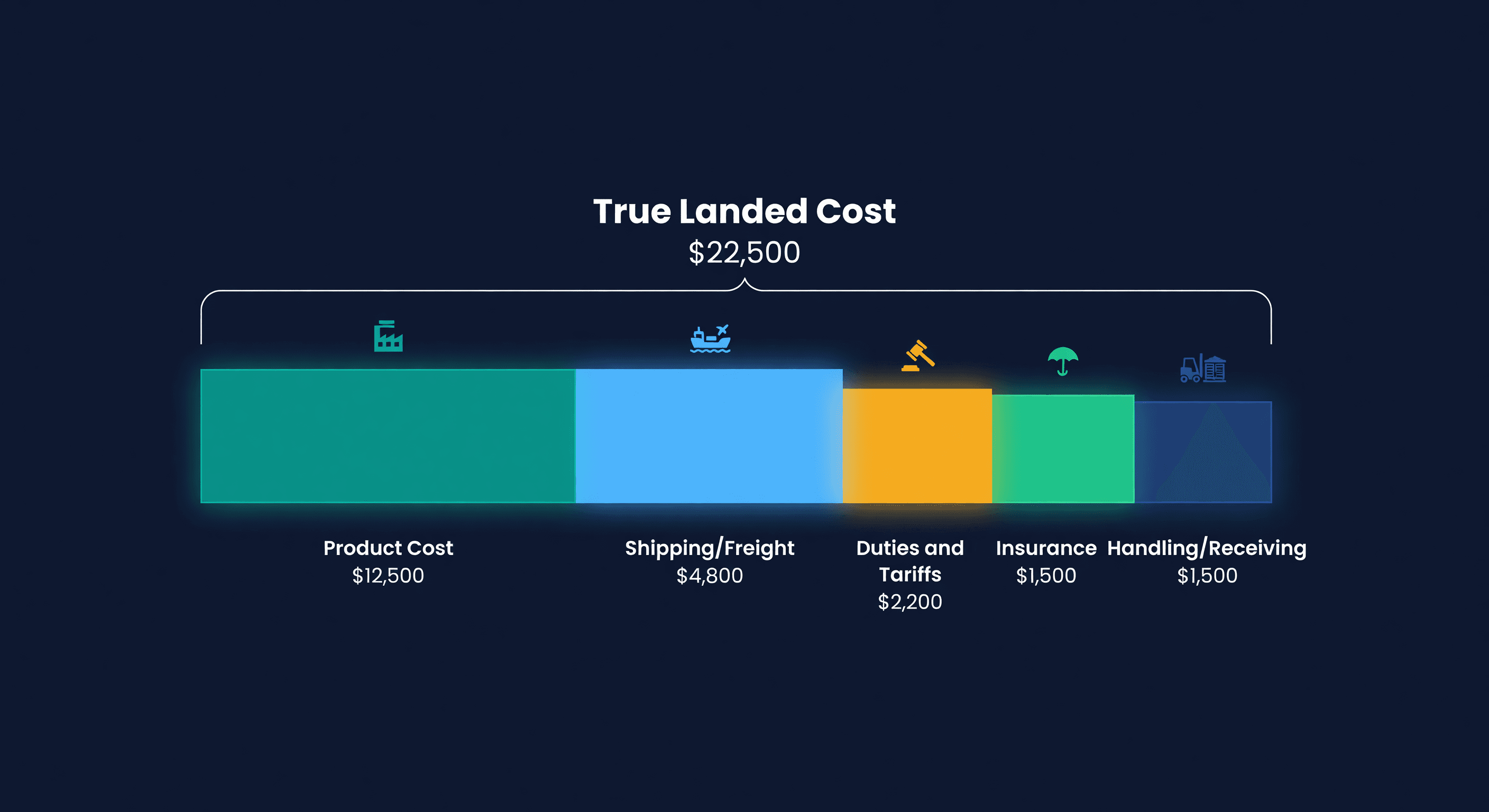
How to Calculate True Landed Cost
Your supplier invoice is not your real cost. Here's the landed cost formula with a worked example showing every hidden expense per unit.
