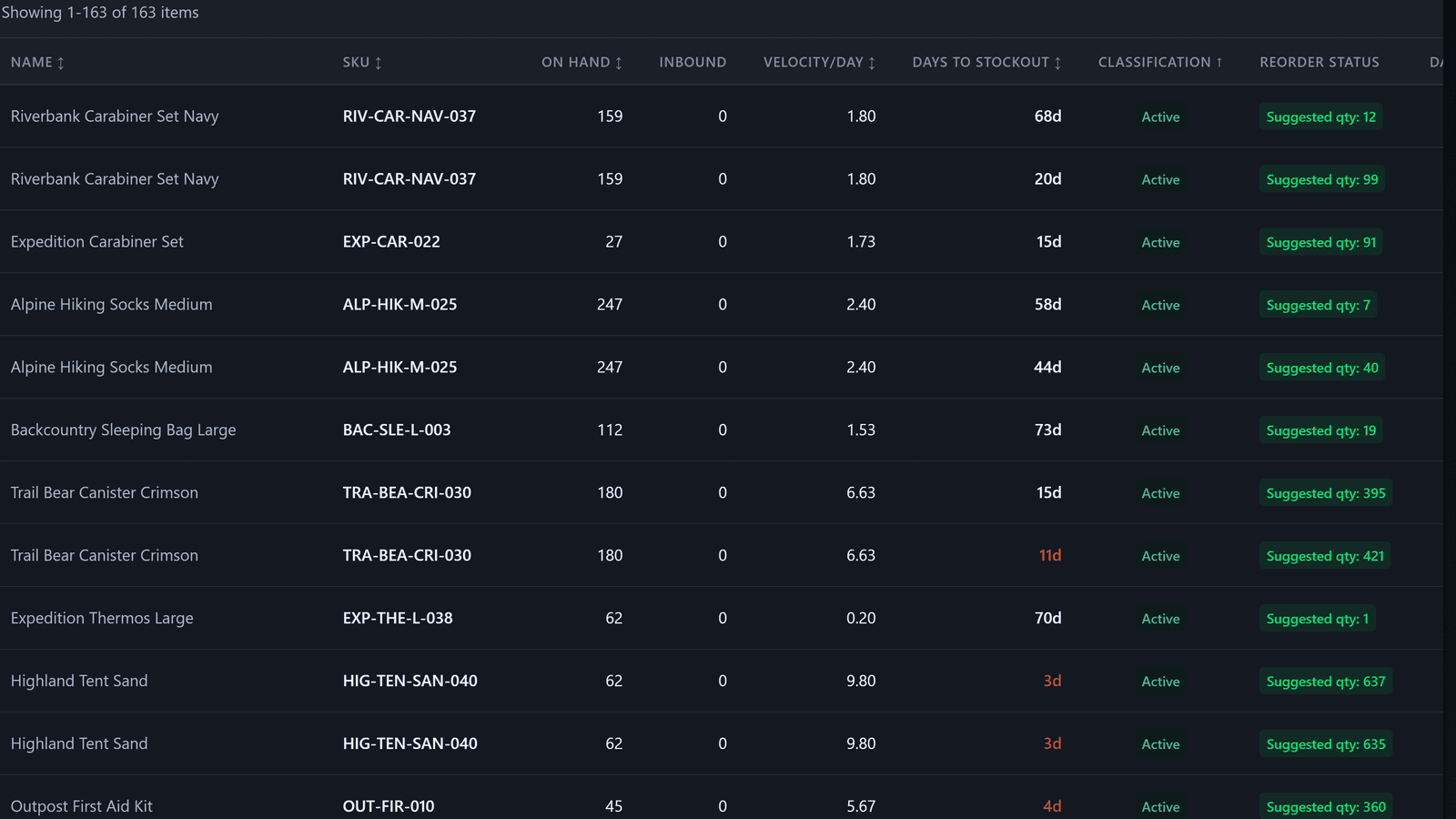
Best Inventory Forecasting Software: 7 Tools for 2026

Key takeaway: Inventory forecasting software predicts how many units of each product you will sell, then tells you what to order and when. For sellers on Shopify and Amazon together, ReplenishRadar is the pick because it forecasts both channels as one demand number and builds the FBA shipment. SKU Compass if Walmart or WooCommerce is in the mix. Inventory Planner for a Shopify-heavy team. SoStocked for Amazon only. Stockful or Prediko for a small Shopify-only store.
Inventory forecasting software, in two sentences
Inventory forecasting software predicts how many units of each product you will sell over the next few weeks or months. It turns that prediction into a decision: what to order, how much, and when, so the reorder lands before the shelf is empty.
That second sentence is where the tools split. Some stop at a chart. Some write the purchase order. A few also decide how much to send to Amazon. I care about the ones that make the decision, because a chart with a trend line never kept anything in stock.
I kept a forecasting spreadsheet for a 200-product catalog on Shopify and Amazon for two years. It was fine for about 40 products. After that I spent Sunday nights re-typing sales numbers, and I still ran short on the bestsellers because I was forecasting each channel on its own tab.
Seven tools below, all of them built to answer "what should I buy". This page leaves out the sync tools that only keep stock counts matched across channels. Those are a different job, and the multi-channel software comparison covers them. Prices are what each vendor published when I checked in September 2026. The date sits next to each one because these numbers move.
What it costs
| Tool | Entry price | Channels it forecasts | Writes the PO? |
|---|---|---|---|
| Stockful | $19.99/mo for 2,000 SKUs | Shopify | Yes |
| Prediko | $49/mo under $100k GMV, then a quote | Shopify | Yes |
| SKU Compass | $79/mo for the first 20,000 orders | Amazon, Walmart, Shopify, WooCommerce | Yes |
| ReplenishRadar | $99/mo Standard, launch pricing | Shopify, Amazon | Yes, plus the FBA inbound plan |
| Sumtracker | $119/mo Replenish plan | Shopify, Amazon, eBay, Etsy, Walmart | Yes |
| Inventory Planner | $119.99/mo for one Shopify warehouse, about $245 by quote above that | Shopify, Amazon demand read-only | Yes |
| SoStocked | $175/mo Inventory + Profit | Amazon | Yes |
The cheapest tool here is not the cheapest decision. Take one product that sells 12 a day with a $22 margin per unit. A 10-day stockout costs 120 units, or $2,640 in margin, before you count the Amazon ranking you lose while the listing sits at zero. The gap between the cheapest and the dearest tool on this list is about $155 a month, so one stockout on one product costs more than 17 months of it. Pick on which channels a tool can see first, and price second.
The tools
ReplenishRadar: best for Shopify plus Amazon
- Best for: sellers on both Shopify and Amazon who need one forecast, not two.
- Channels: Shopify, Amazon.
- Price: Standard is $99 a month at launch pricing through December 31, 2026, then $119. Two stores, 2,000 SKUs and 1,000 sales line items a month, month to month. Every tier is on the pricing page.
We built ReplenishRadar for the seller whose spreadsheet I described above. It reads sales history from both channels and forecasts them as one demand number. A product selling 8 a day on Amazon and 4 a day on Shopify gets a reorder sized for 12, not two orders that each think they own the warehouse. It classifies each product's demand pattern before it forecasts, so a steady seller and a product that sells in bursts do not get the same math. The Growth plan, $199 a month at launch pricing, adds three things. It forecasts net of returns, which matters on apparel where returns can inflate a gross-sales forecast by 20 to 30 percent. It decomposes seasonality across years of history. And it watches how late each supplier actually delivers and widens the safety stock for the ones that slip.
Then it acts on the number. The purchase order respects the supplier's minimum and case pack. The FBA transfer suggestion splits warehouse stock between Amazon and your own store and creates the inbound plan through Amazon's API. Read more on the demand forecasting page.
Not the right fit if Walmart or WooCommerce is a real channel for you. We forecast Shopify and Amazon only. The $9.99 Lite plan is a unified stock count with no forecasting, so do not buy it for this job. Start a 14-day free trial.
SKU Compass: best if Walmart is in the mix
- Best for: sellers on three or four marketplaces with a high SKU count.
- Channels: Amazon, Walmart, Shopify and WooCommerce, per its pricing page.
- Price: $79 a month, including the first 20,000 orders, then $125 for each additional 20,000. Unlimited SKUs and users. Checked on skucompass.com/pricing on September 28, 2026.
SKU Compass sells forecasting and a service layer together. The self-serve plan lists per-SKU reorder points, purchase orders generated from the forecast, and a forecast that refreshes every night. Its home page also covers moving stock between FBA, AWD and your warehouses. The two managed plans are where it differs from everything else here: $1,997 a month on top of usage adds a dedicated inventory analyst, and $3,997 adds a full team that runs the inventory with you. It offers a 30-day free trial.
If you sell on Walmart, it covers a channel we do not. Pricing by order volume with no SKU cap also suits a long catalog of slow sellers better than a per-SKU tier does. In the trial, ask it to show one product's forecast next to last quarter's actual sales. Then ask whether it creates the Amazon inbound shipment or tells you what to send and leaves you to build it in Seller Central.
Inventory Planner: best for a Shopify-heavy team
- Best for: Shopify-led catalogs with a buyer who tunes forecasts by hand.
- Channels: Shopify plus several others, with Amazon demand read into the forecast.
- Price: Essentials is $119.99 a month for one Shopify warehouse. Multi-warehouse plans are quoted from about $245 a month on a 12-month contract. Checked August 17, 2026.
Inventory Planner, now sold by Sage, has the deepest forecast settings on this list. You can override a forecast per product and per location, and it has open-to-buy reports for the budget. If Shopify is 80 percent of your revenue, it covers you. It reads Amazon sales into the forecast but does not create FBA shipments, so the Amazon side stays a manual job next to it.
SoStocked: best for Amazon only
- Best for: Amazon-only brands whose whole business sits in FBA.
- Channels: Amazon, FBA in the US and EU.
- Price: From $175 a month for Inventory + Profit, the only plan on its pricing page. Checked October 5, 2026.
SoStocked forecasts Amazon demand, sends reorder alerts and creates purchase orders. It is now part of SPS Commerce. It does not connect to Shopify, so any demand from your own store is invisible to it. That is fine until your Shopify store starts drawing from the same boxes you planned to send to FBA.
Sumtracker: forecasting bolted onto sync
- Best for: sellers on five marketplaces whose first problem was stock counts.
- Channels: Shopify, Amazon, eBay, Etsy, Walmart.
- Price: $119 a month for the Replenish plan. The $59 plan is sync only. Checked September 7, 2026.
The Replenish plan adds a 12-month forecast, reorder suggestions and purchase orders on top of Sumtracker's stock sync. The Amazon connection is a stock sync, not FBA planning. Buy it when keeping five channels in step is the main job and forecasting is the second one. Full comparison: ReplenishRadar vs Sumtracker.
Prediko: Shopify only, method not published
- Best for: Shopify-only DTC brands that have outgrown a spreadsheet.
- Channels: Shopify only.
- Price: $49 a month under $100k GMV, then a quote. Checked August 21, 2026.
Prediko has a clean planning screen with purchase planning and cash flow views. It calls its forecast AI-powered and does not say what model it runs. Add Amazon later and it cannot see that demand at all.
Stockful: cheapest, Shopify only
- Best for: a Shopify-only store leaving a spreadsheet on a tight budget.
- Channels: Shopify only.
- Price: $19.99 a month for 2,000 SKUs and one location, $39.99 for 7,500 SKUs. Checked on stockful.app/pricing on September 28, 2026.
Stockful puts forecasting, purchase orders and alerts on every plan, including the cheapest. The forecast is self-tuning, so you cannot adjust it by hand the way Inventory Planner lets you. For most Shopify-only stores that is a feature. It has no Amazon connection, so the day you add a second channel you are shopping again.
Test the forecast before you trust it
Every tool on this page claims accuracy. Few show it to you unprompted. So do this in the first week of any trial.
Pick 20 products: your five bestsellers, ten steady middle sellers and five slow ones. Ask the tool for its forecast of the last eight weeks, as if those weeks had not happened, and put it next to what you actually sold. Then work out weighted mean absolute percentage error, which weights the miss on a product selling 50 a week above the miss on one selling two. The forecast accuracy guide walks through the arithmetic.
Under 30 percent is workable for most e-commerce catalogs. Over 50 percent on your bestsellers means the tool is guessing, and a guessing tool is worse than a spreadsheet because you stop checking it. If the tool will not show you a past forecast next to actual sales, that is your answer.
New to the vocabulary? Start with inventory forecasting 101, then come back.
How to decide
Start with your channel mix, because it rules out half the list in one line.
Shopify and Amazon. ReplenishRadar, because it forecasts both as one number and builds the FBA shipment from it. Inventory Planner if Amazon is small and you have someone who wants to tune forecasts every week.
Walmart or WooCommerce as well. SKU Compass, or Sumtracker if keeping the stock counts matched across five channels is the bigger pain.
Amazon only. SoStocked.
Shopify only. Stockful if the bill matters most. Inventory Planner if you have a buyer who wants to tune every forecast by hand.
Then run the accuracy test above on your top two. The winner is the one whose forecast you would have ordered from, not the one with the nicer chart.
Try ReplenishRadar free for 14 days
Related Reading:
Frequently Asked Questions
Get notified when it matters
Amazon and Shopify change the rules constantly. We'll email you when something affects your business.
See what your inventory is really doing
Doing $5M+ in revenue? Talk to our team
Related Posts
Inventory Planner Alternatives (2026)
Eight real Inventory Planner alternatives compared on price, contract terms, Amazon support and setup time, with a pick for each reason people leave.
OpenClaw vs Inventory Software: Where AI Agents Fall Short
OpenClaw handles basic Shopify stock alerts but stops short on FBA lead times, multi-channel forecasting, and reorder math. The honest breakdown.
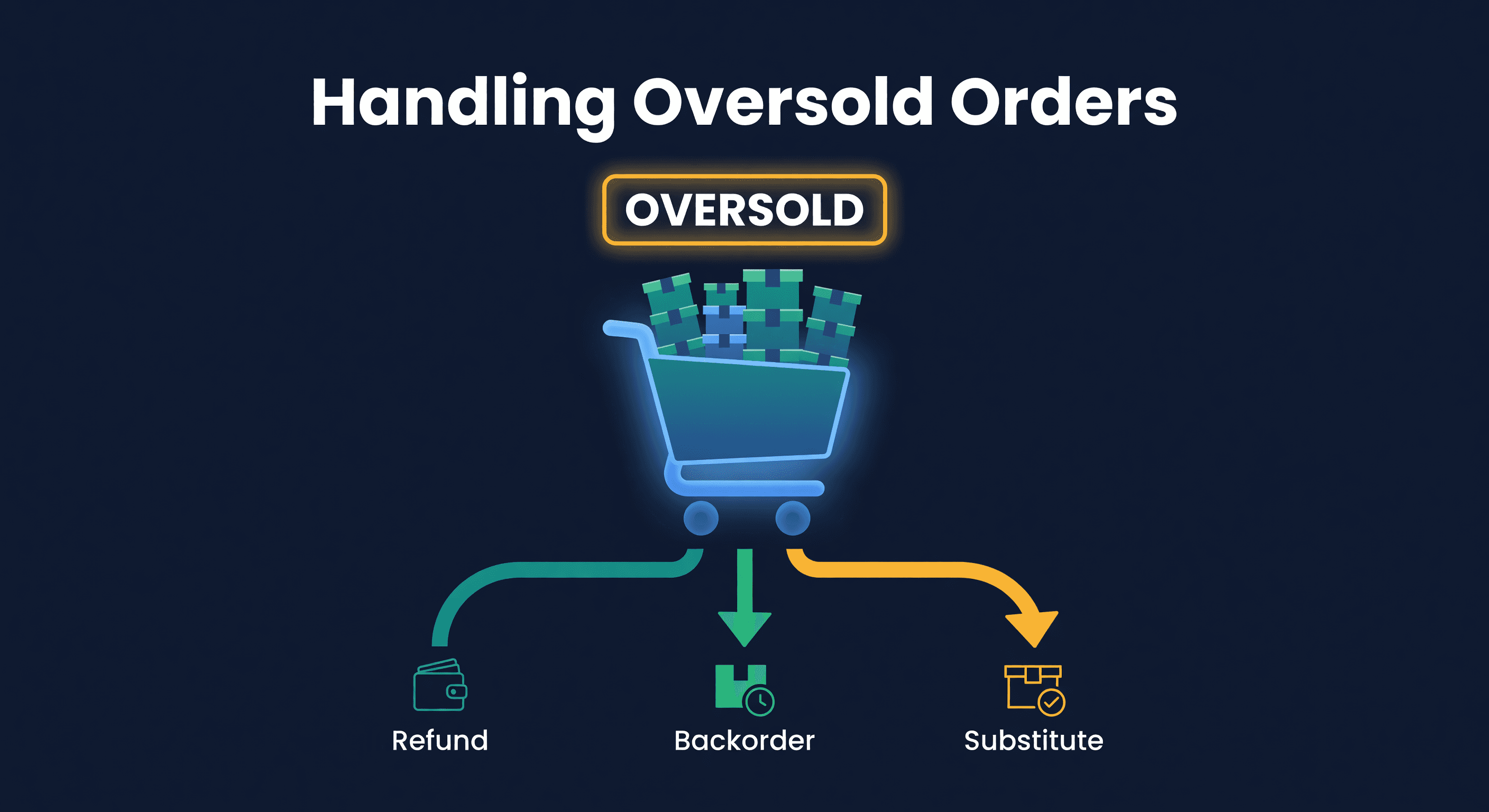
How to Handle Oversold Orders in E-commerce
Why overselling happens on multi-channel stores, what it costs you, and the prevention strategies that actually work, from buffer stock to real-time push sync.
