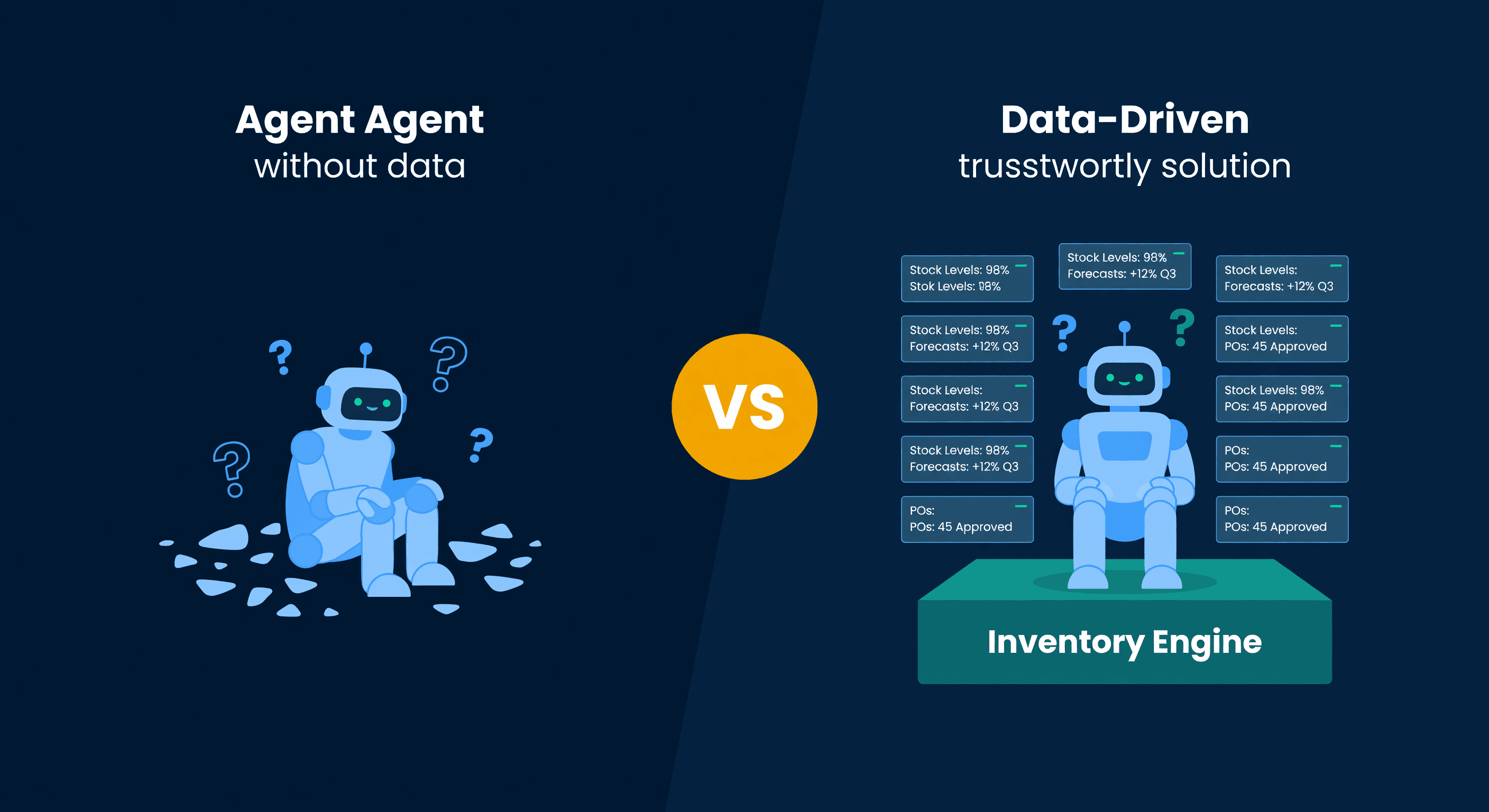
OpenClaw vs Inventory Software: Where AI Agents Fall Short
Key takeaway: OpenClaw works well for sub-50 SKU sellers on a single channel doing under $100K per year. Above that, especially with multi-channel or FBA, purpose-built inventory software delivers better ROI through domain-specific forecasting and reorder math.
OpenClaw hit 250,000 GitHub stars in about 60 days. It has a Shopify skill, an Amazon monitoring plugin, an inventory alert system, and something called the "E-Commerce Operator" bundle with demand forecasting. I have been asked by three different sellers in the last month whether they should use it instead of inventory software.
Fair question. Here is my honest answer.
What OpenClaw Actually Does for Inventory
I set up the Shopify skill on a test store to see what the fuss was about. The setup was genuinely impressive. Within 20 minutes I had an agent that:
- Polled my Shopify store on a fixed 30-minute cycle via the Admin API
- Sent a WhatsApp message when any SKU dropped below its reorder threshold
- Generated a morning report listing every product below the reorder point
- Could answer natural language questions like "how much Blue Widget do we have?"
For a solo seller running 20-30 SKUs on a single Shopify store, this is useful. It is free, self-hosted, and does something that Shopify itself does poorly - proactive low-stock notifications. I can see why people get excited.
The E-Commerce Operator bundle adds more: abandoned cart recovery, review analysis, pricing suggestions, return reason tracking, and a seasonal demand forecaster. Ten skills in one package. The community has built over 13,000 skills on ClawHub, the plugin marketplace. The energy around this project is real.
I am not going to pretend it is not good. It is good. For certain sellers.
Where the Math Breaks Down
Here is the thing about OpenClaw's inventory skills: they are built by enthusiasts, not by people who have spent years in purchasing operations. That distinction does not matter when you have 20 SKUs. It matters enormously when you have 500.
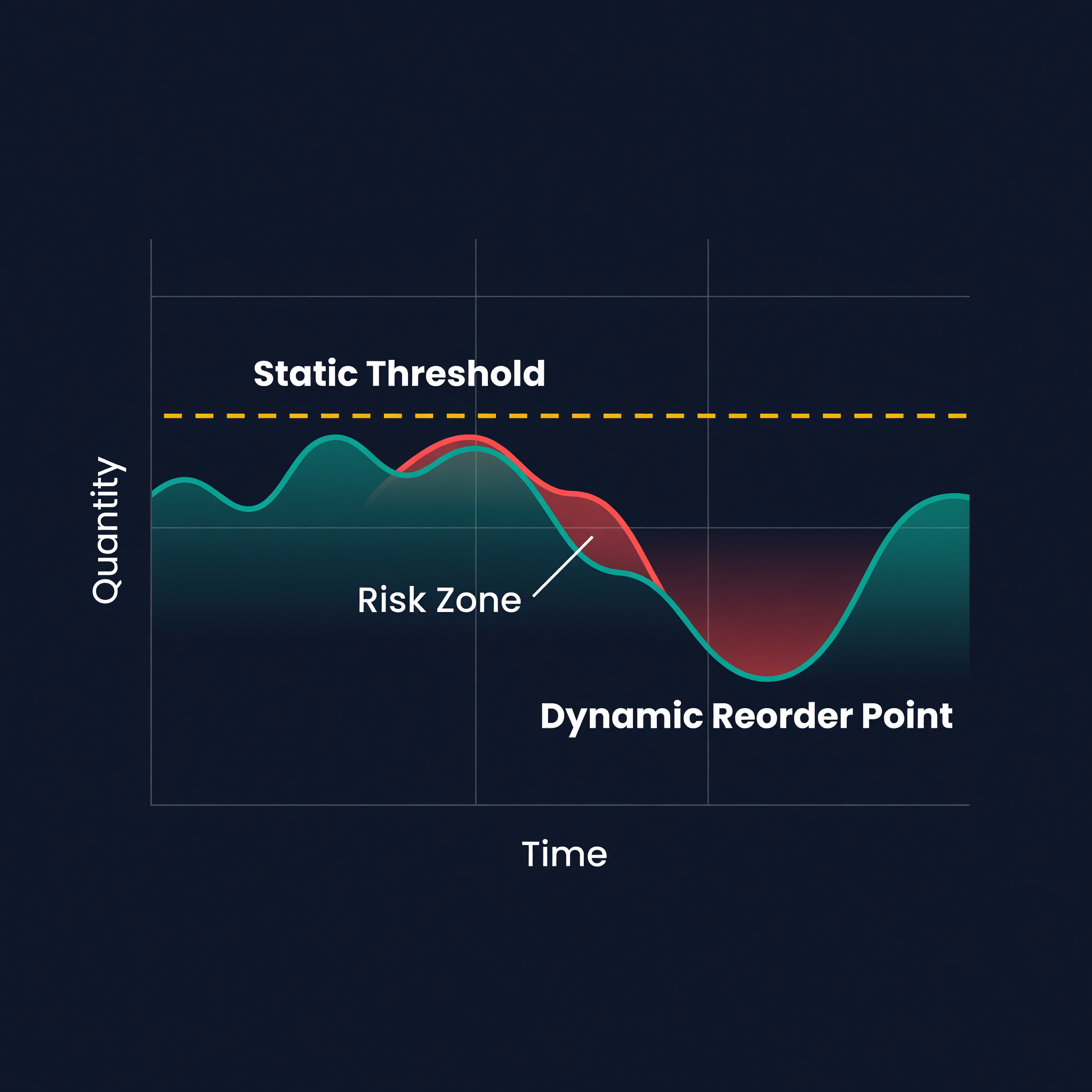
The inventory alert skill works like this: you set a reorder threshold per SKU. When stock drops below it, you get a notification. That is a static number. The skill does not know that your supplier in Shenzhen takes 35 days in February but 52 days in April because of Chinese New Year recovery backlogs. It does not know you order from that supplier every three weeks because they have a $2,000 MOQ and batching your orders is the only way to hit it. It does not know your safety stock should be higher for Q4 because demand variance triples.
It just knows "quantity is below 50, send alert."
One wrong reorder point on a single SKU might cost you $500 in lost sales or a few hundred in excess inventory. Annoying but survivable. Five hundred wrong reorder points across a multi-channel catalog? That is a different problem.
I ran a rough calculation on a 500-SKU catalog selling across Shopify and Amazon:
| Error Source | SKUs Affected | Avg. Cost Per SKU | Annual Impact |
|---|---|---|---|
| Static reorder points missing seasonal shifts | ~75 (15%) | $400 in lost sales or overstock | $30,000 |
| No supplier lead time tracking | ~40 (8%) | $600 in emergency air freight or stockouts | $24,000 |
| No ordering cadence awareness | ~120 (24%) | $150 in sub-optimal order sizing | $18,000 |
| No cross-channel demand aggregation | ~50 (10%) | $350 in channel-specific stockouts | $17,500 |
That is $89,500 per year in avoidable costs. Even if I am off by half, $45,000 is a lot of money to lose because your reorder system is a chatbot with a threshold number.
The AI Agent Reasoning Problem
There is a deeper issue. When OpenClaw's demand forecasting skill tells you "you should reorder SKU-A," what is actually happening under the hood? An LLM is interpreting your sales data and producing a recommendation. That sounds sophisticated. It is not the same as a math engine running reorder point formulas with lead time, demand variance, service level targets, and ordering constraints as explicit inputs.
An LLM approximates. A formula calculates.
For simple questions - "am I running low on this product?" - approximation works fine. For complex ones - "given that I order from this supplier every 21 days, my next Amazon FBA shipment takes 14 days to receive, this SKU's demand is trending up 8% month-over-month, and I have a $15,000 working capital cap across all open POs - how many units should I order?" - approximation is not enough.
I asked an OpenClaw instance that question about one of my test SKUs. The answer was reasonable-sounding but wrong by 34%. It recommended 340 units. The correct number, after working through the constraint stack, was 254. Ordering 340 would have blown past my working capital target and left me short on cash for a higher-priority supplier order due the following week.
This is the gap between "AI that talks about inventory" and "software that does inventory math." Both look like intelligence. One of them can actually tell you the right number.
The Security Problem Is Real
I was going to soft-pedal this section, but the facts are too serious.
OpenClaw had a critical remote code execution vulnerability (CVE-2026-25253, CVSS 8.8) that let an attacker steal authentication tokens and run arbitrary commands on the host machine. Clicking a single malicious link was enough. Over 42,000 internet-exposed instances were at risk.
Moltbook - the social network built for OpenClaw agents - had an unsecured database that exposed 35,000 email addresses and 1.5 million API tokens. Security researchers at Wiz found a single key in the site's code that unlocked full read access.
Gary Marcus called it "a disaster waiting to happen." That was before the CVE was published.
For a to-do list app or a personal assistant, security incidents are embarrassing. For a system connected to your Shopify Admin API and Amazon SP-API - systems that control your product listings, pricing, and order data - a security breach is an existential business risk. Someone with your Shopify API token can modify your product prices, cancel orders, or export your entire customer list.
Purpose-built SaaS inventory tools use scoped OAuth connections that read your data and write back only what you explicitly trigger, not blanket system access. They enforce row-level security on every database query. They do not require your system passwords, email credentials, or calendar access. The attack surface is smaller by design.
I respect the OpenClaw project. But I would not connect it to the API credentials that control my business.
Where OpenClaw Genuinely Wins
I want to be specific about where an AI agent makes sense for inventory, because it does.
The solo seller with 20 SKUs and one channel. You sell on Shopify. Your reorder points do not change much. You do not have complex supplier relationships or FBA restocking to manage. You want a free alert when stock gets low. OpenClaw does this well. Better than checking Shopify admin every morning.
The tinkerer who enjoys building systems. OpenClaw is genuinely fun to set up. If you like configuring agents, writing custom skills, and wiring things together, the process is rewarding in a way that subscribing to a SaaS tool is not. Just know that the time you spend building and maintaining your agent stack is time you are not spending on other parts of your business.
Notification routing. OpenClaw is very good at sending alerts to wherever you already live - WhatsApp, Telegram, Slack, Discord. Most inventory tools send email. If you want a Telegram message at 8 AM with your low-stock list, OpenClaw can do that. It is a clever use of the agent architecture.
Prototyping workflows. Before committing to a paid tool, you can use OpenClaw's inventory skills to test whether automated reorder alerts actually change your behavior. If you find yourself ignoring the alerts, you probably do not need the tool either.
Where Purpose-Built Inventory Software Wins
The gap shows up at scale, at complexity, and when money is on the line.
Multi-channel demand aggregation. If you sell the same product on Shopify and Amazon, you need a single demand number that combines both channels. An OpenClaw skill monitoring Shopify does not know about your Amazon sales. A separate skill monitoring Amazon does not know about Shopify. You end up with two partial pictures. A purpose-built tool sees both channels in one view and forecasts total demand, not channel-specific fragments. I have written about why this matters for multi-channel sellers - the short version is that split demand data leads to under-ordering.
Supplier and ordering intelligence. Real purchasing involves constraints that interact: your supplier has a $3,000 MOQ, ships in case packs of 24, you order from them every three weeks, and your working capital budget this month is $40,000 across all suppliers. The correct order quantity is not "demand times lead time." It is the output of a constraint solver that balances all of those factors simultaneously. This is the kind of problem that purpose-built software exists to solve.
FBA lead time complexity. Sending inventory to Amazon FBA involves multiple phases: shipping to the fulfillment center, receiving and check-in (which varies wildly by FC), and placement into sellable inventory. Each phase has its own variability. A single "lead time" number does not capture this, and an LLM cannot reliably model multi-phase processes with independent variance distributions.
Forecast accuracy tracking. How do you know if your forecasts are right? You measure them. MAPE, bias, tracking signals - these are specific metrics that tell you which SKUs your model handles well and which ones need attention. OpenClaw's forecasting skill does not track its own accuracy. It produces a number and moves on. Without a feedback loop, you cannot improve.
The "Good Enough" Trap
The sellers who reach out to me about OpenClaw are not the ones doing $50K/year with 20 SKUs. They are the ones doing $1-5 million with 200-800 SKUs who heard about OpenClaw and thought "maybe I can build this instead of paying for software."
The math on this is straightforward. ReplenishRadar costs $99-$199/month for sellers at that level. If purpose-built inventory math prevents even two stockouts per month on products selling $50/day, the tool pays for itself in under a week. The question is not whether OpenClaw is free. It is whether "free but approximate" costs more than "paid but precise."
For a seller doing $2 million in annual revenue, the difference between a 15% forecast error and a 25% forecast error is roughly $40,000-$60,000 per year in excess inventory carrying costs and lost sales from stockouts. That gap is what you are paying for when you choose purpose-built software over a general-purpose agent.
We built ReplenishRadar specifically for this segment - sellers who have outgrown spreadsheets and need the math to be right, not just directionally plausible. It connects to Shopify and Amazon via proper OAuth, aggregates demand across channels, factors in supplier lead times and ordering cadence, and generates purchase order suggestions with all the constraints baked in. The output is not "you should probably reorder." It is a specific quantity, for a specific supplier, at a specific time, given your actual constraints.
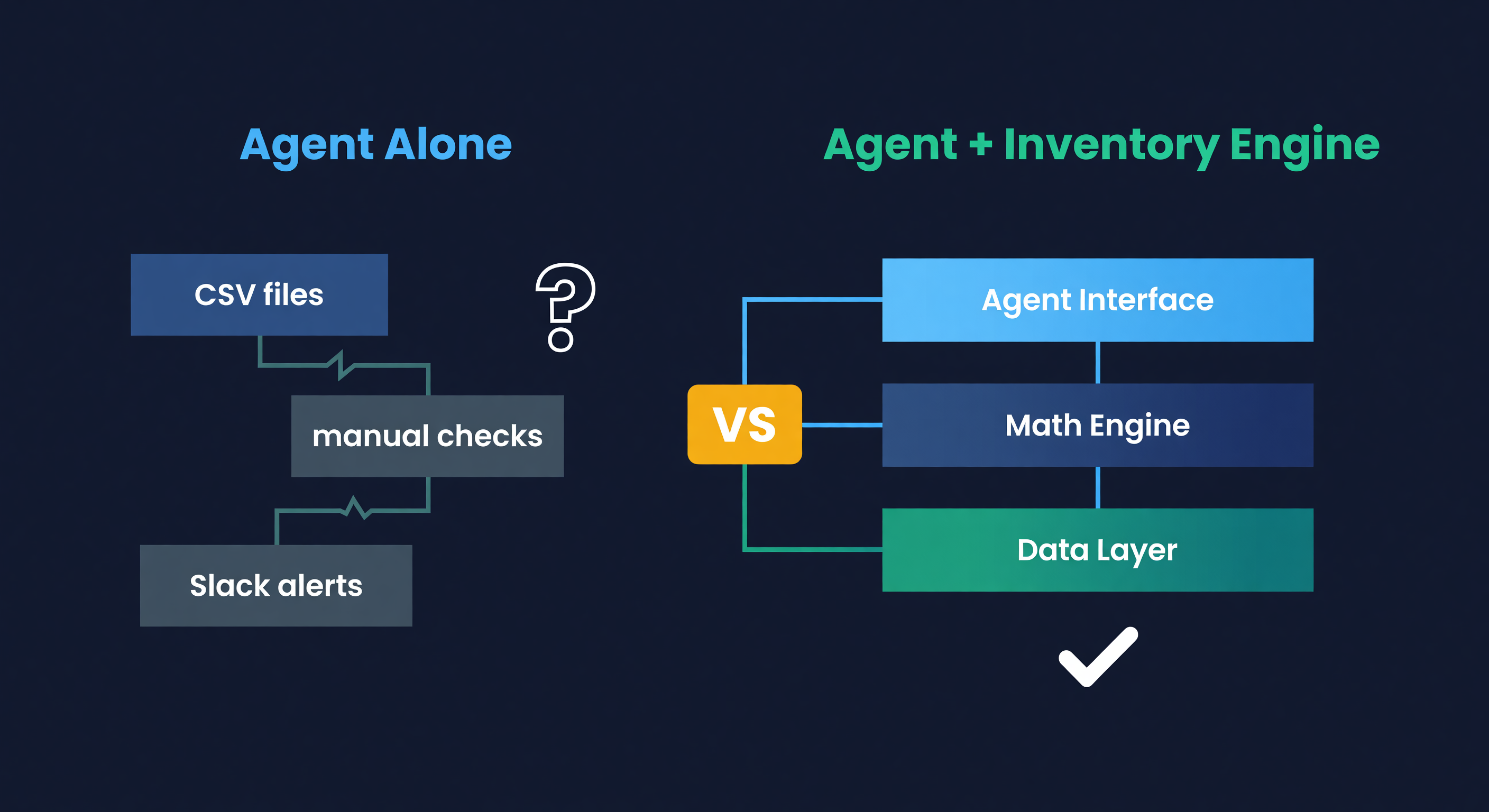
Here is the thing most people miss: you do not have to choose between an AI agent and inventory software. ReplenishRadar ships an MCP package that lets compatible agents, including OpenClaw, query your live inventory data and draft purchase orders through structured tools. The software does the math. The agent gives you a conversational interface on top. If you want OpenClaw's Slack integration combined with ReplenishRadar's constraint engine, you can wire them together in about ten minutes.
Try ReplenishRadar free for 14 days ->
My Recommendation
If you are a solo seller under $100K/year with fewer than 50 SKUs on one channel, set up OpenClaw's Shopify inventory skill. It is free, it works, and it will catch low-stock situations you would otherwise miss. Do not connect it to anything with write access. Use read-only API scopes only.
If you are doing $500K+ with 100+ SKUs, or selling on both Shopify and Amazon, or managing FBA restocking, or working with multiple suppliers - stop trying to make a general-purpose AI agent do specialized inventory math. The problems you have are not problems an LLM can approximate its way through. They are math problems with specific inputs and constraints. Use a tool built for them.
OpenClaw is a remarkable piece of engineering. It is just not inventory software. And pretending it is will cost you more than the subscription you were trying to avoid.
Related Reading:
Frequently Asked Questions
Get notified when it matters
Amazon and Shopify change the rules constantly. We'll email you when something affects your business.
See what your inventory is really doing
Doing $5M+ in revenue? Talk to our team
Works with your AI agent
Ready for agents: MCP tools for live stock data OpenClawClaudeChatGPT
Related Posts
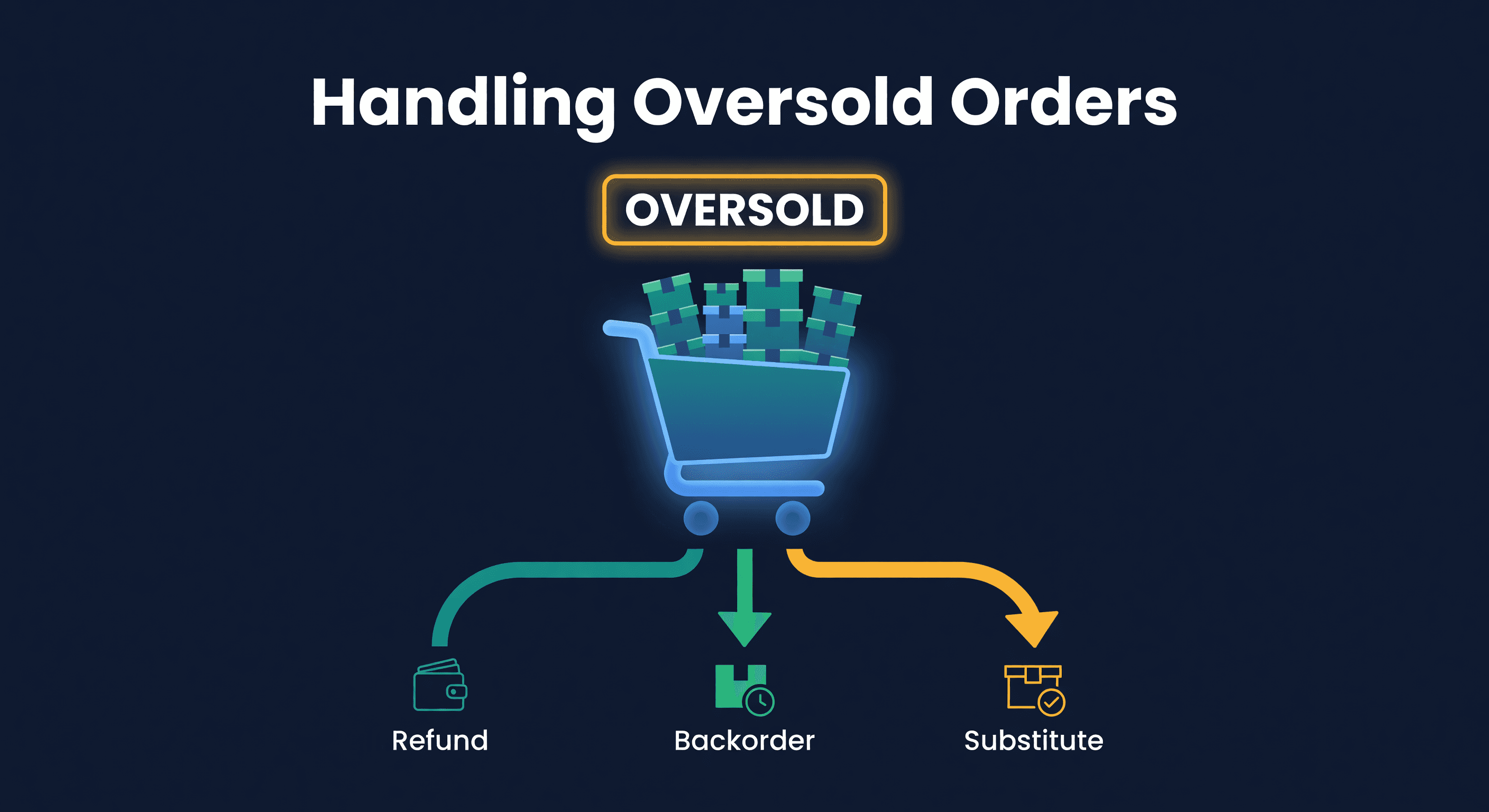
How to Handle Oversold Orders in E-commerce
Why overselling happens on multi-channel stores, what it costs you, and the prevention strategies that actually work, from buffer stock to real-time push sync.
Inventory Lite: Who It's For, What It Does, When to Upgrade
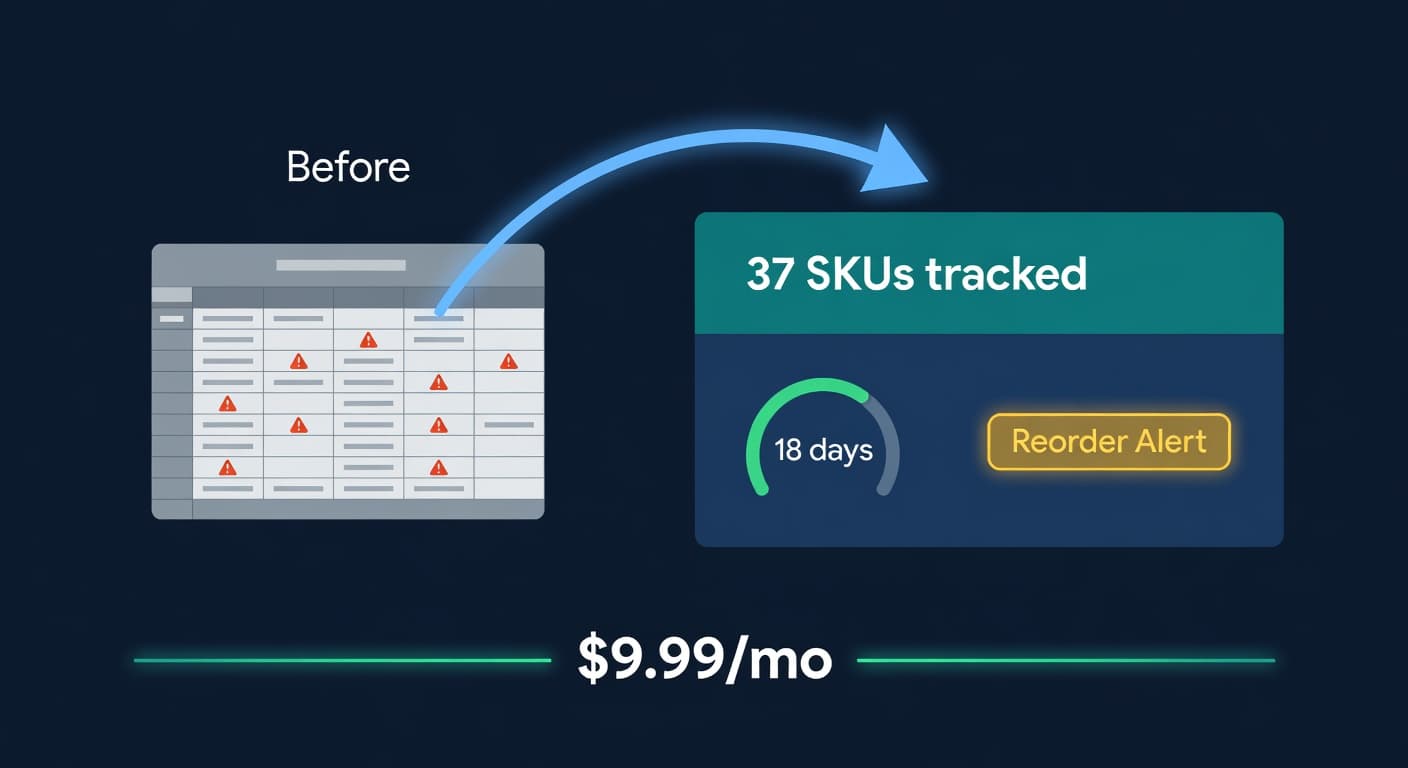
Lite is $9.99/mo for hybrid Shopify + Amazon sellers under 50 SKUs and $10k/30d. Here is what it covers and when you outgrow it.
Why We Built a $9.99 Inventory Plan When Rivals Start at $99
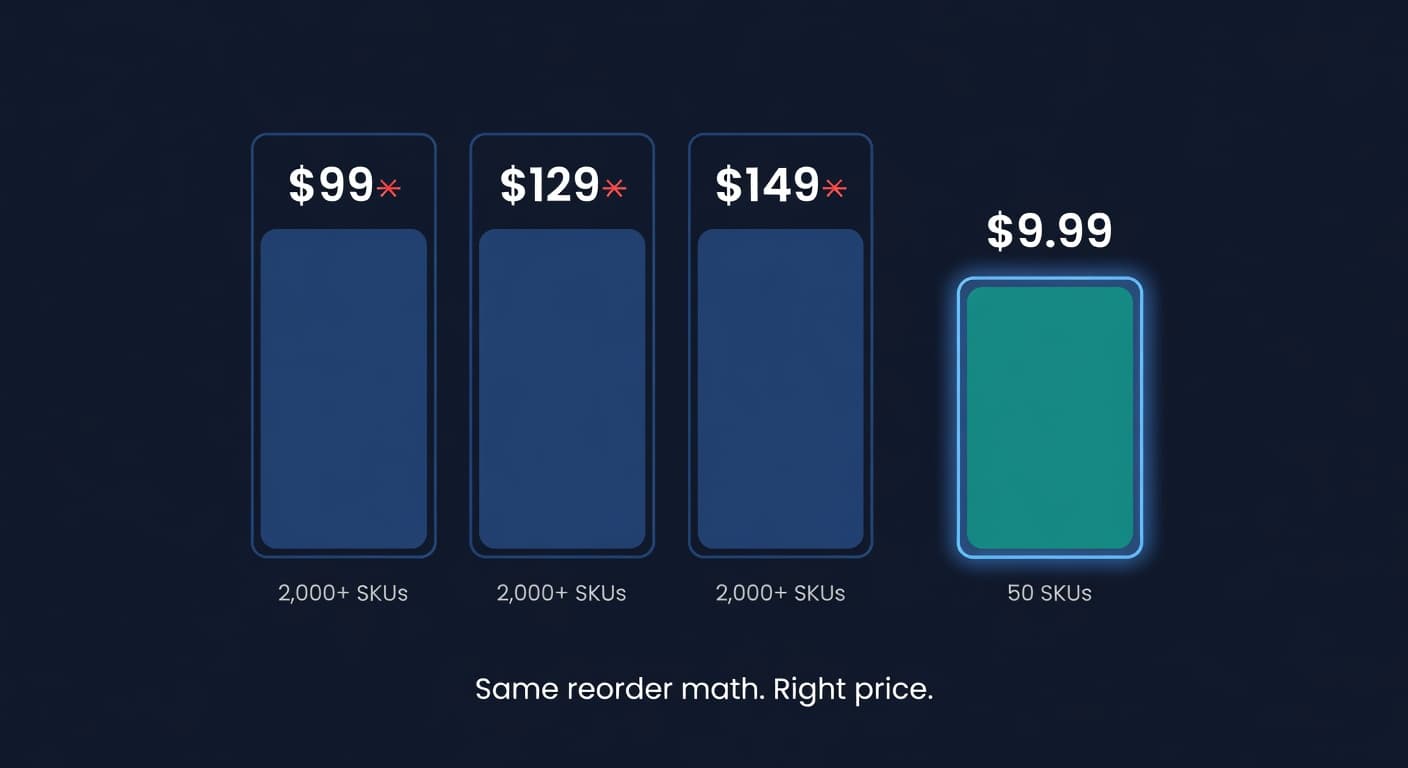
Most inventory tools start at $99 and assume you have 2,000 SKUs and a buyer. If you sell 30 SKUs across Shopify and Amazon, that math is broken.
