Demand Sensing vs Forecasting for E-commerce
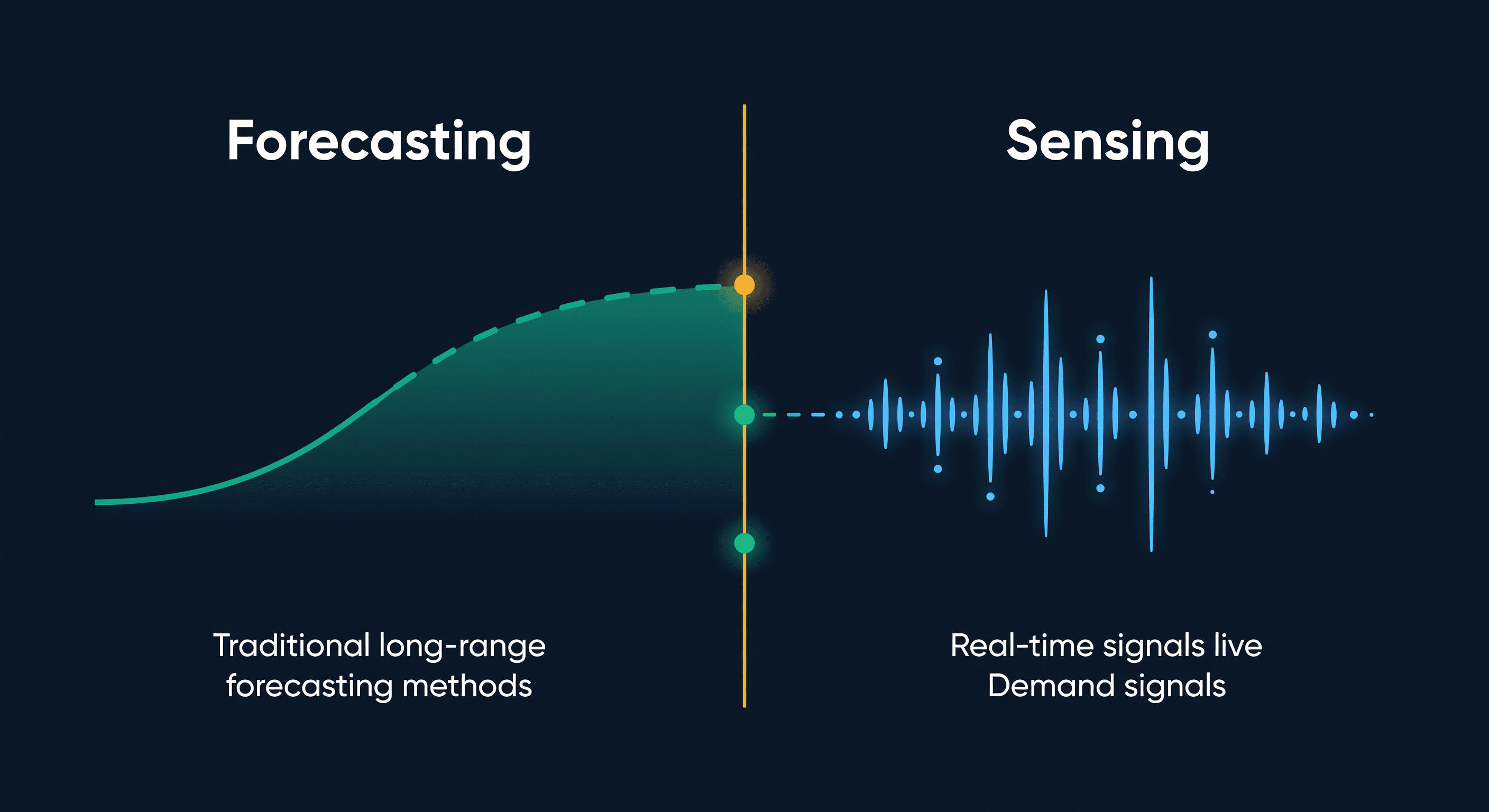
Key takeaway: Demand sensing uses real-time signals (web traffic, search trends, social mentions) to detect demand shifts within hours. Most e-commerce sellers under $10M revenue only need traditional statistical forecasting, which is cheaper and more reliable.
Everyone Is Talking About Demand Sensing. Most Sellers Should Ignore It.
I went to a supply chain conference last year where every other session mentioned "demand sensing" as the future of inventory planning. Real-time signals. AI-powered detection. Sub-hourly demand adjustments. It sounded impressive. I sat through three presentations, took notes, and came back to my business where I still needed to figure out how many units to order from my supplier in Shenzhen who takes 35 days to ship.
Demand sensing did not help me with that problem. It is not going to help most e-commerce sellers either. But demand forecasting - the older, less exciting cousin - absolutely does. The problem is that the two get confused, conflated, and sold interchangeably by software vendors who want to charge you enterprise prices.
Let me separate them.
Demand Forecasting: What You Already Need
Forecasting looks backward to predict forward. You feed it 12-24 months of sales history, it identifies patterns (trend, seasonality, day-of-week effects), and it projects future demand. The output is a number: "You will probably sell 340 units of SKU-A next month."
That number is wrong. It is always wrong. The question is whether it is useful-wrong (off by 15%) or dangerous-wrong (off by 60%). A good forecast is useful-wrong.
The standard approach for e-commerce:
Forecast = Base Demand x Trend Factor x Seasonality Index
If SKU-A sold an average of 300 units/month over the past year, has a 5% month-over-month growth trend, and November historically runs 1.4x the annual average:
November Forecast = 300 x 1.05 x 1.4 = 441 units
That is your planning number. You set your reorder point and safety stock around it. Not perfect, but workable. I have run my purchasing this way for years and my forecast accuracy stays in the 75-85% range on established products.
The inputs are simple: your own sales data. Nothing exotic. Nothing real-time. Just your order history from the past 12+ months and some basic math.
Demand Sensing: What Enterprise Companies Pay Millions For
Demand sensing is a different animal. It does not replace forecasting. It supplements it by detecting short-term demand shifts that historical data cannot predict.
The signals demand sensing systems monitor:
| Signal | What It Detects | Lead Time of Signal |
|---|---|---|
| Web traffic to product pages | Interest surges before they become sales | 1-3 days |
| Social media mentions | Viral or trending products | Hours to days |
| Search volume (Google Trends) | Category-level demand shifts | 1-2 weeks |
| Weather data | Demand changes for seasonal/weather products | 3-7 days |
| Competitor pricing changes | Demand migration when competitors go OOS or raise prices | Same day |
| News events | Demand spikes from media coverage | Hours |
A demand sensing system ingests these signals in near-real-time, correlates them with your sales data, and adjusts your demand forecast mid-cycle. If Google search volume for "portable air conditioner" spikes 200% this week, the system bumps your forecast for that category before the actual sales appear.
This sounds incredible. And for Walmart, Target, and Amazon's own retail operation, it is. They have the data volume, the infrastructure, and the supply chain agility to act on hourly demand signals.
You almost certainly do not.
Why Most Sellers Only Need Forecasting
Three reasons.
Your supplier lead time makes sensing irrelevant. If your supplier takes 35 days to produce and ship your order, detecting a demand surge today means you can react in... 35 days. By then, the surge is over or your existing forecast already caught it. Demand sensing only matters when you can replenish fast. For sellers with 1-3 day lead times (domestic suppliers, drop-ship), sensing has value. For anyone importing from Asia? Your supply chain moves too slowly to benefit.
Here is the cold math:
| Lead Time | Can You React to Demand Sensing? |
|---|---|
| 1-3 days (domestic, drop-ship) | Yes. Sensing can trigger emergency reorders. |
| 7-14 days (domestic manufacturer) | Partially. You can adjust in-flight orders. |
| 21-45 days (Asia import) | No. By the time inventory arrives, the signal is stale. |
| 60+ days (custom manufacturing) | Absolutely not. |
The data volume requirements are enormous. Demand sensing works when you have thousands of data points per day - web sessions, social mentions, search impressions, competitive pricing feeds. A seller doing 50-200 orders per day does not generate enough signal for a sensing model to separate real demand shifts from noise. I spoke to a data scientist who builds these systems for enterprise retailers. Her minimum threshold: 500+ daily transactions per product category. Below that, the model cannot reliably distinguish a real trend from a random Tuesday.
The cost is not justified. Enterprise demand sensing platforms cost $100,000-$500,000 per year. Even the "affordable" mid-market options run $20,000-$50,000. For a seller doing $2 million in annual revenue, that is 1-2.5% of gross revenue spent on a marginal improvement over good forecasting. I would rather spend that on inventory.
When Demand Sensing Matters for Smaller Sellers
I said most sellers should ignore demand sensing. Not all.
Viral-prone products. If you sell products that occasionally get picked up by TikTok, a podcast, or a celebrity mention, the demand spike is immediate and massive - sometimes 10-50x your normal daily sales. No historical forecast predicts that. If you sell in categories where this happens (beauty, fitness gadgets, kitchen tools, novelty items), monitoring social signals manually is worth the effort.
Weather-sensitive goods. I know a seller who sells portable fans and heaters. His demand is 90% correlated with temperature, not with his historical sales. When a heat wave hits the forecast, his sales triple within 48 hours. For him, checking a 10-day weather forecast is more valuable than any statistical model.
Flash sales and deal sites. If your product gets featured on a deal site or goes on a Lightning Deal, demand spikes in hours. Having real-time sales velocity monitoring - not full demand sensing, just faster data - helps you decide whether to extend the deal or cut it off before you oversell.
The Practical Middle Ground
Full demand sensing is overkill. Pure historical forecasting misses sudden shifts. Here is what I actually do, and what I think most mid-market sellers should do:
Weekly Google Trends check. Every Monday, I spend 10 minutes looking at Google Trends for my top 10 product keywords. If any keyword is running 30%+ above its 12-month baseline, I flag that product for a potential reorder acceleration. Free. Takes 10 minutes. Catches about 60% of the demand shifts that a proper sensing system would catch.
Sales velocity alerts. I monitor daily sales velocity against my forecast. If actual sales exceed the forecast by more than 25% for three consecutive days, I treat it as a demand shift and recalculate my reorder timing. This is demand sensing at the simplest level - using your own real-time sales data as the signal. (ReplenishRadar does this automatically on every sync. The forecasting engine incorporates recent trend data so your demand projections adjust as conditions change, not just when you remember to check.)
Seasonal pre-positioning. Before known demand events - Q4, Prime Day, back-to-school - I bump my forecast manually by the historical lift factor. This is not sensing. It is just good seasonal planning. But it solves the same problem sensing would: getting inventory in position before demand arrives.
The Forecasting Hierarchy
If you are trying to figure out where to invest your time and money:
- Get a baseline forecast. Historical demand, trend, seasonality. This is table stakes. If you are not doing this, nothing else matters. It covers 70-80% of your demand planning needs.
- Add manual trend monitoring. Google Trends, social media, competitor watching. Costs nothing. Takes 30 minutes per week. Catches the signals that historical data misses.
- Automate the forecast refresh. Instead of running your forecast monthly, run it weekly or on every data sync. The more frequently you update, the faster your forecast responds to real shifts. This is where most sellers get 90%+ of the benefit that demand sensing promises.
- Full demand sensing. Only if you are doing $10M+ in revenue, have sub-week lead times, and sell in volatile categories. For everyone else, steps 1-3 are enough.
I skipped from step 1 to step 3 and never looked back. The bullwhip effect of over-reacting to noisy signals is worse than being a few days late to a demand shift. A stable, frequently-refreshed forecast beats a twitchy demand sensing model that whipsaws your purchasing decisions.
What Happens When You Over-React to Signals
I want to tell a cautionary story. A seller I know got excited about demand sensing after a conference (the same one I attended). He set up Google Trends alerts, social media monitoring, and real-time competitor price tracking. He started adjusting his purchase orders every time he saw a blip in search volume.
In March, Google Trends showed a 45% spike for one of his product keywords. He doubled his next PO. Two weeks later, the spike disappeared - it was a seasonal blip from spring cleaning content, not a real demand shift. He ended up with 2,200 units of a product that sells 150 per month. Fourteen months of supply. The carrying cost at 25% annually was $4,400, and he had $17,600 in cash tied up in inventory that would take over a year to sell through.
That is the bullwhip effect in action. The signal said "demand is up." The decision was "order more." But the signal was noise, and the response was permanent. Cash locked up. Warehouse space consumed. And the product eventually needed markdowns to clear.
The opposite mistake - ignoring a real signal - usually costs less. If demand genuinely spikes and you miss it, you stock out for a few weeks. Lost sales hurt, but you recover when the next shipment arrives. Over-ordering on a false signal? That inventory sits there for months.
When in doubt, bias toward your baseline forecast. Adjust incrementally. A 20% bump to a PO is recoverable. A 100% bump is not.
Do Not Over-Invest in Detection. Invest in Response.
Here is the opinion that will get me argued with at supply chain conferences: for 95% of e-commerce sellers, the bottleneck is not detecting demand changes. It is responding to them. You could have a perfect demand sensing system that tells you at 9 AM that demand will spike 40% this week, and it would not matter because your supplier takes 28 days to ship and Amazon takes 7 days to receive your FBA shipment.
The money most sellers spend chasing demand sensing should go to shortening lead times, building supplier relationships that allow rush orders, maintaining adequate safety stock, and keeping inventory distributed across locations so you can reroute during spikes.
Detection without response is just expensive awareness. Get the basics right first.
The sellers I respect most are boring forecasters. They run the numbers monthly, adjust for seasonality, keep 4-6 weeks of safety stock, and do not chase every trend they see on Twitter. They stock out occasionally. They over-order occasionally. But their inventory turns are healthy, their cash is not trapped in speculative purchases, and they sleep at night.
That is what good demand planning looks like. Not real-time dashboards and AI alerts. Just math, discipline, and a supplier who picks up the phone.
Related Reading:
- Inventory Forecasting 101: A Practical Guide
- How to Measure Forecast Accuracy
- Seasonal Inventory Planning: A Step-by-Step Guide
- The Bullwhip Effect Explained for E-commerce
- SKU-Level Demand Forecasting - per-product forecast models and accuracy tiers
Frequently Asked Questions
Get notified when it matters
Amazon and Shopify change the rules constantly. We'll email you when something affects your business.
See what your inventory is really doing
Doing $5M+ in revenue? Talk to our team
Related Posts
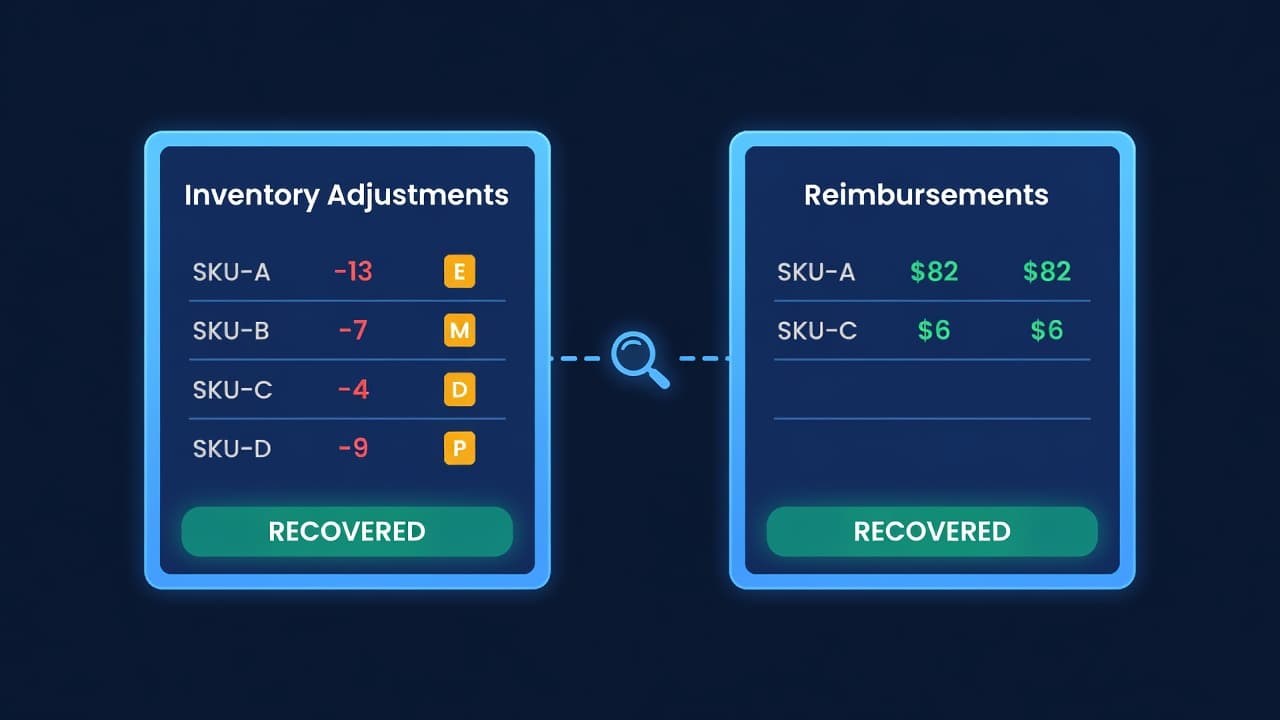
Amazon Lost Inventory: How to Get Reimbursed
How to find lost or damaged FBA inventory, file reimbursement claims with Amazon, and stop leaving 1-3% of your FBA revenue on the table.
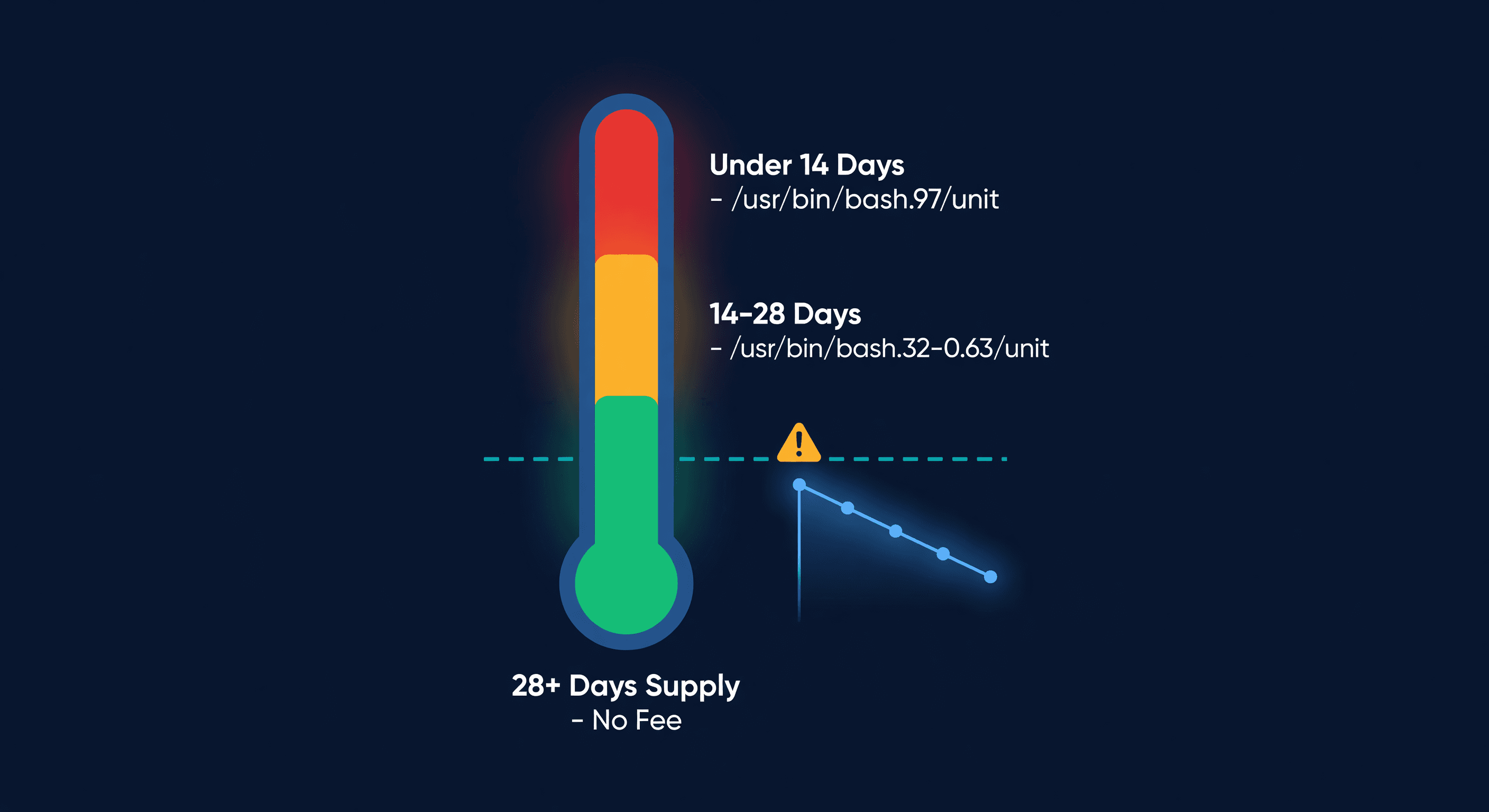
Amazon Low-Inventory-Level Fee Explained
How Amazon's low-inventory-level fee works, which products are exempt, fee amounts by days of supply, and how to avoid it without triggering storage fees.
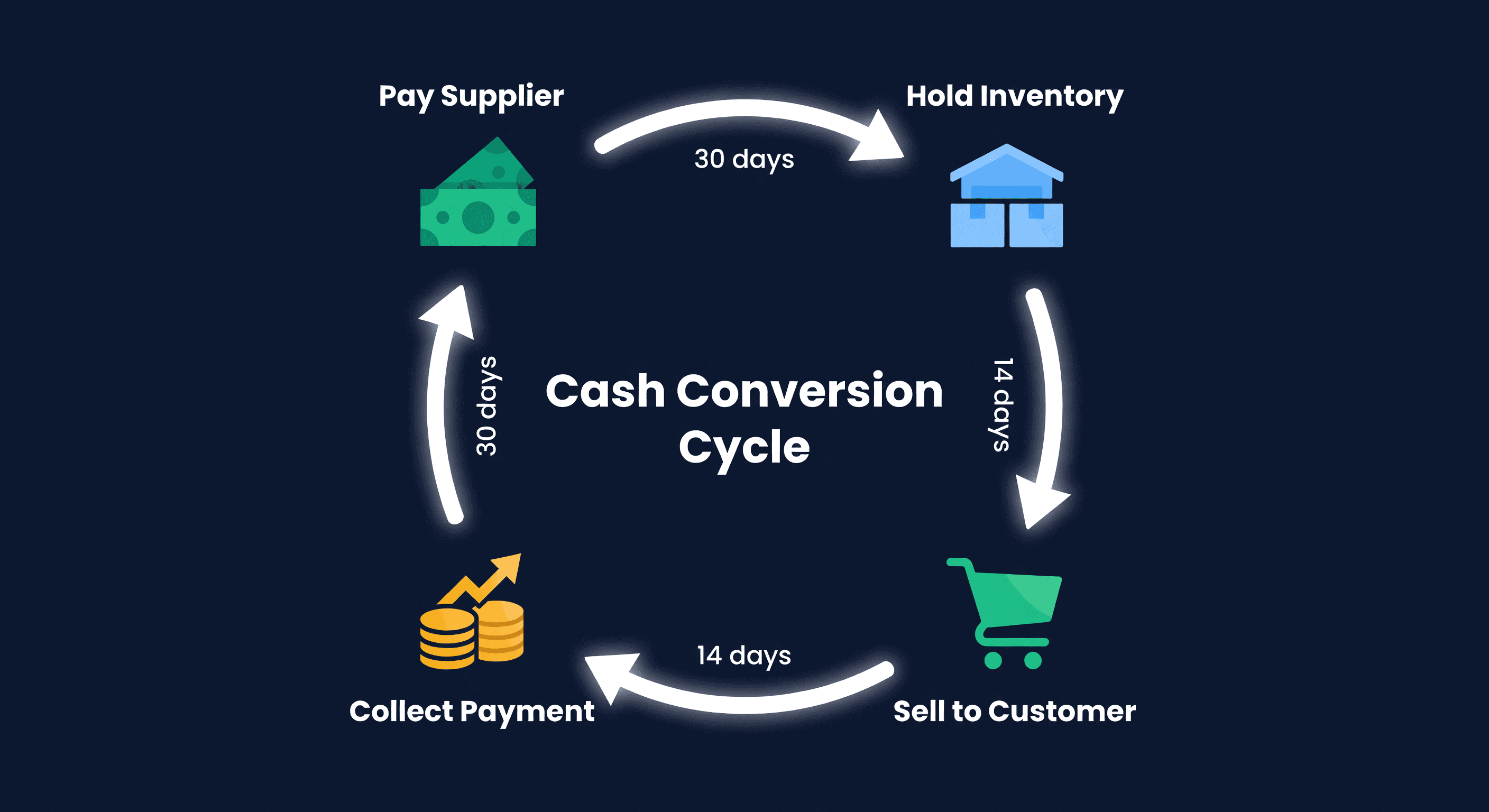
Cash Conversion Cycle for E-commerce Sellers
The CCC formula (DIO + DSO - DPO) explained with real e-commerce numbers. Learn what good looks like and how to shorten yours.
