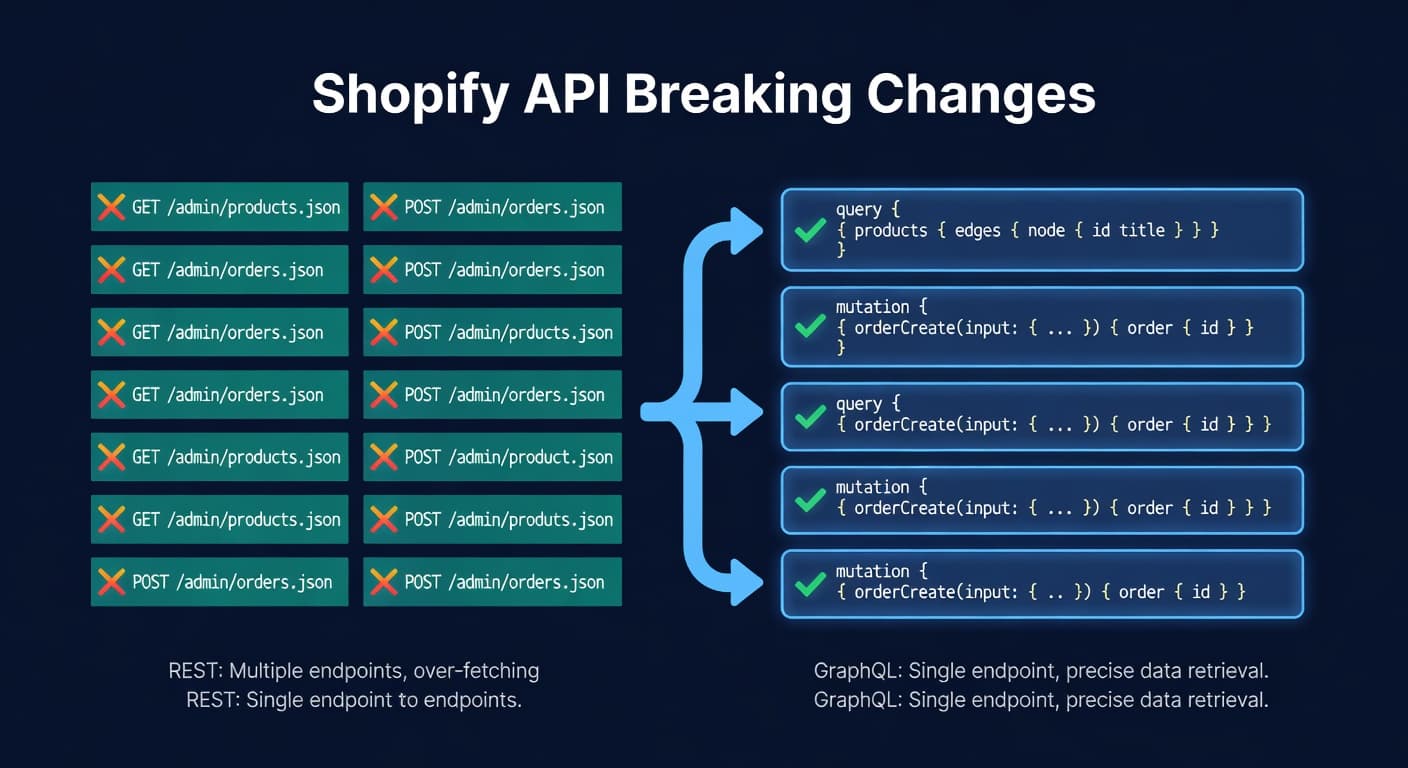
Shopify API 2025-10: What Broke for Inventory Apps
Shopify Killed More REST Endpoints. Your Inventory Sync Might Be Next.
Shopify released API version 2025-10 in early October, and for inventory-related apps, this one has teeth. Several REST Admin API inventory endpoints that developers have relied on for years are now deprecated, with a hard removal date 12 months out. If you are running a custom integration or using an app that has not migrated to GraphQL, the clock is ticking.
This post is specifically for sellers who have custom Shopify integrations, use smaller inventory apps, or work with developers who maintain their Shopify connection. If you use a major app that is actively maintained, they have probably already handled this. Probably.
What Shopify Changed
Three categories of inventory endpoints got hit.
Inventory level adjustments. The REST POST /admin/api/{version}/inventory_levels/adjust.json endpoint is deprecated. The replacement is the GraphQL inventoryAdjustQuantities mutation, which is actually better - it supports adjusting multiple inventory types (available, committed, incoming) in a single call and includes reason codes. But any code still calling the REST endpoint needs to be rewritten.
Variant inventory queries. The REST product variant endpoint now returns minimal inventory data. If you were using GET /admin/api/{version}/variants/{id}.json to pull inventory quantities, you will get back less data than before. The full inventory picture - including per-location quantities, incoming, and committed - requires the GraphQL inventoryItem and inventoryLevel queries.
Bulk inventory operations. REST bulk operations for inventory (listing all inventory levels across locations, bulk adjustments) are gone. The GraphQL bulkOperationRunQuery mutation replaces them with a much more capable system - you can pull inventory for thousands of variants in a single async operation instead of paginating through REST responses.
The Timeline
Shopify follows a rolling API version deprecation. Here is the timeline that matters:
| Date | What Happens |
|---|---|
| October 2025 | API version 2025-10 released. REST inventory endpoints deprecated |
| April 2026 | API version 2025-10 becomes "supported" (no longer latest) |
| October 2026 | REST endpoints from 2025-10 removed permanently |
If your integration is pinned to API version 2024-10 or earlier, you have until that version's removal date (12 months after it became "unsupported"). Shopify gives you time. But I have watched sellers and developers procrastinate on these migrations and end up scrambling the week before the deadline. Don't be that person.
Why This Matters for Sellers (Not Just Developers)
You might be thinking "I'm a seller, not a developer. Why do I care about API versions?" Because your inventory accuracy depends on software that talks to Shopify's API. If that software stops working because it used deprecated endpoints, here is what happens:
Your inventory levels stop syncing. New orders decrement inventory in Shopify but your external system does not see the change. You reorder based on stale numbers. Your reorder point calculation depends on the data being correct. You either over-order (tying up cash) or under-order (stocking out). If you sell on multiple channels, the desync cascades - your Amazon allocation is wrong because your Shopify numbers are wrong.
I have seen this happen. A seller was using a custom Google Sheets integration built by a freelancer in 2023. It pulled inventory via the REST API. When Shopify deprecated the endpoint, the sheet silently stopped updating. The seller did not notice for three weeks. By then, they had $12,000 in over-ordered inventory on two product lines.
How to Check If You Are Affected
If you use a major inventory management app (ReplenishRadar, or any well-maintained competitor), you are almost certainly fine. These apps have engineering teams that track API changes and migrate proactively. ReplenishRadar has been on GraphQL exclusively since day one.
If you use a custom integration, ask your developer three questions:
- Which Shopify API version are we pinned to?
- Are we using any REST inventory endpoints?
- When is the migration to GraphQL planned?
If the answers are "I'm not sure" to any of those, you have a problem.
If you use a smaller or unmaintained app, check their changelog or support docs. If the last update was before October 2025 and the app touches inventory, it may be using deprecated endpoints. Test it: make a manual inventory adjustment in Shopify and verify it shows up in the app within your expected sync window.
What To Do
Audit your integrations. List every app and custom script that reads or writes Shopify inventory. For each one, confirm it uses GraphQL or has a migration plan.
Set a calendar reminder for July 2026. That is three months before the hard removal date. If any integration has not migrated by then, you need an alternative.
Consider this a wake-up call for custom integrations. The REST-to-GraphQL migration is not a one-time event. Shopify is moving their entire API to GraphQL, and future versions will continue deprecating REST endpoints. If your inventory workflow depends on a REST integration, the right move is migrating to GraphQL now - not patching it every 12 months.
ReplenishRadar's Shopify integration uses the GraphQL Admin API exclusively with OAuth authentication. We track Shopify API versions and update within 30 days of each release. Our sync is not affected by REST deprecations.
Try ReplenishRadar free for 14 days
Related Reading:
Frequently Asked Questions
Get notified when it matters
Amazon and Shopify change the rules constantly. We'll email you when something affects your business.
See what your inventory is really doing
Doing $5M+ in revenue? Talk to our team
Related Posts
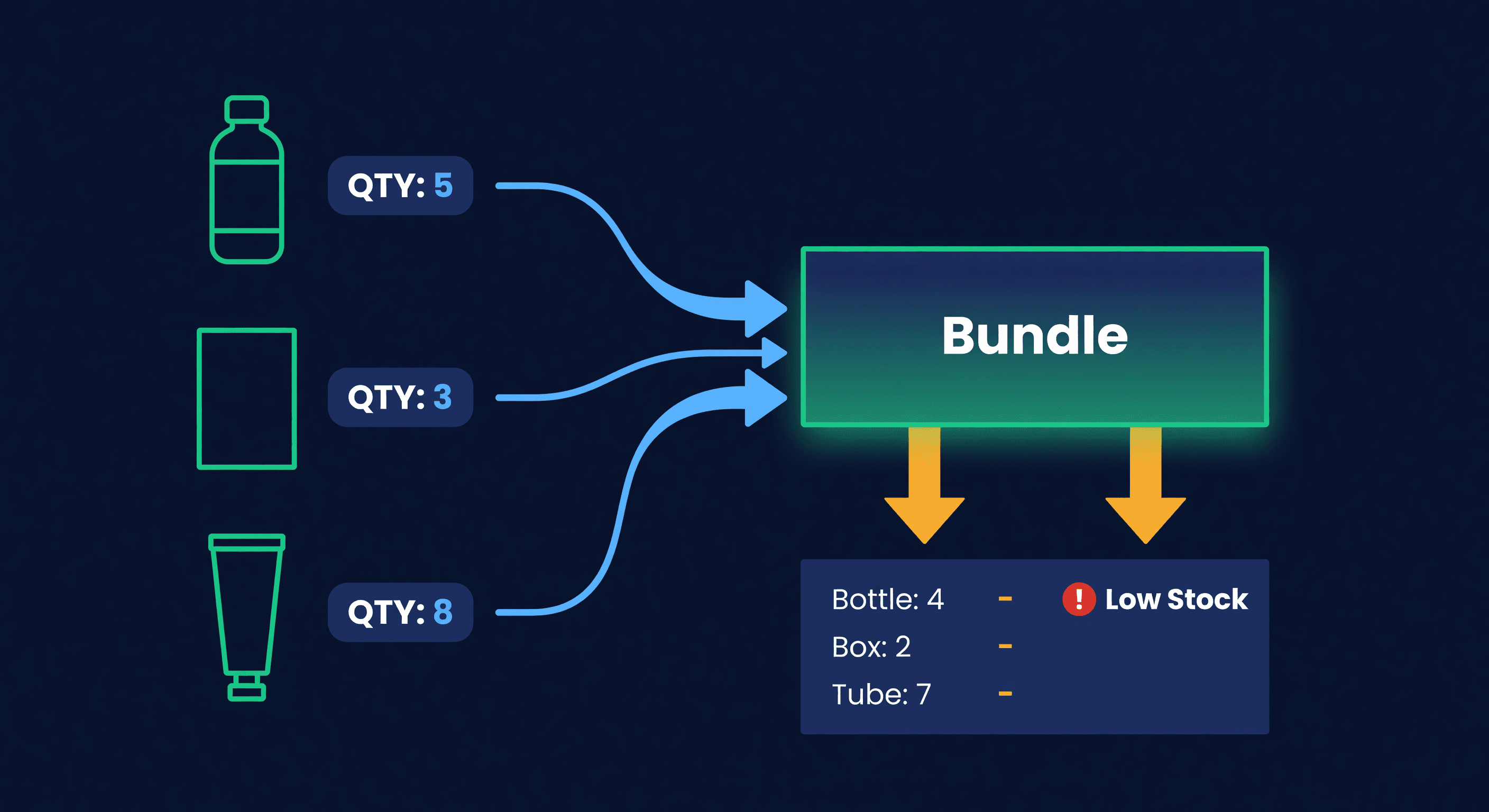
Shopify Bundles and the Inventory Problem
Product bundles sell great. Tracking their inventory is a mess. Here's how to handle component-level stock for Shopify bundles without overselling.
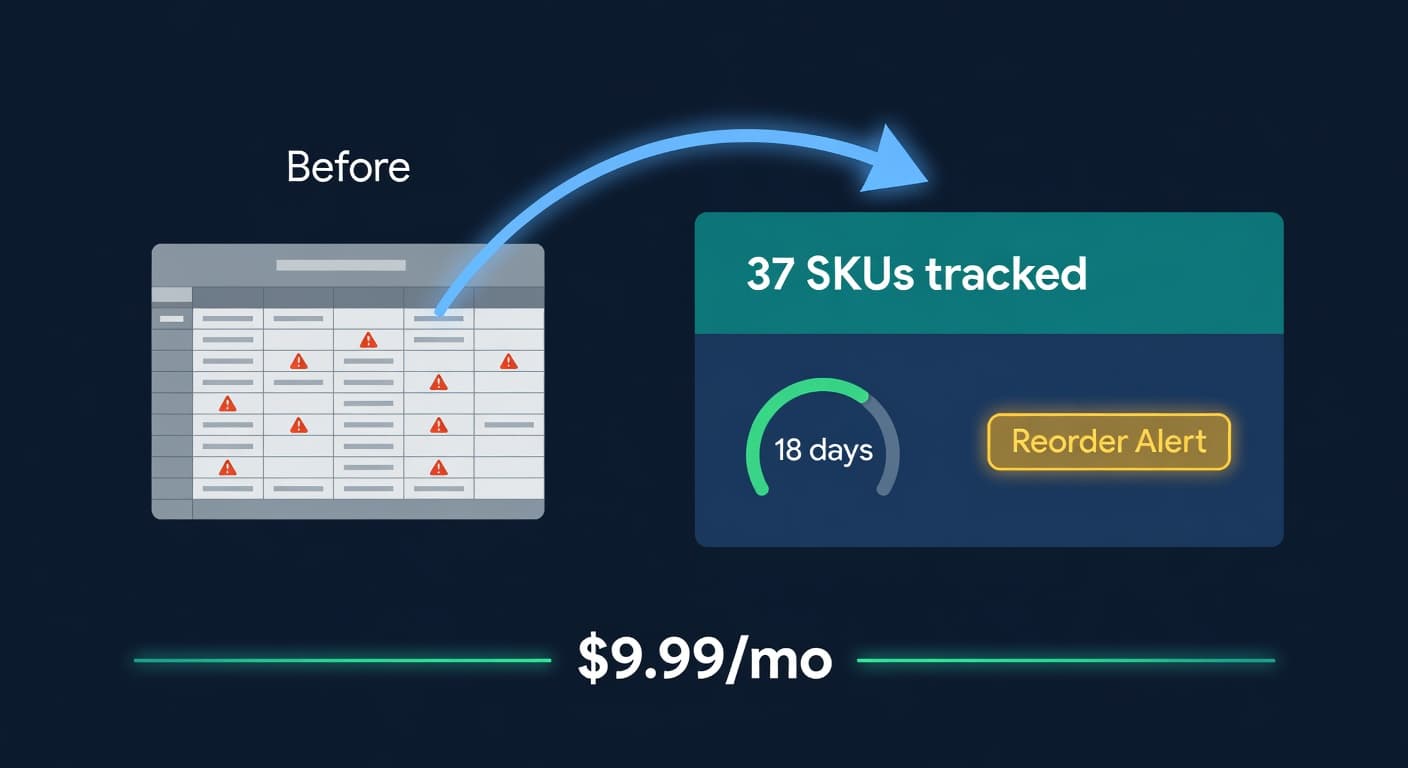
Inventory Lite: Who It's For, What It Does, and When to Upgrade
Lite is $9.99/mo for hybrid Shopify + Amazon sellers under 50 SKUs and $10k/30d. Here is what it covers and when you outgrow it.
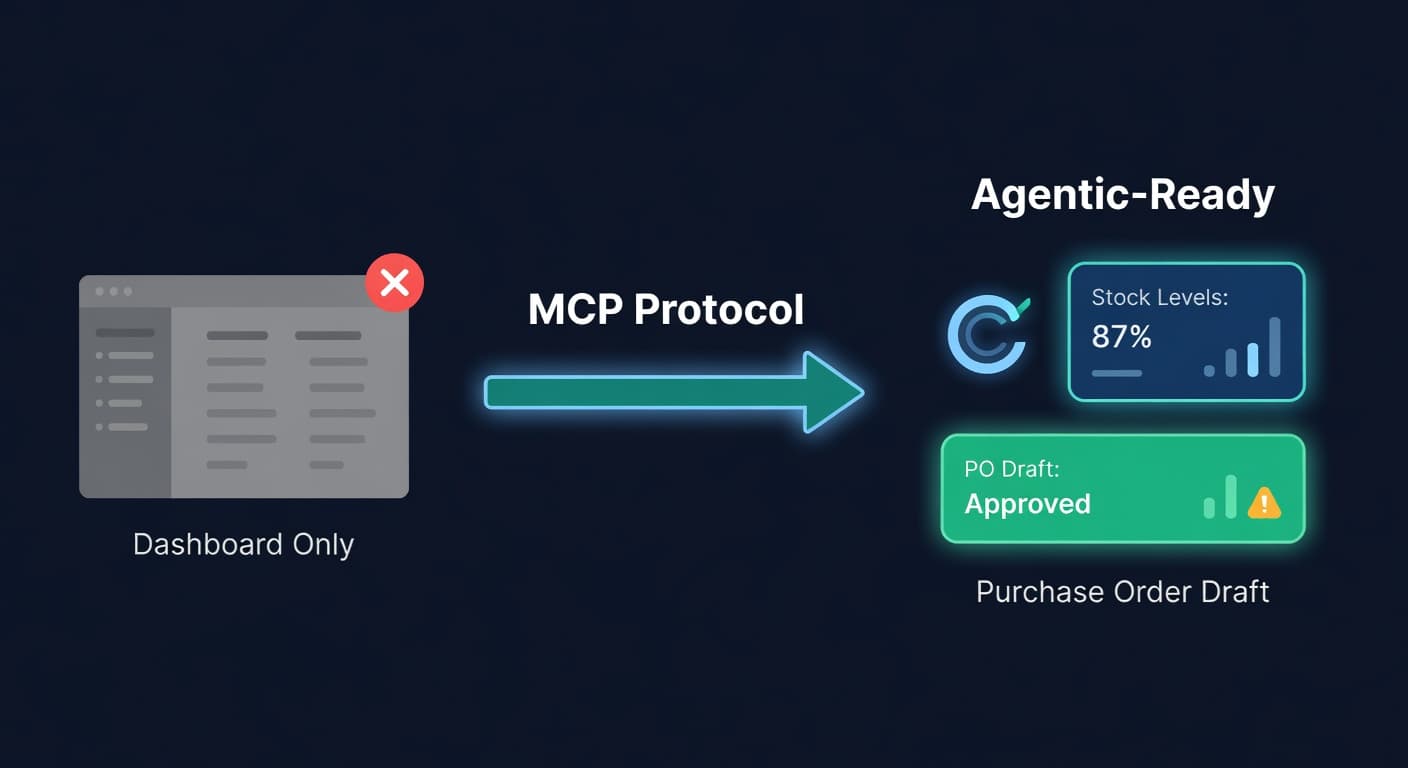
Is Your Inventory Stack Agentic-Ready?
What 'agentic-ready' means for inventory tools, how to evaluate your stack, and the MCP standard that connects AI agents to real inventory data.
