Why We Built a $9.99 Inventory Plan When Rivals Start at $99
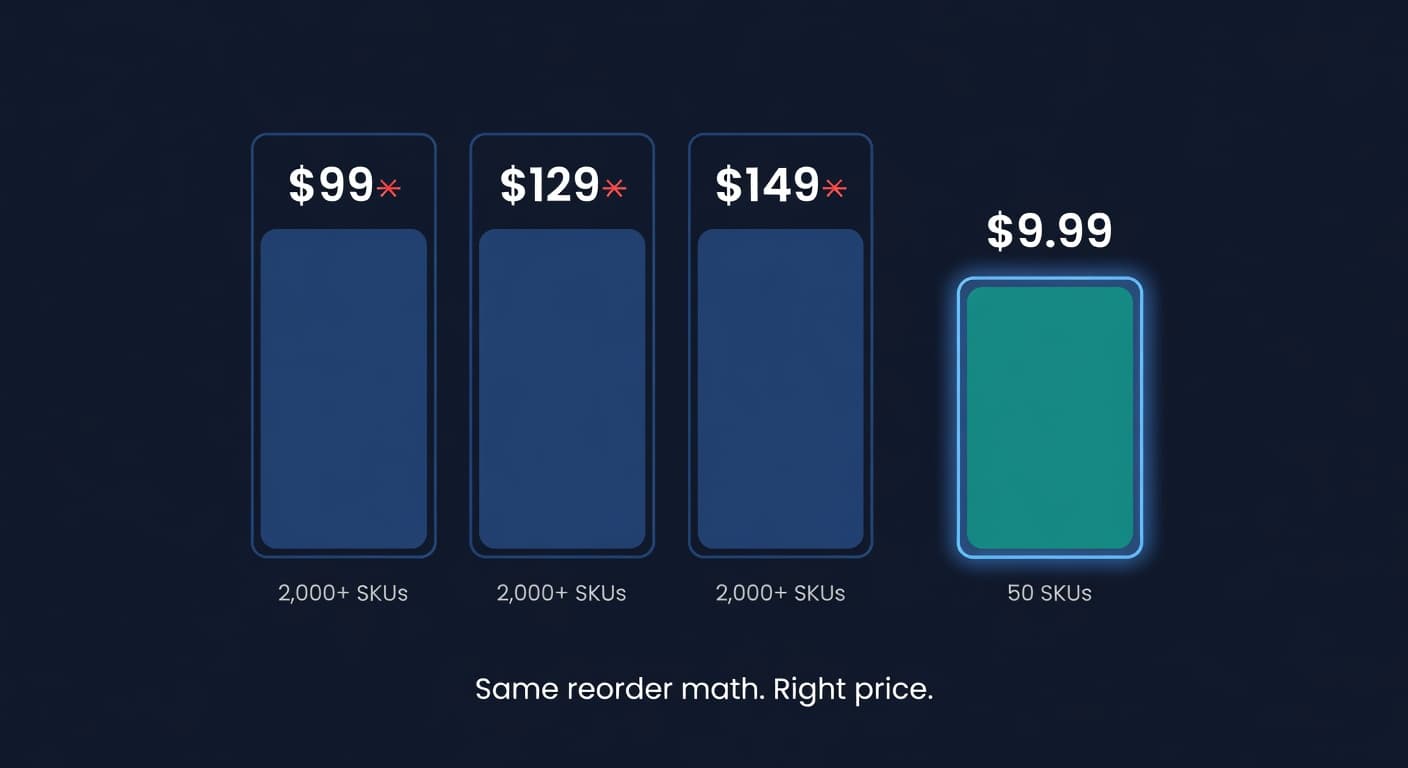
Key takeaway: Most inventory tools start at $99 a month and assume you sell 2,000+ SKUs with a buyer on staff. If you run 30 listings across Shopify and Amazon by yourself, that math doesn't work. Lite is what those tools should have shipped: $9.99/mo, 50 SKUs, weekly sync, hybrid Shopify + Amazon, the reorder math, nothing else. The trial is 14 days at https://app.replenishradar.com/app?flow=trial&plan=lite&interval=month&utm_source=blog&utm_medium=organic&utm_campaign=founder_post.
I am Scott. I built ReplenishRadar.
For a long time the cheapest plan on this site was $99 a month. That is roughly the floor in our category. SoStocked, Inventory Planner, Cin7, Skubana - they all live somewhere between $99 and a few thousand a month. The implicit assumption baked into that number is that you sell 2,000 or more SKUs, you have a buyer or a small ops team, and your revenue is measured in millions.
Most of the people who actually email me are not that seller.
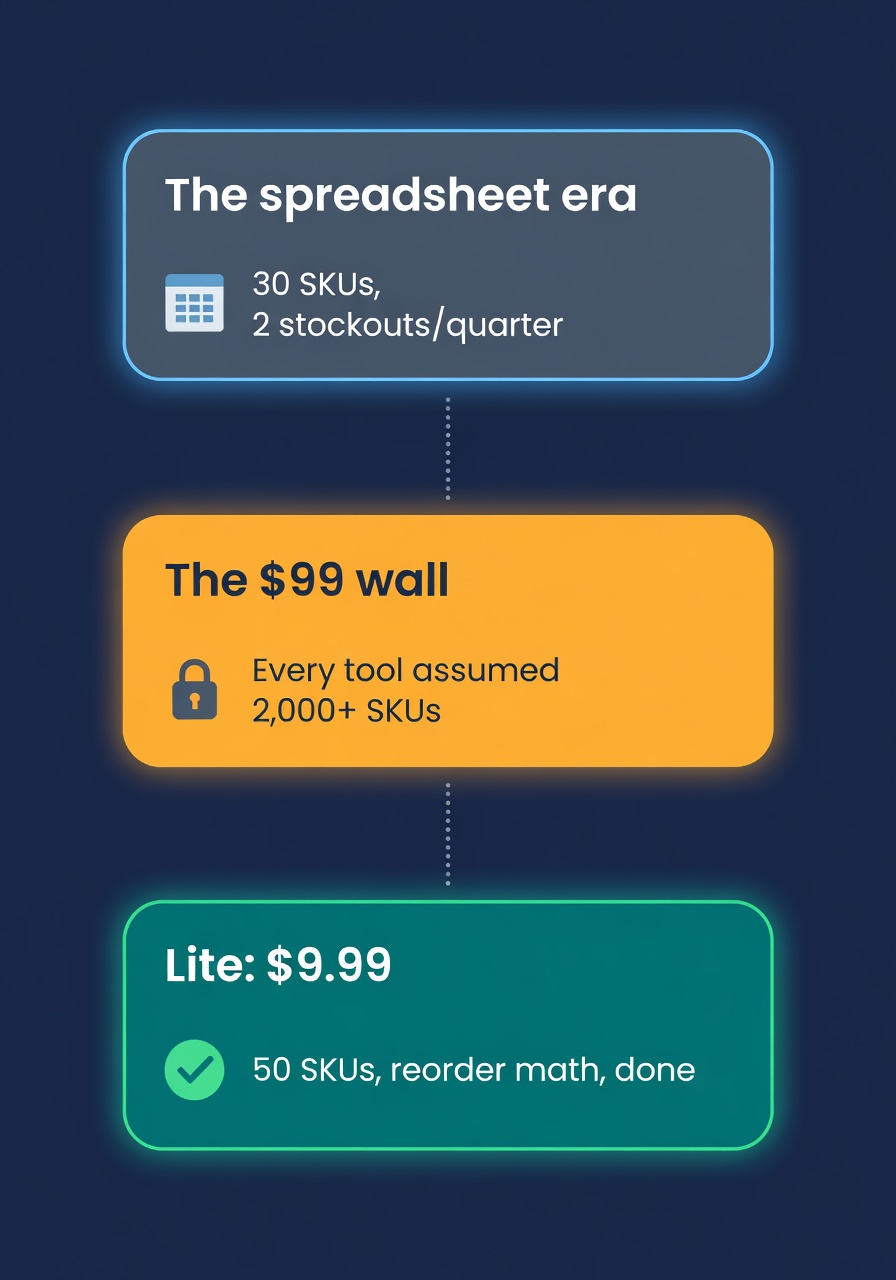
They have one Shopify store. One Seller Central account. Thirty listings, maybe forty. They are doing $5k to $10k a month, growing out of spreadsheets, and the spreadsheet is starting to lie to them. They have stocked out on Amazon twice this quarter. They do not need a forecasting model. They need a tool that knows how much they have, how fast it is moving, and when to reorder.
For that seller, $99 a month is not a "premium plan." It is a tax on being small.
The math everyone in the category is using
Pick any inventory tool aimed at e-commerce. Look at the entry plan. The price will be somewhere around $99 to $149. The seat is one. The store count is two. The SKU cap is somewhere between 1,000 and 5,000.
Now look at the actual seller the tool was built for. Way bigger. The pricing is set by what enterprise-ish sellers will pay because that is where the unit economics work for the tool maker. The 30-SKU seller pays the same price, gets none of the bargaining power, and ends up with a feature list that overshoots their problem by an order of magnitude.
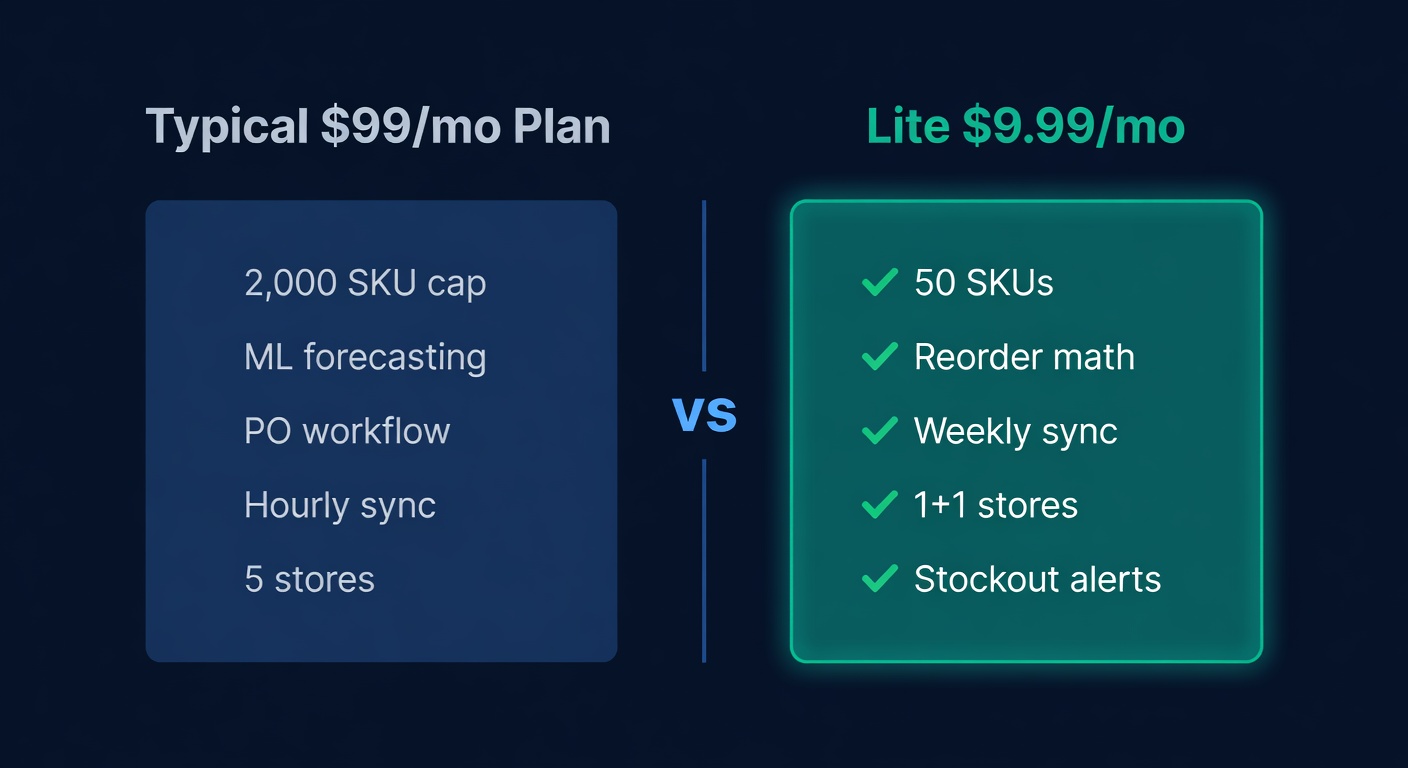
Here is what that looks like in a table:
| Typical $99/mo tool | What a 30-SKU seller actually needs | |
|---|---|---|
| SKU cap | 1,000 - 5,000 | 50 |
| Forecasting | Included (seasonal, trend, ML) | No. Run rate is enough. |
| PO workflow | Full draft-send-receive | No. Email to supplier is fine. |
| Sync frequency | Hourly or real-time | Weekly is sufficient |
| Stores | 2 - 5 | 1 Shopify + 1 Amazon |
| Cost per SKU | $0.03 - $0.10 at their cap | $3.30 per SKU at 30 |
| What they really need | Reorder alerts, days of cover | Reorder alerts, days of cover |
The 30-SKU seller is paying for forecasting they will not use, PO workflows they do not need, and sync speeds that do not matter at their volume. The cost per tracked SKU is absurd.
I know how this happens. I built the bigger plans first. I was talking to sellers doing $2M and $5M a year because they were the ones with budget and patience for an annual contract. They got forecasting, multi-store, FBA fee tracking, supplier scorecards, the agent integration - all of it. Standard, Growth, Scale. Real prices, real value.
But the people I most enjoyed talking to were the smaller ones. The side hustle going hybrid. The Shopify seller who just got accepted into FBA and now has a second pile of inventory to track in a different system. They asked good questions. They did not waste my time. And every time the conversation got to pricing they would say something like "yeah, I get it, that is just way more than I can spend right now."
So I would tell them to use Google Sheets. Which they were already using. Which was already failing.
What Lite is
Lite is $9.99 a month. Not free, not a forever-free trick, not a feature-stripped trial that expires into a $99 plan you were not expecting. A real plan you can stay on.
Here is the actual scope:
- 50 tracked SKUs
- $10,000 of revenue per 30 days
- One Shopify store and one Amazon account, hybrid (both required)
- Automatic sync once per week, plus one manual refresh per day
- A weekly stockout email digest
- Days of cover and reorder math on every tracked SKU
That is the whole product on Lite. Small on purpose.
What Lite is not
This is the part most launch posts skip.
Lite does not include forecasting. No demand model, no seasonality. The reorder math uses recent velocity and lead time. That is enough for most sellers under 50 SKUs. It is not enough at 200 SKUs and it is not enough if you have a Q4 spike that triples your run rate.
Lite does not include purchase orders. No PO drafts, no vendor send, no receiving workflow. If you place orders by email, that is fine - Lite tells you when to order. It does not place the order.
Lite does not include hourly sync. The data refreshes weekly, with a manual button you can press once per day. If you need real-time, this is not the plan.
Lite does not include FBA intelligence, reimbursement tracking, multi-store, API access, Slack alerts, or seats beyond one. Each of those is on a higher plan because each of those costs real money to run. If you need them, the math points to Growth or Scale and we will show you that path inside the app.
When I say Lite is missing those things, I mean it. They are removed deliberately. That is what makes it $9.99 instead of $99.
Who Lite is wrong for
If you are over 50 SKUs, Lite is wrong for you. Over $10k per 30 days, wrong for you. Only sell on one channel, wrong for you. Need any of the things I just listed, wrong for you.
Lite is right for one specific seller: the hybrid Shopify + Amazon operator under 50 SKUs and under $10k per 30 days who needs to stop running their reorder logic in a spreadsheet. That is it.
If that is you, go to the Lite trial. The trial is 14 days. You will see Lite-scope features the whole time, not a Growth tease that disappears on day 15. You either fit Lite or you do not, and you will know inside two weeks.
If that is not you, our pricing page has Standard, Growth, and Scale and they are the right answer for the sellers they are sized for.
- Scott
Related Reading:
Frequently Asked Questions
Get notified when it matters
Amazon and Shopify change the rules constantly. We'll email you when something affects your business.
See what your inventory is really doing
Doing $5M+ in revenue? Talk to our team
Related Posts
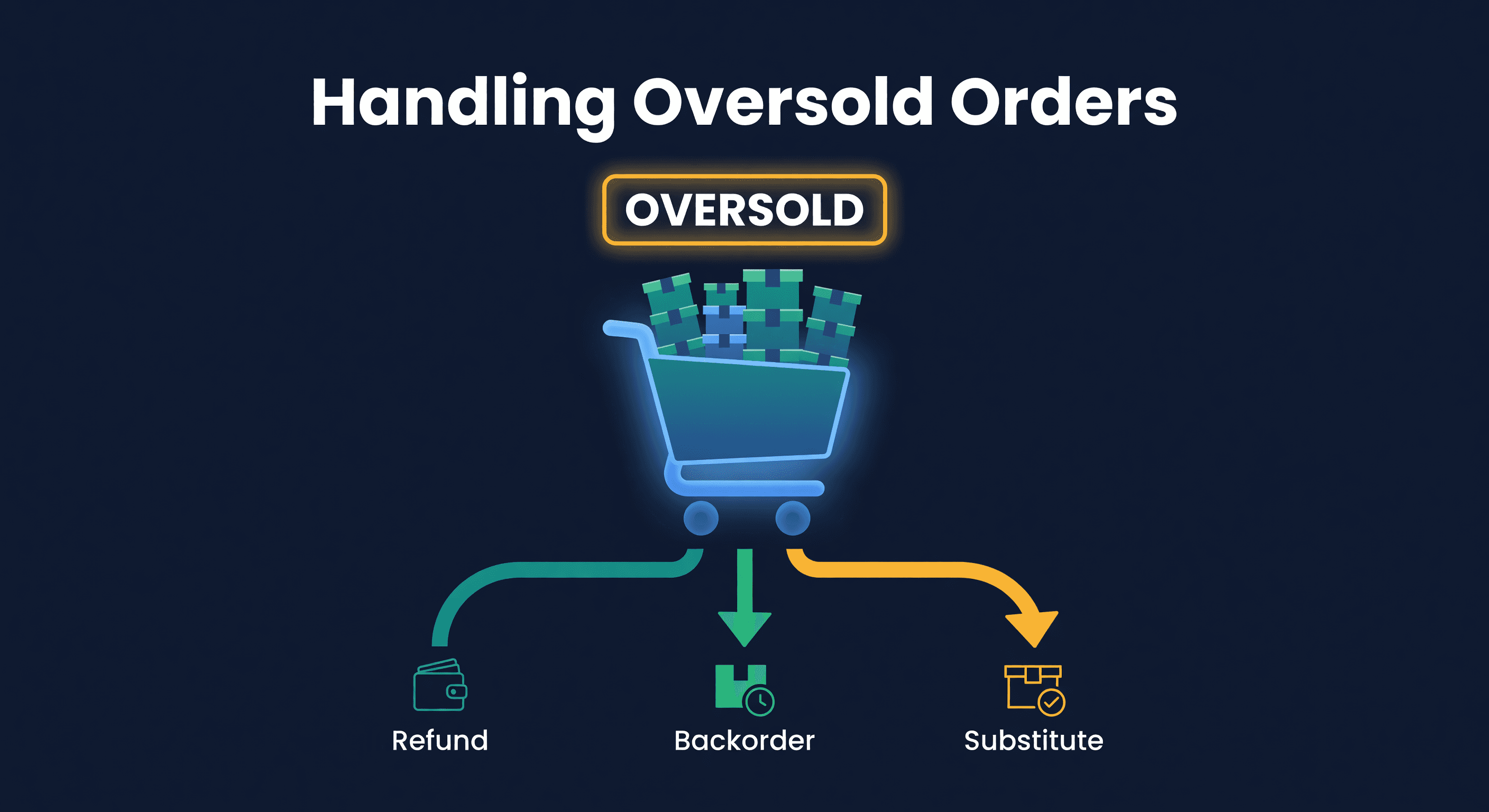
How to Handle Oversold Orders in E-commerce
Why overselling happens on multi-channel stores, what it costs you, and the prevention strategies that actually work, from buffer stock to real-time push sync.
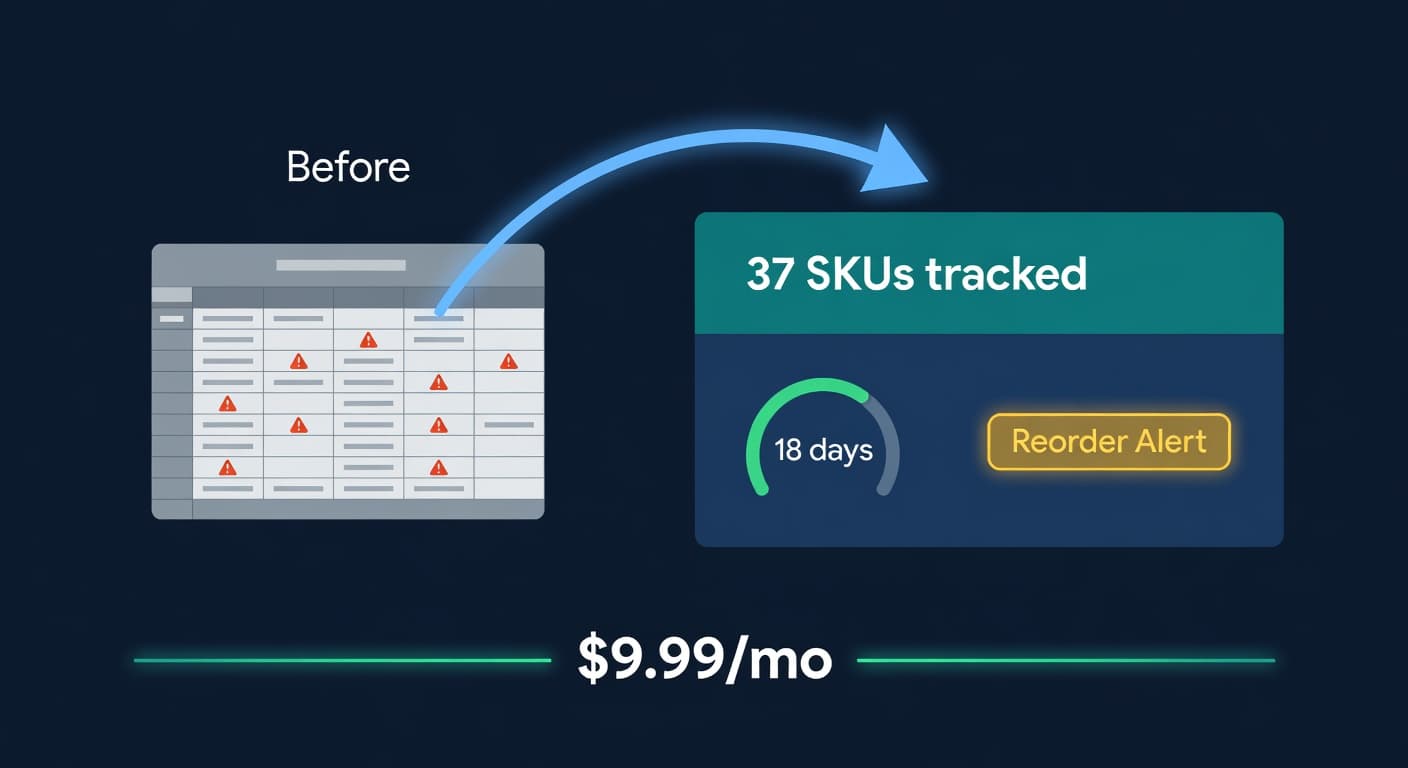
Inventory Lite: Who It's For, What It Does, When to Upgrade
Lite is $9.99/mo for hybrid Shopify + Amazon sellers under 50 SKUs and $10k/30d. Here is what it covers and when you outgrow it.
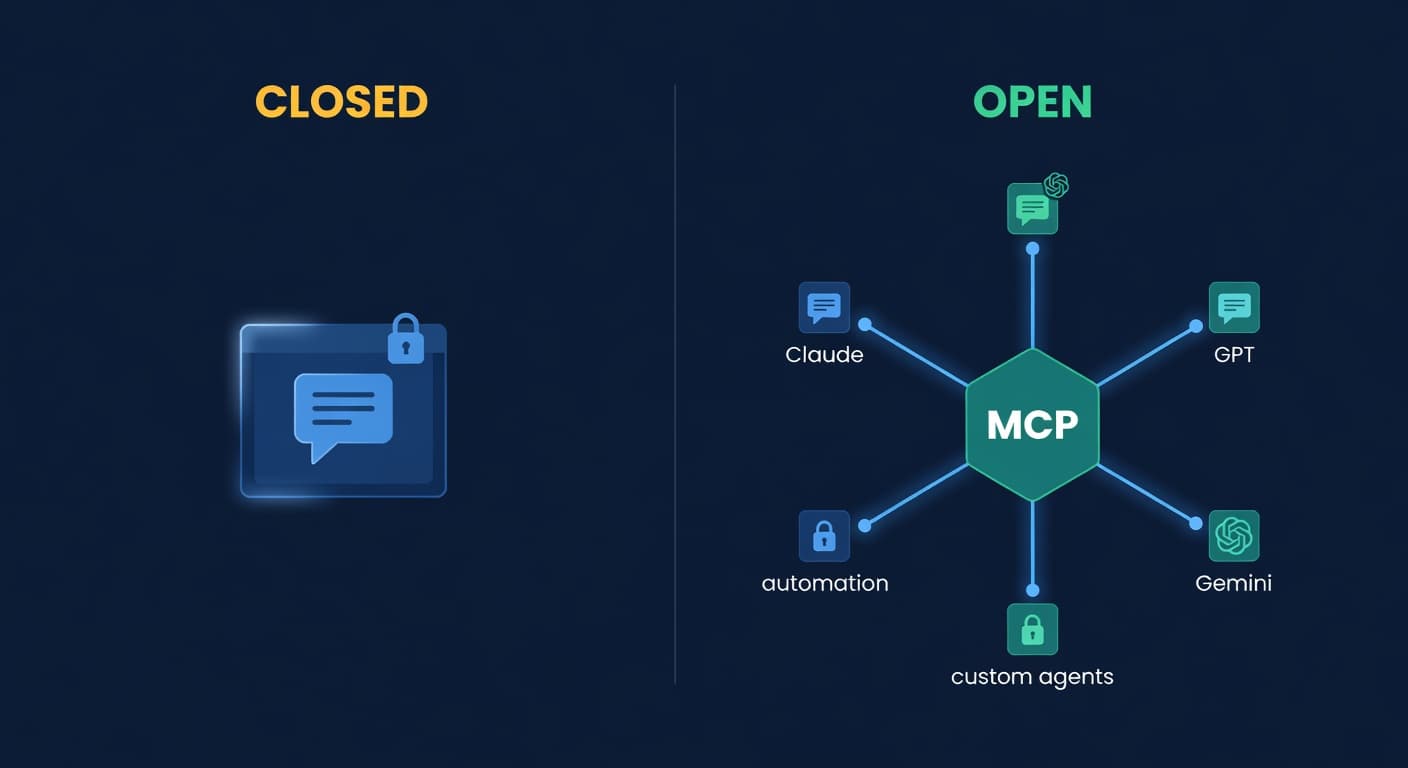
Open vs Closed AI for Inventory Management
Prediko launched an AI chatbot. Here's why open AI architecture with MCP beats closed chatbots for inventory management.
