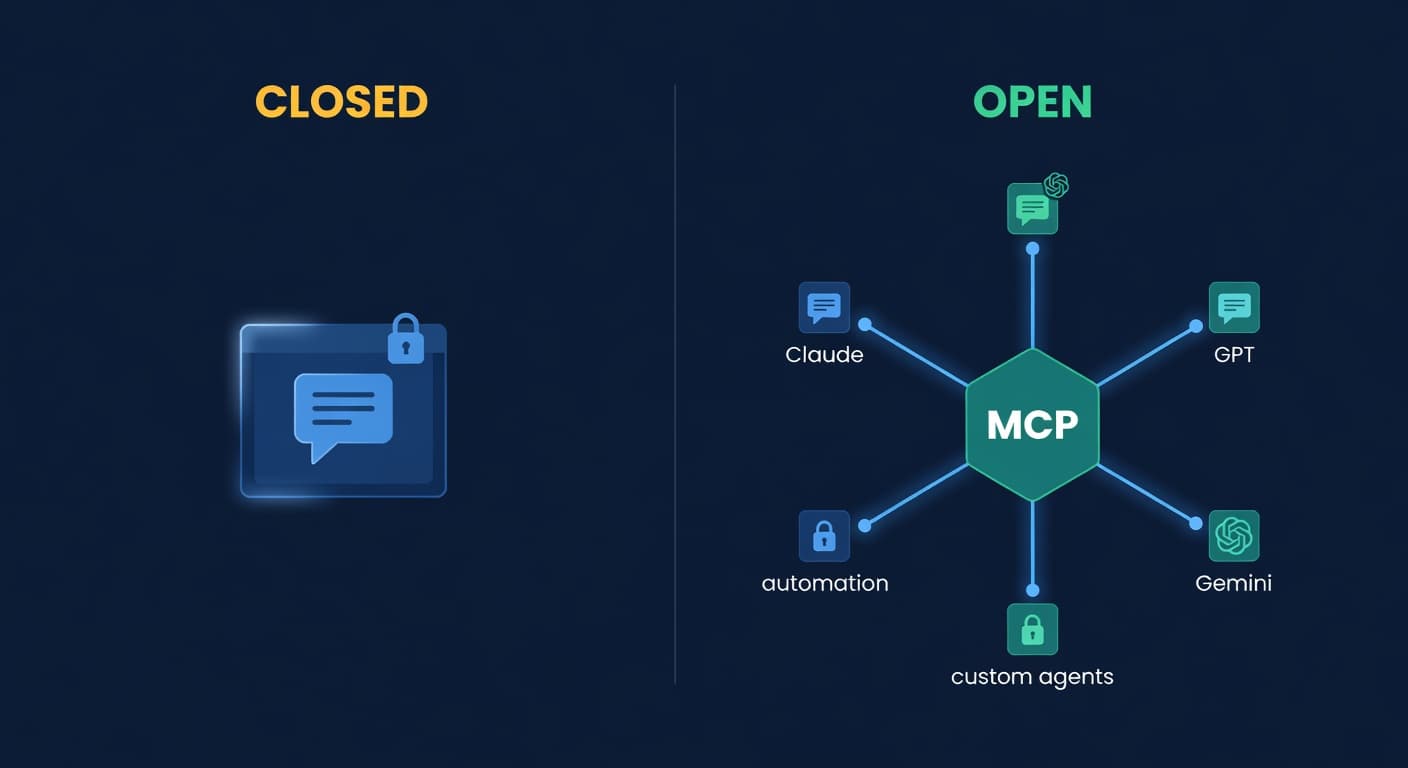
Open vs Closed AI for Inventory Management

Prediko just launched Pia, their AI inventory assistant. It is a chatbot that sits inside Prediko and lets you ask questions about your stock levels, get restock recommendations, and draft purchase orders through a conversational interface.
That is a reasonable product decision. Chat is easier than clicking through five dashboards. I get why they built it.
But I want to talk about the architecture underneath, because the choice between a closed chatbot and an open protocol will matter a lot more than the chat interface itself. And most sellers are not thinking about this yet.
What Pia Actually Is
From what Prediko has shared publicly, Pia is a conversational layer on top of their existing forecasting engine. You ask a question ("What should I reorder this week?"), and Pia translates that into a query against your Prediko data, then returns the answer in plain English.
This is useful. It is also not new AI. The forecasting underneath is the same math Prediko was already running. Pia makes it more accessible, but it does not make it more accurate or more capable. The intelligence is in the wrapper, not in a new model.
Think of it like adding a voice assistant to your thermostat. You can now say "make it cooler" instead of pressing buttons. The thermostat itself did not get smarter.
The Closed Chatbot Problem
Here is where architecture matters.
Pia lives inside Prediko. It can only talk to Prediko's data, run Prediko's forecasting, and surface Prediko's recommendations. If you want your AI agent to pull data from your accounting software and your inventory system in the same conversation, that is not happening. If you want to swap Claude for GPT-4 because the next model is better at reasoning about supply chains, that is not happening either.
You are locked in. The AI you get is the AI Prediko built. No more, no less.
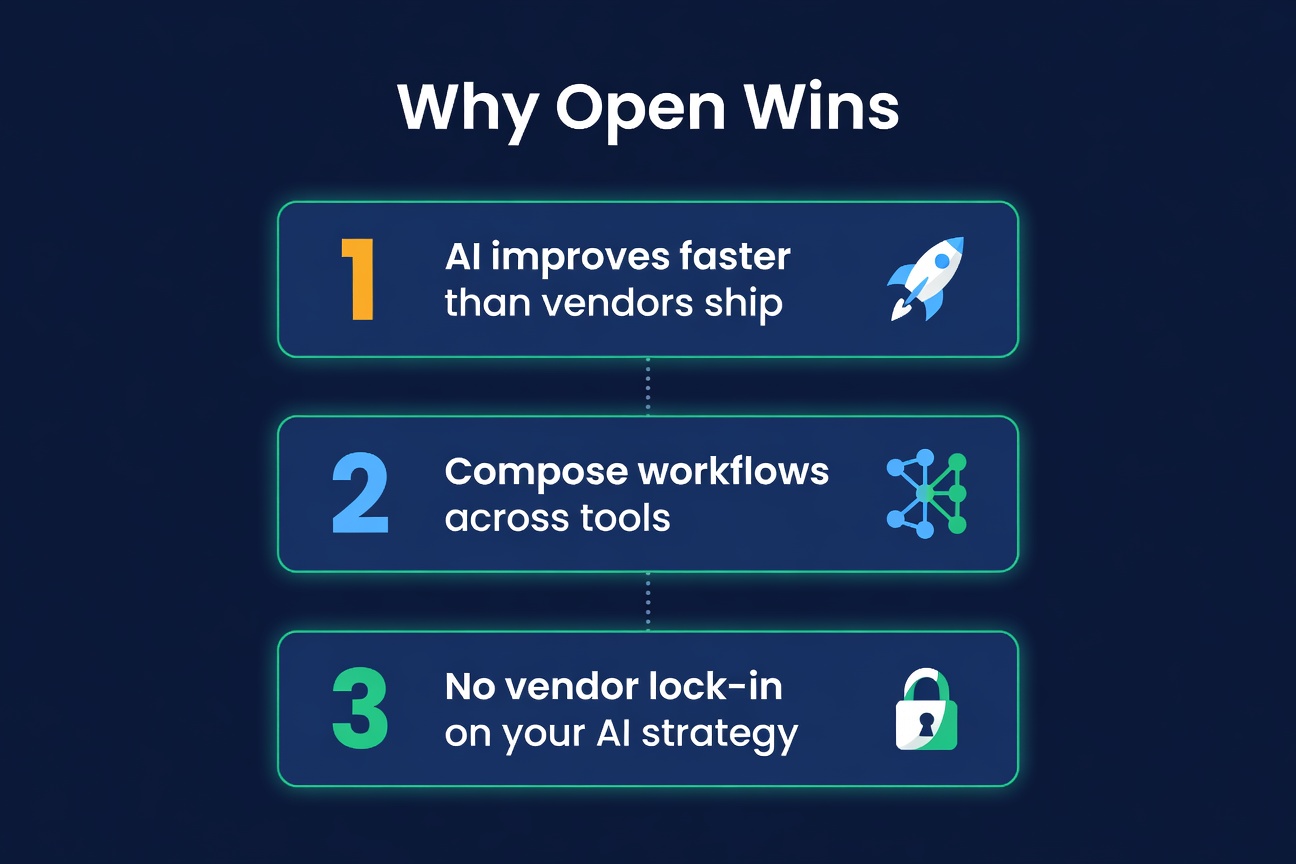
This matters for three reasons:
1. AI models improve faster than any single vendor can ship.
GPT-4 to GPT-4o to o1 to o3. Claude 3 to Claude 4. Gemini 1.5 to 2.0. The pace is relentless. A closed chatbot means you get improvements only when Prediko ships them. An open protocol means you get improvements the day a new model launches, from any provider.
I have been using Claude Desktop with our inventory data since March. When Anthropic shipped Claude 4, the quality of inventory analysis improved overnight. I did not have to wait for anyone to update a chatbot. The protocol was the same. The model got better.
2. You cannot compose workflows across tools.
A seller's week involves inventory data, supplier communications, ad performance, margin calculations, and cash flow planning. A closed chatbot can only see inventory. An open agent can pull from multiple MCP servers in a single conversation.
"Show me which SKUs are at risk of stocking out, then check if my ad spend on those products is still profitable given the reorder cost." That is a two-system query. A closed chatbot cannot do it. An agent connected to multiple data sources can.
3. You should not bet your AI strategy on one vendor's product roadmap.
Prediko decides what Pia can do. They decide what questions it can answer, what actions it can take, what data it can access. If Pia does not support a use case you need, your options are to wait or to leave.
With an open protocol, your options are to connect a different agent, build a custom workflow, or use an automation platform. The data access layer does not change when you change your mind about which AI to use.
What "Open" Actually Means
MCP, the Model Context Protocol, is an open standard created by Anthropic. It defines how AI agents connect to data sources through structured tools. Your inventory system exposes a set of tools (get stock levels, check reorder points, draft a PO), and any MCP-compatible agent can call them.
The adoption pattern matters more than the logo list. Once agents can discover typed tools, sellers no longer need every inventory workflow rebuilt as a one-off chatbot. The same inventory surface can serve Claude Desktop, OpenClaw, Cursor, a custom Python agent, or a workflow tool that calls the REST API.
ReplenishRadar ships an MCP server package with 49 ReplenishRadar tools plus knowledge search for inventory operations. Not a chatbot. Not a proprietary interface. A protocol that compatible agents can speak.
The Chatbot vs Protocol Comparison
| Closed Chatbot | Open Protocol (MCP) | |
|---|---|---|
| AI provider | Vendor's choice | Your choice |
| Model upgrades | When vendor ships | When model launches |
| Cross-tool workflows | No | Yes |
| Custom automation | No | Yes (n8n, Make, custom code) |
| Data access | Vendor's UI only | Any MCP client |
| Switching cost | Lose the AI layer | Keep the AI layer, swap the model |
The chatbot approach is faster to ship. I will give it that. Building a good chat interface is easier than designing a 49-tool protocol. But the protocol ages better. Five years from now, the AI models will be wildly different from what exists today. The protocol can stay stable while the model changes. The chatbot will need to be rebuilt.
They Built a Chatbot. We Built a Protocol.
I am not here to trash Prediko. Pia is a reasonable v1 for sellers who want a conversational interface and are already in the Prediko system. For that use case, it probably works fine.
But the architectural question is bigger than any single feature. When you choose a closed chatbot, you are choosing that vendor's vision of what AI should do with your data. When you choose an open protocol, you are choosing to let the best available AI do whatever you need with your data. Those are different bets.
We bet on the protocol. You can connect Claude Desktop to your inventory data in five minutes and start asking questions today. Or connect OpenClaw. Or build a custom agent that runs your morning briefing automatically. ReplenishRadar's MCP server package handles the data access. You pick the AI.
The next model that ships, from any company, will work with your inventory data on day one. That is the promise of open architecture. And that is a bet worth making.
Related Reading:
Frequently Asked Questions
Get notified when it matters
Amazon and Shopify change the rules constantly. We'll email you when something affects your business.
See what your inventory is really doing
Doing $5M+ in revenue? Talk to our team
Related Posts
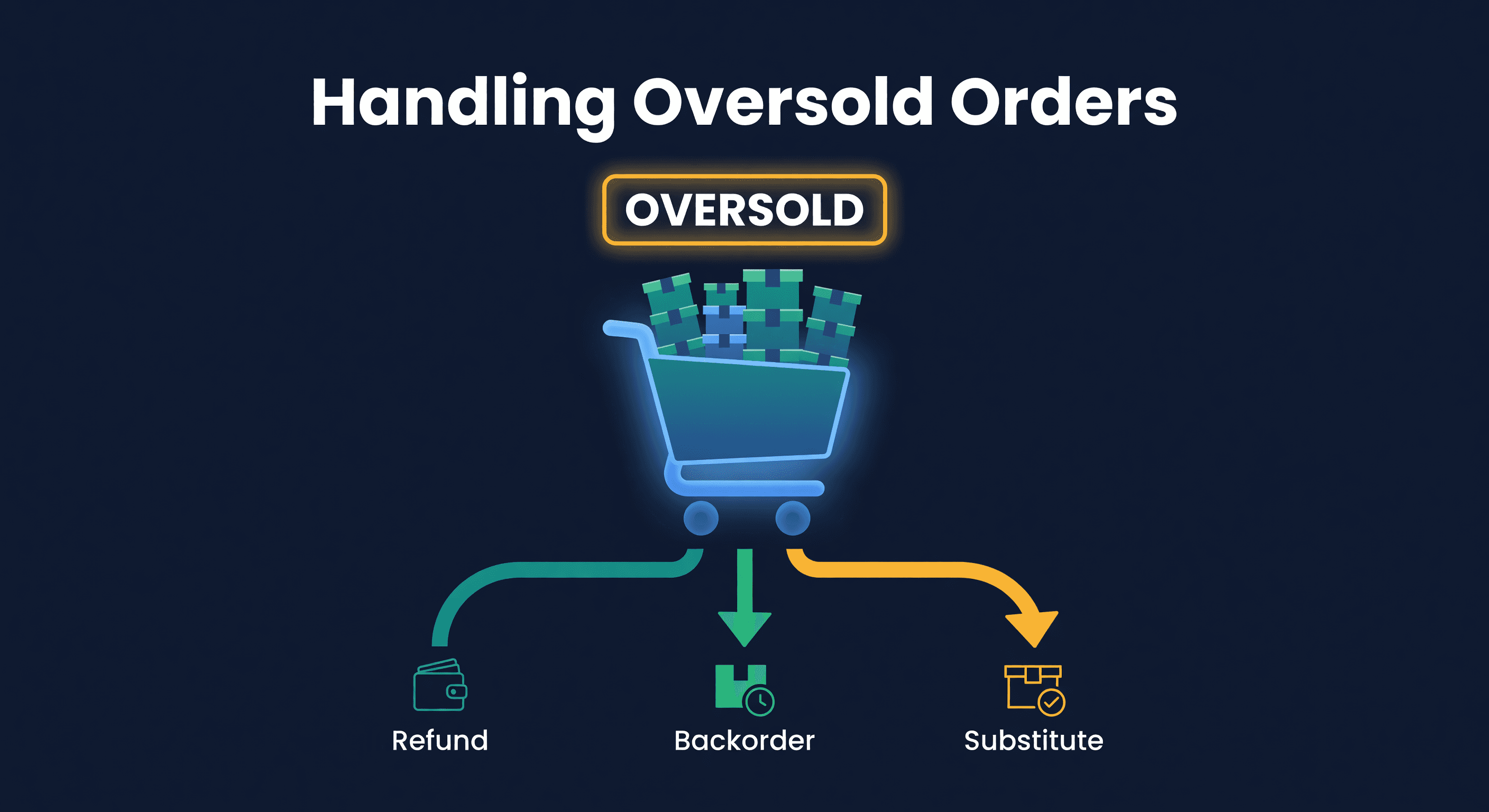
How to Handle Oversold Orders in E-commerce
Why overselling happens on multi-channel stores, what it costs you, and the prevention strategies that actually work, from buffer stock to real-time push sync.
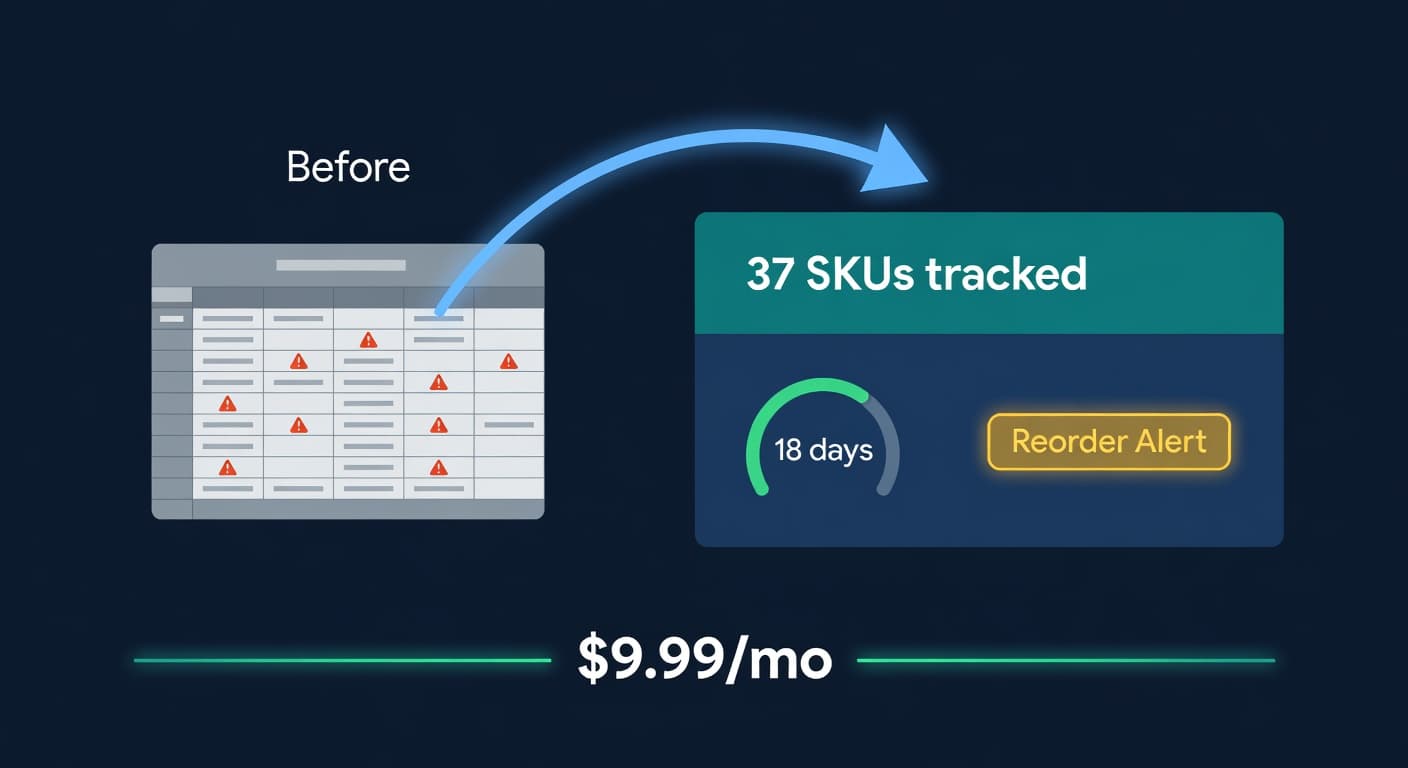
Inventory Lite: Who It's For, What It Does, When to Upgrade
Lite is $9.99/mo for hybrid Shopify + Amazon sellers under 50 SKUs and $10k/30d. Here is what it covers and when you outgrow it.
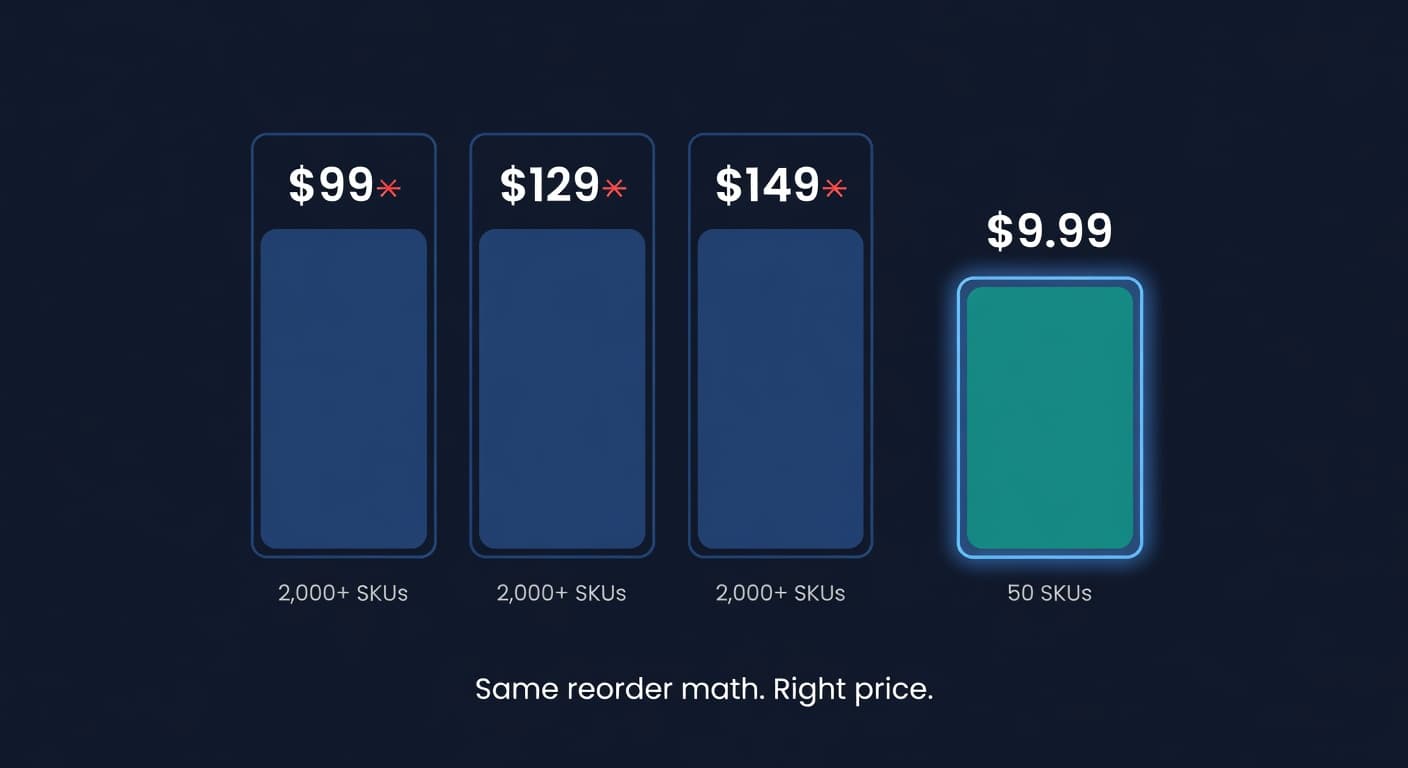
Why We Built a $9.99 Inventory Plan When Rivals Start at $99
Most inventory tools start at $99 and assume you have 2,000 SKUs and a buyer. If you sell 30 SKUs across Shopify and Amazon, that math is broken.
